

How to Read Bryan Washington's Books
Bryan Washington has quickly established himself as one of the most distinctive voices in contemporary American fiction. Known for his sparse, dialogue-driven prose and intimate portrayals of queer communities of color, his books are set primarily in the sprawling suburbs of Houston, Texas, often branching out to international hubs like Osaka, Tokyo, and Jamaica. Because his works are either standalone novels or a collection of interconnected short stories, they do not follow a strict, multi-book narrative continuity. However, reading them in a specific order helps trace his evolution as a stylist and thematic builder.
The Recommended Reading Path
For the most rewarding experience, we recommend reading Bryan Washington's books in publication order. This sequence allows you to experience the raw, foundational energy of his debut short stories before seeing how those same regional and structural themes expand into his longer novels. Here is our recommended path:
- Lot (2019): Start here. This debut collection of interconnected stories acts as a vibrant, gritty introduction to Washington's narrative style, his portrayal of working-class Houston, and his unique blending of Spanish, English, and local slang.
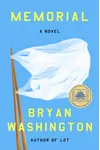
- Memorial (2020): Move next to his debut novel. It takes the intimate, domestic tension established in his short stories and stretches it across two continents, exploring a fraying relationship between a Black daycare teacher and a Japanese-American chef.
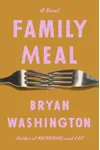
- Family Meal (2023): Follow up with his second novel, which takes a deeper, darker dive into themes of grief, substance use, and chosen family, utilizing a split-perspective structure that highlights how people seek comfort in the wake of loss.
- Palaver (2025): Conclude with his third novel. This award-winning book expands his scope even further, tracing the complex dynamics of an estranged mother and son reconnecting in Tokyo, while weaving in histories across Jamaica and Houston.
Bryan Washington Books in Publication Order
If you want to read his work exactly as it was released to the public, here is the complete list of Bryan Washington's major publications:
- Lot (Short Story Collection) — 2019
- Memorial (Novel) — 2020
- Family Meal (Novel) — 2023
- Palaver (Novel) — 2025
- The O. Henry Prize Stories 2019 (Anthology Contribution) — 2019
What to Know Before You Start
Before diving into Washington's catalog, it helps to understand the stylistic and structural signatures that define his writing. Knowing what to expect will help you appreciate the nuances of his narratives:
Houston as a Living Character
Washington is a dedicated chronicler of Houston, Texas. Rather than focusing on the glittering downtown skyline, his stories explore the cultural and socioeconomic realities of neighborhoods like Alief, Shepherd, and the East End. The city's intense heat, heavy traffic, gentrifying blocks, and diverse food scene are not just backdrops; they actively shape the characters' identities and choices.
The Language of Food and Cooking
Food is central to how Washington’s characters communicate. Whether it is a family-run restaurant in Lot, a chef navigating family history through cooking in Memorial, or bakery environments in Family Meal, the preparation and sharing of meals serve as a stand-in for unspoken love, cultural heritage, and reconciliation.
Minimalist, Dialogue-Heavy Prose
Do not expect long paragraphs of internal monologue or heavy exposition. Washington writes with a stark, rhythmic minimalism. His characters speak in realistic, sometimes evasive dialogue, leaving much of the emotional weight to be felt in the subtext, pauses, and physical gestures between sentences.
Chronological Order and Continuity Caveats
A common question from new readers is whether Washington's books share a single universe or recurring characters. Here is what you need to know about continuity in his work:
Are the Novels Connected?
No. Memorial, Family Meal, and Palaver are entirely separate standalone works. They do not share characters or direct plotlines. You can read any of these novels as a self-contained story without feeling lost. Their connection is purely thematic: they all deal with young queer men, the friction between biological and chosen families, cross-cultural relationships, and the search for home.
The Interconnected Structure of 'Lot'
While the novels are standalones, his short story collection Lot contains a distinct internal continuity. Approximately half of the stories follow a single unnamed narrator—the son of a Black mother and a Latino father—as he grows up, navigates his sexuality, and works at his family's restaurant in Houston. The remaining stories focus on a wider ensemble of Houston residents (such as neighbors and relatives). Reading the stories in Lot in their printed order is highly recommended, as the narrator's coming-of-age arc is braided throughout the collection and builds to a cohesive emotional payoff.
Practical Reader Advice
If you are deciding where to start or how to approach his work, keep these practical tips in mind:
The Best Starting Point
While Memorial is his most famous novel, Lot remains the best gateway. Because it is a collection of shorter pieces, it allows you to get used to his sparse prose style and local slang in bite-sized increments. If you prefer a single, sustained narrative from the outset, start with Memorial.
Themes of Grief and Resilience
Washington’s work deals honestly with heavy themes, including systemic inequality, racism, homophobia, addiction, and profound grief. However, he deliberately avoids exploiting trauma for shock value. His stories are ultimately grounded in hope, warmth, and the quiet beauty of human connection, making them deeply comforting despite their raw subject matter.
Adaptations to Watch For
Readers should also note that the acclaimed production company A24 acquired the television rights to adapt Memorial. Reading the novel now will give you a head start before the adaptation reaches screens, allowing you to appreciate the book's dual-city setting of Houston and Osaka in its original format.