

Where to Start with Bryce Courtenay
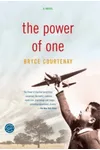
For readers new to Bryce Courtenay, the choice of where to begin is clear: you should start with his masterwork, The Power of One. Published in 1989, this debut novel is not only his most famous book but also serves as the perfect introduction to his narrative style, which blends rich historical settings, deep emotional stakes, and themes of raw human resilience. If you prefer a historical family saga set against the backdrop of early Australian penal colonies, your alternative starting point is The Potato Factory, the first book in his acclaimed Australian Trilogy.
Because Courtenay's series are self-contained and his standalone novels require no prior background, you do not need to follow a strict chronological timeline of his entire bibliography. Instead, the most practical approach is to read his core series in publication order, and then explore his standalone historical novels based on the settings that interest you most.
The Power of One Series
This is the series that established Courtenay as a global storytelling phenomenon. Set in South Africa during the rise of the apartheid era, these books are deeply personal, reflecting the author's own upbringing and observations of social injustice.
- The Power of One (1989): Set in South Africa during the 1930s and 1940s, the novel follows Peekay, an English-speaking boy who faces intense hostility from Boer classmates. Through boxing and the mentorship of eccentric characters, Peekay learns to navigate a divided society and develops his own path to resilience.
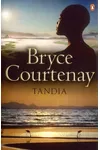
- Tandia (1992): A direct sequel that picks up where the first book ends. While Peekay remains a key figure, the narrative focus shifts significantly toward Tandia, a young girl of mixed racial heritage who suffers horrific abuse under the apartheid regime. Together, they join the fight against institutionalized racism.
Reading Caveat: Some readers find the shift in tone and focus in Tandia jarring compared to the tight, inspiring narrative of the first book. However, reading both in order is essential to fully resolve Peekay's journey and understand the broader scope of Courtenay's critique of apartheid.
The Australian Trilogy (The Potato Factory Books)
This trilogy is a massive, gritty family saga that traces the lives of English convicts transported to Australia and their descendants. It remains one of the most popular historical fiction series in Australian literature.
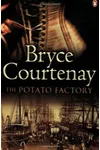
- The Potato Factory (1995): Set in 19th-century London and the penal colony of Van Diemen's Land (modern-day Tasmania). It introduces Ikey Solomon, a clever fence, and his partners Mary Abacus and Hannah Solomon, as they struggle for survival and success in a brutal new world.
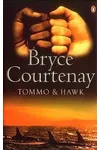
- Tommo and Hawk (1998): Follows the next generation, focusing on the twin brothers Tommo and Hawk. Their adventures span the Pacific, taking them from whaling ships to the goldfields of Australia and the Maori wars in New Zealand.
- Solomon's Song (1999): The final chapter of the trilogy, which ties together the legacy of the Solomon family against the backdrop of a changing Australia moving toward federation.
Reading Advice: This trilogy must be read in strict publication order. The complex web of family rivalries, betrayals, and historical events builds directly from one volume to the next.
The Persimmon Tree Duology
Set during the turbulent years of World War II and the subsequent reconstruction, this duology explores love, survival, and corporate intrigue in the Pacific theater.
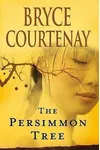
- The Persimmon Tree (2007): Tells the story of Nick Duncan and Anna van Schurman, whose lives intersect in Java just as the Japanese forces invade during World War II.
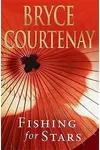
- Fishing for Stars (2008): Picks up in the post-war era, following the characters as they deal with the psychological scars of the war, the rise of new industries, and unresolved personal conflicts across Australia and Asia.
Key Standalone Novels and Non-Fiction Highlights
Beyond his series, Courtenay wrote several massive standalone novels that are highly regarded by fans. These can be read in any order, but a few are particularly notable:
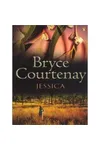
- Jessica (1998): Based on a true story, this novel features a fierce, unconventional young woman fighting for justice and her child in rural New South Wales during the early 20th century. It is widely considered one of Courtenay's strongest female-led narratives.
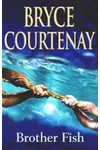
- Brother Fish (2004): A massive epic spanning three continents and four decades, focusing on the unlikely friendship between an white Australian soldier, a Black American sailor, and a Korean woman, forged during the Korean War.
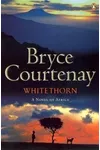
- Whitethorn (2005): A return to a South African setting, focusing on the childhood of an orphan named John Baxter in the years leading up to apartheid, exploring the roots of racial hatred and personal identity.
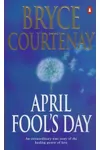
- April Fool's Day (1993): This is Courtenay's first and most significant work of non-fiction. It is a heartbreaking tribute to his son Damon, a hemophiliac who contracted HIV through a contaminated blood transfusion and died from AIDS-related complications on April 1, 1991. The book is an emotional account of love, family strength, and a critique of the medical systems of the time.
What to Know Before You Start
Bryce Courtenay did not write brief books. Most of his novels are sweeping epics that easily exceed 600 pages. His writing is characterized by high drama, vivid historical detail, and a clear division between heroic underdogs and cruel antagonists. While his historical accuracy is generally well-researched, he often prioritized emotional truth and dramatic storytelling over dry historical precision. Readers should prepare themselves for intense emotional journeys, as his characters frequently endure extreme hardships before achieving any form of peace or justice.