


The Portals: Choosing Your Starting Point
If you are new to C. Gockel’s worlds, the best place to begin depends entirely on whether you prefer mythological urban fantasy or far-future space opera. The author’s work is divided into distinct universes that do not cross over, meaning you can dive into either path without worrying about missing critical context from the other. Her writing style is defined by fast-paced, present-tense narration, sharp dialogue, and highly character-driven plots that balance humor with high-stakes tension.
For readers who love Norse mythology, witty banter, and trickster gods, the recommended starting point is Wolves, the first book in the I Bring the Fire series. If you are a fan of high-stakes science fiction, space battles, and quantum physics, start with Archangel Down, which kicks off the main arc of the Archangel Project. Both entry points offer a complete introduction to Gockel's signature storytelling style.
I Bring the Fire Series Reading Order
The I Bring the Fire series is C. Gockel's flagship urban fantasy work. It follows Amy Lewis, a veterinary student, and Loki, the Norse god of mischief, as they navigate an adventure spanning modern-day Earth, ancient Asgard, and the Nine Realms. Unlike the popular cinematic portrayals of Loki, Gockel drafts a trickster who is much closer to the complex, morally grey figure of original Norse Eddas. The main story is highly serialized, and it is strongly recommended to read the core books in their numerical order. However, several novellas and prequels expand the universe.
Recommended Reading Order
- Wolves (I Bring the Fire Part I) (2012): The essential entry point where veterinary student Amy Lewis accidentally saves a very chaotic Loki in Chicago.
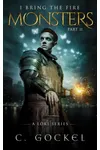
- Monsters (I Bring the Fire Part II) (2012): Continues the fallout of their initial meeting as ancient mythological forces begin to gather on Earth.
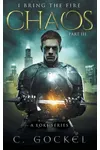
- Chaos (I Bring the Fire Part III) (2013): High-stakes action where Loki's past catches up to him and threatens modern society.
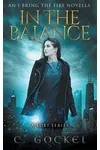
- In the Balance (I Bring the Fire Part 3.5) (2013): A companion novella that bridges the gap between Chaos and Fates, focusing on key character side-quests.
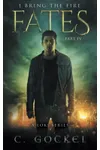
- Fates (I Bring the Fire Part IV) (2014): The fourth main novel expanding the cosmic scale of the conflict across the Nine Realms.
- The Slip (I Bring the Fire Part 4.5) (2014): A short story focusing on side characters and magical dimensions that enriches the main plot.
- Warriors (I Bring the Fire Part V) (2014): The fifth novel where battles for the realms intensify and alliances are tested.
- Ragnarok (I Bring the Fire Part VI) (2015): The climactic conclusion to the primary Amy and Loki storyline.
- The Fire Bringers (I Bring the Fire Part 6.5) (2015): A post-Ragnarok novella offering closure and setting up future paths for the surviving characters.
- Someday My Count Will Come (2019): A later story set within the same universe, focusing on Count Dracula and a quirky heroine, blending mythological lore with classic vampire tropes.
The Prequel Caveat: When to Read "Atomic"
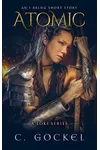
Atomic (I Bring the Fire Part 0.5) (2016) is a prequel novella focusing on Sigyn's backstory before the events of Wolves. While chronologically first, reading it first is not recommended for newcomers. It contains major character revelations and world-building details that are far more impactful if read after Ragnarok (Book 6) or at least after Chaos (Book 3). Read it as a companion flashback piece once you are already invested in the lore.
The "After the Fire" Spin-Offs
If you want to stay in the I Bring the Fire universe but explore romance-focused story arcs, the After the Fire paranormal romance spin-off series is your next destination. These books can be read completely as standalones, although they feature cameos from characters in the main series.
- Soul Marked (After the Fire Book 1) (2017): A standalone romance featuring magic, Norse myth elements, and new protagonists.
- Magic After Midnight (After the Fire Book 2 / Part VIII) (2018): A slow-burn urban fantasy romance blending classic fairy tales with Gockel's signature Norse mythos.
Archangel Project Series Reading Order
The Archangel Project is an expansive space opera series filled with alien empires, genetic augmentation, and witty banter. The narrative is split into two major segments: the original 10-book series and the Convergence prequel/companion trilogy.
Main Space Opera Arc
The core series follows Commander Noa Sato and Professor James Sinclair as they navigate galactic conspiracies and the mysterious Archangel technology. The publication and chronological order are mostly aligned, except for the prequel novella.
- Carl Sagan's Hunt for Intelligent Life in the Universe (Archangel Project Book 0.5) (2016): A prequel novella following the alien Hsissh and his bond with a young Noa Sato. You can read this first, or as a flashback after Book 1.
- Archangel Down (Archangel Project Book 1) (2015): The best starting point for the main sci-fi arc, introducing the mystery of the Archangel Project.
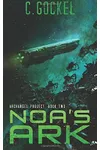
- Noa's Ark (Archangel Project Book 2) (2016): Continues Noa's struggle to protect her crew and uncover genetic secrets.
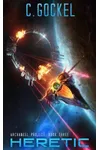
- Heretic (Archangel Project Book 3) (2017): High-stakes political and military conflict in deep space.
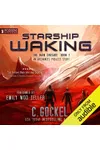
- Starship Waking (Archangel Project Book 4) (2018): Expands the universe and introduces new alien threats.
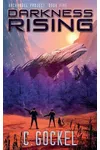
- Darkness Rising (Archangel Project Book 5) (2019): The narrative ramps up toward the final conflict.
- The Defiant (Archangel Project Book 6) (2019): A major climax to the initial story arc.
- Android General 1 (Archangel Project Book 7) (2020): Shifts focus slightly to explore the wider consequences of the galactic war.
- Admiral Wolf (Archangel Project Book 8) (2020): Brings military strategy and political maneuvering to the forefront.
- Supernova (Archangel Project Book 9) (2021): The ultimate concluding novel of the main space opera saga.
Archangel Project: Convergence Sub-Series
The Convergence series serves as a prequel and companion trilogy set in the same universe, focusing on a rescue mission to Proxima Centauri and the discovery of faster-than-light travel. It is best read after finishing the first few books of the main Archangel Project series, or as a standalone sci-fi adventure.
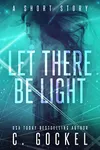
- Let There Be Light (Archangel Project Companion Story) (2018): A short prequel story tracking the physicist Hana Morgenstern as she survives under Proxima Centauri.
- Beasts in the Garden (Convergence Book 1): John Miller's mission to find Hana Morgenstern on a ruined outpost.
- Intelligent Design (Convergence Book 2): John and Hana struggle to survive on a primitive planet.
- Noble Savages (Convergence Book 3): The conclusion of the survival and discovery arc.
Urban Magick & Folklore Series Reading Order
If you prefer dark fairy tale retellings with a modern, gritty edge, C. Gockel’s Urban Magick & Folklore series is a standalone collection. Set in a world of concrete and ancient magic, these books should be read in publication order:
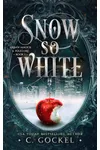
- Snow So White (2022): A retelling of Snow White and Rose Red.
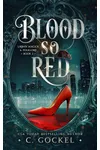
- Blood So Red (2022): Continues the folklore-inspired urban fantasy.
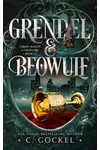
- Grendel & Beowulf (2022): A modern spin on the classic Old English epic.
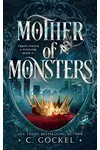
- Mother of Monsters (2023): Expands the mythological threat.
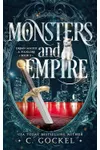
- Monsters & Empire (2023): The high-stakes continuation of the series.
What to Know Before You Start
When starting your journey, keep in mind that C. Gockel's writing style features fast-paced, present-tense narration and highly character-driven dialogue. While the urban fantasy books benefit from a background in Norse mythology, the author's portrayal of Loki is closer to the complex trickster of original folklore than popular cinematic iterations. Standalones like the short story Murphy's Star (2013) offer a quick, self-contained taste of the author's early science fiction writing if you want to sample her style before committing to a multi-book series.