



The Recommended Reading Order: Where to Start
For most readers, the ultimate gateway into Caleb Carr's bibliography is the Dr. Laszlo Kreizler series (commonly known as the Alienist universe). This sequence is best read in publication order, allowing you to follow the development of psychological profiling techniques and the growth of the central cast of characters.
However, navigating Carr's complete works requires sorting through a few common bibliographic misconceptions, including a modern-day successor novel, an authorized Sherlock Holmes pastiche, a disowned debut, and a highly anticipated sequel that was never published before his passing in 2024. Here is the recommended path to experience his fiction at its best:
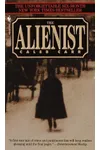
- The Alienist (1994) – Set in 1896 New York City, this groundbreaking novel introduces Dr. Laszlo Kreizler and his investigative team as they track down a brutal serial killer using early forensic psychology.
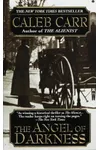
- The Angel of Darkness (1997) – Set in 1897, this sequel shifts the narrator's voice to Stevie Taggart, Kreizler's young ward, as the team hunts for a kidnapped child in a case involving psychological pathology and infanticide.
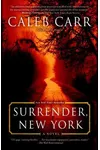
- Surrender, New York (2016) – A contemporary companion thriller. While set in modern-day upstate New York rather than the Gilded Age, the protagonist, criminal psychologist Dr. Trajan Jones, is the world's leading expert on Laszlo Kreizler and uses his pioneering methods to solve a modern string of crimes.
The Dr. Laszlo Kreizler Series (The Alienist Universe)
Caleb Carr's literary legacy is anchored by his depiction of late 19th-century New York. By blending real historical figures (such as Police Commissioner Theodore Roosevelt) with fictional criminologists, Carr created a vivid, atmospheric world that serves as the foundation for the historical profiling subgenre.
The Alienist (1994)
In The Alienist, Carr introduces Dr. Laszlo Kreizler, a specialist in mental pathology (known in the 19th century as an "alienist"). When a series of gruesome murders of boy prostitutes shocks the city, Roosevelt enlists Kreizler to conduct a secret investigation. Alongside New York Times reporter John Schuyler Moore, police department secretary Sara Howard, and detective brothers Marcus and Lucius Detweiler, Kreizler attempts to build a psychological profile of the killer. The novel was a runaway bestseller and was adapted into a major TNT television series in 2018.
The Angel of Darkness (1997)
Taking place a year after the events of the first book, The Angel of Darkness is narrated by Stevie Taggart, a former street urchin taken in by Kreizler. When the infant daughter of a Spanish diplomat is kidnapped, Sara Howard solicits the team's help. The investigation leads them from the slums of Manhattan to the town of Saratoga, uncovering a dark web of psychological abuse, Munchausen syndrome by proxy, and social tensions surrounding the impending Spanish-American War.
The Mystery of the Unpublished Sequel: The Alienist at Armageddon
If you search online databases or retail sites, you may encounter listings for a third historical Kreizler book titled The Alienist at Armageddon (frequently listed with a publication date of 2022 or 2023). This book was never published. Originally envisioned as a story set in 1915 during the First World War—reuniting an older Kreizler with a mature Stevie Taggart—the book was repeatedly delayed and remained unreleased at the time of Carr's death in May 2024. Bibliographic listings for this title are placeholder errors.
Caleb Carr's Standalone Fiction
Beyond the streets of Gilded Age Manhattan, Carr experimented with several genres, ranging from classical detective fiction to futuristic science fiction and medieval fantasy.
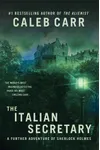
The Italian Secretary (2005)
Commissioned by the estate of Sir Arthur Conan Doyle, The Italian Secretary is an authorized Sherlock Holmes pastiche. In this novel, Holmes and Dr. Watson travel to Scotland's Holyrood Palace to investigate a double murder that eerily mirrors the historical 16th-century assassination of David Rizzio (the Italian secretary to Mary, Queen of Scots). Carr successfully infuses the narrative with his trademark historical precision and a touch of the macabre.
Surrender, New York (2016)
As noted in the recommended path, this contemporary thriller serves as a spiritual and thematic successor to The Alienist. The protagonist, Dr. Trajan Jones, is an outcast criminal psychologist living in rural New York who fights against modern, high-tech forensic shortcuts in favor of Kreizler's classic, subjective profiling methods. The novel bridges the gap between historical crime-solving and modern institutional failures.
Other Fiction Projects
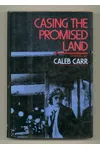
- Casing the Promised Land (1980) – Carr's actual debut novel. This coming-of-age story set in Greenwich Village during the 1970s was heavily autobiographical. Carr later grew to dislike the book, eventually disowning it and letting it go permanently out of print.
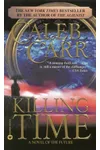
- Killing Time (2000) – A departure into science fiction, this dystopian thriller is set in the year 2023. The plot revolves around a global elite manipulating information, a secret coalition trying to preserve historical truth, and a murder mystery involving a terminally ill scientist.
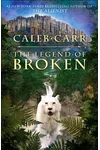
- The Legend of Broken (2012) – An epic, low-fantasy novel set in a mythical medieval fortress-state known as Broken. Combining elements of military strategy, folklore, and adventure, the book showcases Carr's background as a military historian.
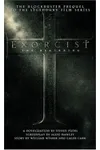
- Exorcist: The Beginning (Story Credit) – While Carr is sometimes listed in catalogs as the author of a book by this title, he did not write the novelization (which was written by Steven Piziks). Carr co-wrote the original story treatment for the prequel film that eventually became Dominion: Prequel to the Exorcist and Exorcist: The Beginning.
- Doctoral Deformation (2017) – A horror/thriller novella that follows a college student participating in a bizarre medical trial with tragic results.
Non-Fiction and Personal Legacy
Before his breakthrough as a novelist, Carr worked as a military historian, contributing to journals and writing historical analyses. Understanding his non-fiction work helps illuminate the deep respect for historical context found in his fiction.
- America Invulnerable (1988) – Co-authored with James O. Goldsborough, this book analyzes the history of American military policy and the quest for national security.
- The Devil Soldier (1992) – A highly praised biography of Frederick Townsend Ward, an American mercenary who led the Ever Victorious Army during the Taiping Rebellion in 19th-century China.
- The Lessons of Terror (2002) – A controversial historical analysis arguing that warfare targeting civilians (terrorism) has historically failed to achieve its objectives and remains a self-defeating strategy.
- My Beloved Monster (2024) – Carr's final published work. This poignant memoir chronicles his deeply personal bond with his rescue cat, Masha, while detailing his own childhood trauma, chronic pain, and his final battle with cancer.
What to Know Before You Start
When starting Caleb Carr's work, it is important to prepare for his dense, academic style. Thanks to his background as a historian, his descriptions of locations, dress, food, and social customs are incredibly detailed. His books do not rush; they build a slow, atmospheric dread.
Readers should also be aware of the intense thematic material. Carr's fiction frequently deals with the psychological aftermath of childhood abuse, violence against children, and institutional corruption. This focus was deeply personal for Carr, who spoke openly about the abuse he suffered at the hands of his Beat Generation father, Lucien Carr. His books are not merely entertainment—they are explorations of how trauma shapes human behavior.