

Where to Start Reading Carl Sagan
Carl Sagan was a master of making the grand scale of the cosmos feel deeply personal. Because almost all of his books are standalone works, there is no single mandatory starting point. However, depending on what you want to get out of your reading experience, there are highly recommended pathways to follow.
The Best Overall Entry Point: Cosmos (1980)
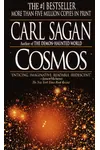
If you want to experience Sagan at his peak, start with Cosmos. Written to accompany the iconic television series, this book is a poetic, philosophical, and historical tour of cosmic exploration. It establishes his unique voice—one of profound humility, curiosity, and wonder—and serves as the foundation for the themes he built upon throughout his career.
The Best Starting Point for Critical Thinking: The Demon-Haunted World (1995)
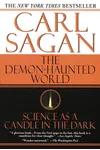
If you are less interested in astronomy and more interested in how to navigate modern misinformation, start with The Demon-Haunted World: Science as a Candle in the Dark. This book is Sagan's passionate defense of scientific skepticism. It introduces his famous "Baloney Detection Kit," a set of tools for identifying fallacies and evaluating claims, making it more relevant today than ever.
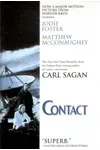
The Best Starting Point for Fiction: Contact (1985)
For those who prefer narrative storytelling, his only novel, Contact, is the perfect starting point. It grounds a classic first-contact scenario in real science and plausible international politics, showing Sagan’s ability to weave scientific concepts into a gripping speculative drama.
Recommended Reading Pathways
Once you have finished your first book, you can branch out into dedicated reading pathways depending on your interests:
Pathway 1: The Cosmic Vision (Astronomy & Humanity’s Future)
Follow this path to trace Sagan’s thoughts on space exploration and our place in the universe. These books build on the awe-inspiring style of his television work.
- Cosmos (1980) – The essential starting point that introduces the cosmic calendar and the history of science.
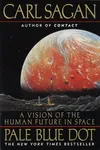
- Pale Blue Dot (1994) – A spiritual sequel to Cosmos, focusing on the future of human spaceflight, our solar system, and the vulnerability of Earth.
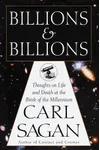
- Billions & Billions (1997) – Sagan's final book, consisting of essays that tackle environmental issues, nuclear threats, and personal reflections on mortality.
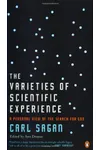
- The Varieties of Scientific Experience (2006) – Published posthumously, this collection of his Gifford Lectures explores the relationship between science, philosophy, and religion.
Pathway 2: The Skeptic’s Journey (Skepticism & Human Nature)
This track focuses on the human mind, how we perceive reality, and the tools we need to protect ourselves from deception and superstition.
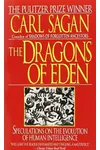
- The Dragons of Eden (1977) – An award-winning exploration of the evolution of human intelligence, brain physiology, and why we dream.
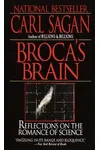
- Broca's Brain (1979) – A collection of essays defending science against pseudoscience, covering everything from ancient astronauts to the boundaries of space and time.
- The Demon-Haunted World (1995) – The ultimate guide to rational thinking and skeptical inquiry in everyday life.
Pathway 3: The Search for Cosmic Neighbors (Astrobiology & SETI)
Follow this path to explore the scientific search for life beyond Earth, a central theme of Sagan's academic and popular career.
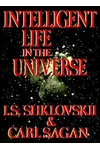
- Intelligent Life in the Universe (1966) – A fascinating historical collaboration with Soviet astrophysicist I.S. Shklovsky.
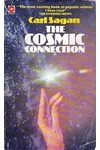
- The Cosmic Connection (1973) – A highly accessible early work outlining the possibility of planetary exploration and contact.
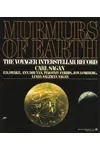
- Murmurs of Earth (1978 / 1983) – The story behind the creation of the Voyager Golden Record, co-authored with the team that selected the content.
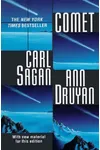
- Comet (1985) – A beautifully illustrated, co-authored deep dive into the history, science, and myth of comets, published ahead of Halley's Comet's return.
- Contact (1985) – The fictional culmination of Sagan's thoughts on how humanity might handle a real signal from the stars.
What to Know Before You Start: Collaborations & Tone
Carl Sagan was a deeply collaborative writer. While his solo works are widely celebrated, his partnerships shaped some of his most influential books. His most frequent collaborator was his wife, Ann Druyan, who co-authored Comet and Shadows of Forgotten Ancestors, co-created the Cosmos television series, and edited his posthumous works like The Varieties of Scientific Experience. Understanding their partnership helps explain the warm, humanist philosophy that anchors his writing.
Sagan also partnered with international experts to bridge political divides during the Cold War. His 1966 book Intelligent Life in the Universe was written with Soviet scientist I. S. Shklovsky via correspondence, serving as a remarkable example of cooperation. Later, in 1984, he joined forces with Paul R. Ehrlich, Donald Kennedy, and Walter Orr Roberts to write The Cold and the Dark, warning the public about the scientific consequences of a nuclear winter.
A Note on Database Errors and Misattributions
When searching for Carl Sagan's bibliography online, you will frequently encounter database errors that list him as the primary author of books he only contributed to or was quoted in. To save you time and confusion, here is what you need to know about these misattributions:
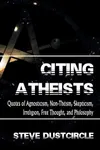
- Citing Atheists (2015): This is not a book written by Sagan. It is a compilation of quotations on agnosticism and free thought compiled by Steve Dustcircle. Sagan is merely quoted within its pages. Furthermore, Sagan famously resisted the label of "atheist," preferring "agnostic" as he believed asserting the non-existence of a deity required a level of proof he did not possess.
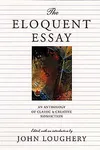
- The Eloquent Essay (2000): This is an anthology of classic essays edited by John Loughery. Sagan did not write or edit this book; it simply contains a reprint of his famous essay "The Fine Art of Baloney Detection."
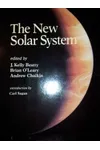
- The New Solar System (1981): Edited by J. Kelly Beatty, Brian O'Leary, and Andrew Chaikin, this is a planetary science reference work. Sagan only wrote the introduction to this collection, but databases often list him as an author.
Carl Sagan Books in Publication Order
Standalone Novels
- Contact (1985)
Non-Fiction Books
- Intelligent Life in the Universe (1966) – Co-authored with I. S. Shklovsky.
- Planets (1966) – Co-authored with Jonathan Norton Leonard for the Time-Life Science Library.
- The Cosmic Connection: An Extraterrestrial Perspective (1973) – Edited by Jerome Agel.
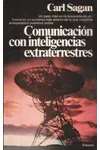
- Communication with Extraterrestrial Intelligence (1974) – Edited by Sagan, compiling the proceedings of a joint Soviet-American conference.
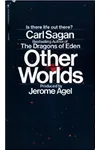
- Other Worlds (1975) – A look at the worlds of our solar system and the possibilities of alien life.
- The Dragons of Eden: Speculations on the Evolution of Human Intelligence (1977) – Winner of the Pulitzer Prize for General Non-Fiction.
- Broca's Brain: Reflections on the Romance of Science (1979) – A collection of essays on science, borders of knowledge, and skepticism.
- Cosmos (1980) – The companion book to the landmark PBS television series.
- Murmurs of Earth: The Voyager Interstellar Record (1983) – Co-authored with Frank Drake, Ann Druyan, Jon Lomberg, Linda Salzman Sagan, and Timothy Ferris.
- The Cold and the Dark: The World After Nuclear War (1984) – Co-authored with Paul R. Ehrlich, Donald Kennedy, and Walter Orr Roberts.
- Comet (1985) – Co-authored with Ann Druyan.
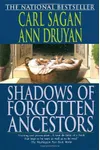
- Shadows of Forgotten Ancestors: A Search for Who We Are (1992) – Co-authored with Ann Druyan.
- Pale Blue Dot: A Vision of the Human Future in Space (1994)
- The Demon-Haunted World: Science as a Candle in the Dark (1995)
- Billions & Billions: Thoughts on Life and Death at the Brink of the Millennium (1997) – Posthumously published, containing Sagan's final essays and an epilogue by Ann Druyan.
- The Varieties of Scientific Experience: A Personal View of the Search for God (2006) – Posthumously published, edited by Ann Druyan.