








Where to Start with Carl Sandburg
Carl Sandburg was a true American polymath. He was a Pulitzer Prize-winning poet, a monumental biographer, a collector of folk music, a children's author, and even wrote a massive historical novel. Because his work spans so many distinct genres, the best starting point depends entirely on what you want to experience:
- For Poetry Lovers: Start with Chicago Poems (1916). This is the collection that put Sandburg on the map, capturing the industrial muscle, grit, and beauty of early 20th-century America.
- For History Buffs: Begin with the condensed one-volume edition of his Lincoln biography, or jump straight into the two-volume Abraham Lincoln: The Prairie Years (1926) for the full literary experience.
- For Families and Whimsy: Pick up Rootabaga Stories (1922), a delightful collection of American fairy tales set in a mythical Midwestern landscape.
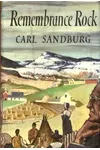
- For Fiction Enthusiasts: Read his single standalone novel, Remembrance Rock (1948), which spans three centuries of the American dream.
The Abraham Lincoln Biography Reading Order
Carl Sandburg spent decades researching and writing his monumental biography of Abraham Lincoln. Rather than a dry historical record, Sandburg wrote with the lyricism of a poet and the meticulous detail of a devoted scholar. The project is divided into two primary parts, comprising six volumes in total, which are best read in chronological order:
- Abraham Lincoln: The Prairie Years (1926 – 2 Volumes): This covers Lincoln's early life, his youth, his legal career in Illinois, and his rise to prominence, ending just as he departs for Washington, D.C. to assume the presidency.
- Abraham Lincoln: The War Years (1939 – 4 Volumes): This massive four-volume segment focuses entirely on Lincoln's presidency, his leadership during the American Civil War, and his assassination. It won the Pulitzer Prize for History in 1940.
To supplement this core reading sequence, Sandburg also published several companion works:
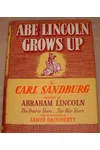
- Abe Lincoln Grows Up (1928): A children's adaptation focusing on Lincoln's youth, adapted directly from the first chapters of The Prairie Years.
- Mary Lincoln: Wife and Widow (1932): A non-fiction look at the complicated life of the First Lady.
- Storm Over The Land (1942): A condensed one-volume history of the Civil War taken largely from The War Years.
- A Lincoln Preface (1953): An essay serving as an introductory profile of Lincoln.
- Lincoln Collector (2012): A posthumously published collection detailing the history of Oliver R. Barrett's Lincoln collection, which Sandburg utilized heavily during his research.
The Rootabaga Stories Order
Frustrated by the European focus of traditional fairy tales (which were filled with kings, castles, and knights), Sandburg wanted to create stories rooted in the American landscape. The result was the Rootabaga series, filled with skyscraper-high corn, agricultural whimsy, and characters with names like the Potato Face Blind Man and Gimme the Ax.
The primary children's books and stories should be read in this sequence:
- Rootabaga Stories (1922)
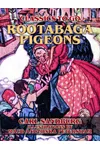
- Rootabaga Pigeons (1923)
- More Rootabaga Stories (1993): A collection of stories published posthumously that builds on the original universe.
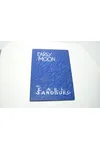
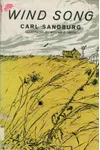
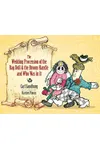
Other companion pieces for children include Early Moon (1930) and Wind Song (1960), which are collections of poetry selected specifically for younger readers, and the illustrated storybook The Wedding Procession of the Rag Doll & The Broom Handle and Who Was in It (1967).
His Singular Novel: Remembrance Rock (1948)
If you are looking for fiction, Sandburg wrote only one standalone novel: the massive historical epic Remembrance Rock (1948). Commissioned originally as a film concept for Metro-Goldwyn-Mayer, the story spans from the Pilgrims arriving in 1607 to the aftermath of World War II in 1945. It is a sprawling, ambitious tribute to the resilience of the American spirit and the preservation of democracy through generations. While critics were mixed on its cinematic structure and length, it is a fascinating milestone in Sandburg's bibliography.
The Poetry Collections: Publication Order
Sandburg is first and foremost remembered as the "Poet of the People." Reading his collections in publication order allows you to see how his style and social commentary evolved alongside the nation itself:
- Incidentals (1904) & In Reckless Ecstasy (1904): Rare early pamphlets containing his earliest verses.
- Chicago Poems (1916): His breakthrough collection featuring famous poems like "Chicago" and "Fog."
- Cornhuskers (1918): A focus on the Midwest prairies and rural life, which earned him a special Pulitzer Prize citation.
- Smoke and Steel (1920): A lyrical exploration of industrial labor, steel mills, and urban sweatshops.
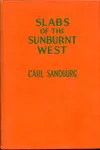
- Slabs of the Sunburnt West (1922): Further explorations of the expanding American frontier.
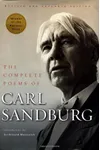
- The Complete Poems (1950): A definitive compilation of his poetic career up to that point, which earned him the 1951 Pulitzer Prize for Poetry.
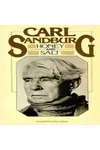
- Honey and Salt (1963): His final collection published during his lifetime, containing reflective and romantic themes.
The American Songbag and Folk Music
An often overlooked aspect of Sandburg's career is his work as a musicologist. He toured the country singing folk ballads while accompanying himself on the guitar. He collected these traditional songs in two major publications:
- The American Songbag (1927): A groundbreaking anthology containing the sheet music and histories of 280 American folk songs, including spirituals, cowboy songs, and work ballads.
- New American Songbag (1950): An updated expansion of his folk music catalog.