






The Recommended Reading Paths for Carlos Castaneda
Deciding how to read Carlos Castaneda’s books comes down to what you want to get out of his shamanic adventures. While all twelve of his main books focus on his apprenticeship with the Yaqui shaman Don Juan Matus, the series shifts dramatically in tone, focus, and philosophy over the three decades it was published. There are two primary paths readers take when diving into this mind-bending world.
Path 1: The Chronological Publication Order (Recommended)
For most readers, the best approach is to follow the books exactly as they were published. Reading in publication order allows you to experience the apprenticeship just as Castaneda presented it to the world. You start with his initial academic skepticism, move through his early encounters with psychotropic plants, and slowly transition into the abstract, highly complex Toltec philosophy of his later years. This path ensures you don't get lost in the complex terminology introduced later in the series.
Path 2: The Philosophical Entry (Starting with Journey to Ixtlan)
An extremely popular alternative is to skip the first two books and start directly with the third, Journey to Ixtlan. Castaneda’s first two works focus heavily on altered states of consciousness induced by psychotropic plants (peyote and datura). However, in Journey to Ixtlan, Castaneda undergoes a massive shift in perspective, clarifying that the plants were merely temporary tools to break his stubborn, logical mind. Starting here highlights the core spiritual and philosophical concepts of the 'Warrior’s Way' without the heavy focus on psychedelics.
Carlos Castaneda's Books in Publication Order
Here is the complete order of Carlos Castaneda's main works based on their original publication dates, which represents the standard narrative progression of his apprenticeship:
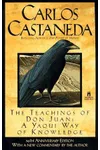
- The Teachings of Don Juan: A Yaqui Way of Knowledge (1968)
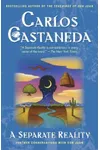
- A Separate Reality: Further Conversations with Don Juan (1971)
- Journey to Ixtlan: The Lessons of Don Juan (1972)
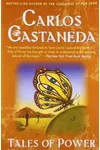
- Tales of Power (1974)
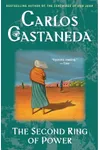
- Second Ring of Power (1977)
- Eagle's Gift (1981)
- Fire from Within (1984)
- The Power of Silence (1987)
- The Art of Dreaming (1993)
- Magical Passes (1997)
- The Wheel of Time (1998)
- The Active Side of Infinity (1999)
The Four Phases of Don Juan’s Teachings
To help you pace your reading, it is helpful to look at Castaneda's bibliography as four distinct chronological phases, each representing a different stage of his spiritual evolution.
Phase 1: The Psychotropic Apprenticeship (1968–1972)
This phase includes the first three books. Here, Castaneda is still an anthropology student at UCLA trying to classify shamanic herbs. The tone is relatively academic, and the narrative focuses on his struggles to comprehend Don Juan’s 'non-ordinary reality'. By the time you finish Journey to Ixtlan, the focus shifts entirely to mental discipline and personal power.
Phase 2: The Sorcery Group & Transition (1974–1981)
Spanning Tales of Power, Second Ring of Power, and Eagle's Gift, this phase represents a dramatic shift. Castaneda is introduced to the wider circle of apprentices, including the female sorcerers. He learns about the 'nagual' (the leader and the unseen realm) and the 'tonal' (the physical, structured world). The narrative builds to a physical and symbolic leap into the unknown, cementing his role as the new leader of the group.
Phase 3: The Deep Philosophy of the Nagual (1984–1993)
In Fire from Within, The Power of Silence, and The Art of Dreaming, the books become deeply philosophical and esoteric. Castaneda explores concepts like the 'assemblage point' (how humans perceive reality), the 'inner silence' needed to access shamanic power, and the practice of conscious dreaming to explore alternate dimensions. These books are highly recommended for readers looking for abstract spiritual metaphysics.
Phase 4: Practical Applications & Reflections (1997–1999)
The final phase of Castaneda's life and career focuses on legacy and practice. Magical Passes introduces Tensegrity, a modernized physical movement system based on shamanic postures. The Wheel of Time acts as a curated compilation of quotes and reflections from his previous works, while the posthumously published The Active Side of Infinity serves as a collection of memorable events and life reviews from his long journey.
The Sister Sorcerers: Companion Works by Female Apprentices
Castaneda was not the only apprentice of Don Juan. Two female members of his inner circle, Taisha Abelar and Florinda Donner-Grau, also wrote books detailing their own training under Don Juan and his companion Clara Grau. These books offer a vital female perspective on the same magical universe and are highly recommended companion reads:
- Florinda Donner-Grau: Her most famous companion book is Being-in-Dreaming: An Initiation into the Sorcerers' World (1991), which details her initiation into the group. She also wrote Shabono (1982) and The Witch's Dream (1987).
- Taisha Abelar: She authored The Sorcerer's Crossing: A Woman's Journey (1992), which provides a detailed, practical look at the physical and mental training required for female sorcerers in Don Juan's lineage.
What to Know Before You Start
Before diving into the Sonoran desert with Don Juan, it is helpful to keep a few context points in mind. First, there is a massive scholarly debate regarding the authenticity of Castaneda's work. While initially published as non-fiction anthropological fieldwork, critics and anthropologists later concluded that the books are largely works of allegorical fiction, as no proof of Don Juan's existence was ever found. Second, you do not need to read the companion works or the anthologies (such as Voices and Visions or The Portable Sixties Reader) to understand the main story. Stick to the core 12 books, decide whether you want to start with the herbal teachings of book one or the warrior rules of book three, and enjoy the journey into the unknown.