






Where to Start Reading Carlos Fuentes
If you are new to Carlos Fuentes, diving straight into his most complex, doorstop novels can be daunting. The best way to experience his genius is to start with his two most famous and accessible works from the height of the Latin American Boom. They represent two sides of his literary persona: the hauntingly gothic and the historically epic.
Your first stop should be Aura (1962). This short, eerie novella is a masterpiece of magical realism and gothic suspense. Written in a rare second-person singular perspective ("you"), it pulls you directly into a dark, decaying Mexico City mansion where a young historian is hired to edit the memoirs of a deceased general, only to become entangled with the general's eccentric widow and her mesmerizing niece, Aura. It is brief, atmospheric, and the perfect introduction to Fuentes's obsession with youth, aging, and fluid identity.
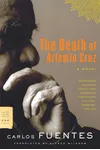
Once you have finished Aura, move on to his magnum opus, The Death of Artemio Cruz (1962). This novel is a sweeping, fragmented retrospective of modern Mexican history told through the memories of a corrupt, dying tycoon and former revolutionary soldier. By jumping across different eras of the protagonist's life, Fuentes exposes the betrayals of the Mexican Revolution and the complex forces that shaped the modern nation. It is experimental but deeply rewarding, serving as the ultimate gateway to his larger historical novels.
The Core Framework: 'La Edad del Tiempo' (The Age of Time)
Unlike many contemporary writers, Carlos Fuentes did not write straightforward, serialized sequels. Instead, he spent decades organizing his narrative output into a conceptual macro-cycle called La Edad del Tiempo (The Age of Time). Inspired by Honoré de Balzac's La Comédie Humaine, Fuentes viewed his novels, short stories, and essays not as isolated pieces, but as parts of a grand, circular tapestry that collectively mapped the human experience, myth, and Latin American history.
First introduced in the late 1980s, Fuentes continually rearranged and expanded this cycle throughout his life, assigning and reassigning books to thematic sub-categories like "El mal del tiempo" (for supernatural and fantastic tales) or "Los días enmascarados" (for stories of masked identity). Because this project was thematic and circular rather than linear, there is no official chronological order required to read the cycle. Instead, books echo and reference one another across centuries, allowing you to trace recurring motifs of power, memory, and hybrid cultural identity in whatever order you choose.
The Romantic Time Trilogy (El Tiempo Romántico)
For readers looking for traditional subseries, the closest Fuentes came was a projected historical trilogy titled El tiempo romántico (The Romantic Time). This series was designed to chronicle a century of political and social transformation in Latin America, bridging the gap between the independence movements of the early 19th century and the outbreak of the Mexican Revolution in 1910.
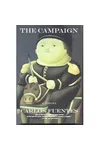
The series begins with The Campaign (1991), which follows a wealthy, idealistic young man from Buenos Aires who joins the fight against Spanish colonial rule. The book serves as a brilliant exploration of the revolutionary ideals and harsh realities that shaped South America's birth. While Fuentes explicitly planned two follow-up volumes to complete this epic historical cycle, he ultimately did not publish them under the formal banner of this trilogy, leaving The Campaign to stand as a unique, self-contained historical epic.
Supernatural Companion Pieces: Aura and Vlad
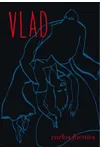
Another fascinating sub-reading path focuses on Fuentes's contributions to gothic and vampire literature. Decades after publishing Aura, Fuentes returned to the uncanny with Vlad (2004). Though they do not share characters, the two novellas function as thematic companion pieces.
Both stories utilize a classic gothic setup: an unsuspecting professional (a historian in Aura, a real estate lawyer in Vlad) is summoned to a dark, shuttered house in Mexico City under the pretense of work. While Aura deals with witchcraft, spiritual possession, and the illusion of eternal youth, Vlad is Fuentes's modern, satirical spin on the Dracula myth. In Vlad, Count Vlad Radu relocates to a contemporary Mexican suburb, bringing his ancient bloodlust to the local bourgeoisie. Reading these two novellas back-to-back offers a thrilling look at how Fuentes's treatment of the supernatural evolved over a forty-year period.
Navigating the Publication Order of Carlos Fuentes's Novels
For readers who want to experience Fuentes's development as a writer, following his standalone novels in publication order is a highly rewarding journey. This path allows you to see how he moved from mid-century realism to experimental high-modernism, and finally to political satire and reflective family sagas in his later years.
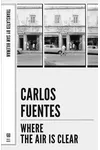
- Where the Air is Clear (1958) – His debut novel, offering a panoramic, collage-like portrait of Mexico City's diverse social classes.
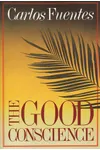
- The Good Conscience (1959) – A more traditional, realistic novel exploring provincial hypocrisy and bourgeois family expectations.
- Aura (1962) and The Death of Artemio Cruz (1962) – The Boom-era breakthroughs that secured his global reputation.
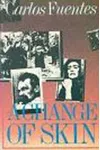
- A Change of Skin (1967) – An experimental, multi-layered novel about a road trip that confronts memories of World War II and the Holocaust.
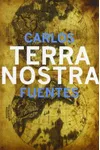
- Terra Nostra (1975) – A massive, demanding 800+ page epic that reimagines the Spanish Empire, the court of Philip II, and the conquest of the Americas. Save this complex masterpiece for after you are comfortable with his style.
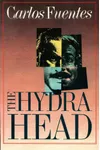
- The Hydra Head (1978) – A fast-paced, entertaining political spy thriller focusing on international espionage and the battle over Mexico's oil reserves.
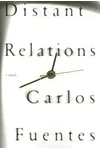
- Distant Relations (1980) – A haunting mystery connecting a French family with their Creole counterparts in the Americas.
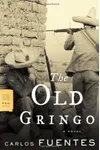
- The Old Gringo (1985) – A highly acclaimed, accessible historical novel based on the real-life disappearance of American writer Ambrose Bierce during the Mexican Revolution.
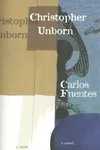
- Christopher Unborn (1986) – A wild, satirical, and linguistic tour de force narrated by an unborn child in a dystopian, polluted Mexico City.
- The Campaign (1991) – The first volume of his projected historical trilogy.
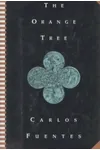
- The Orange Tree (1993) – A collection of five novellas centering on the circle of Spanish conquest and colonization.
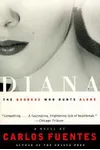
- Diana (1994) – A passionate, semi-autobiographical novel detailing a doomed love affair between a Mexican writer and an American actress.
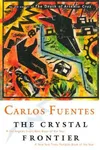
- The Crystal Frontier (1995) – A novel-in-stories focusing on the human, political, and economic relationships along the US-Mexico border.
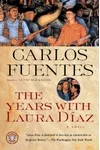
- The Years with Laura Diaz (1999) – A sprawling companion piece to Artemio Cruz, tracing the 20th century through the eyes of a politically active woman and photographer.
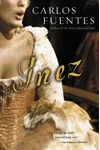
- Inez (2000) – A brief, musical novel blending a conductor's obsession with opera and an ancient love story.
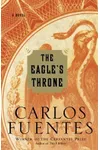
- The Eagle's Throne (2002) – A sharp, epistolary political satire set in a near-future Mexico where the US has cut off all electronic communications.
- Vlad (2004) – His modern vampire novella.
- Happy Families (2006) – A choral work exploring the fractured lives of families in contemporary Mexico.
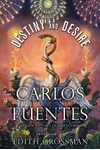
- Destiny and Desire (2008) – A novel narrated by a severed head, looking back at the lives of two friends navigating political power and corruption.
- Adam in Eden (2009) – A late-career satire addressing the war on drugs and political corruption in Mexico.
What to Know Before You Start
Before stepping into the world of Carlos Fuentes, it is helpful to keep a few key concepts in mind. First, Fuentes is a writer deeply obsessed with the circularity of time. In his works, the past is never truly dead; instead, Aztec myths, Spanish colonial trauma, and revolutionary struggles constantly erupt into the modern day. If you find yourself confused by sudden shifts in timeline or perspective, remember that this temporal fluidity is a deliberate choice designed to reflect how history shapes current identity.
Second, his work spans a wide range of readability. Books like The Old Gringo, The Hydra Head, and Aura are relatively straightforward and narrative-driven. In contrast, epics like Terra Nostra and Christopher Unborn are highly demanding, experimental, and filled with literary allusions, stream-of-consciousness prose, and linguistic wordplay. Start small, build your familiarity with his themes, and work your way up to his grandest literary experiments.