
Where to Start Reading Carola Saavedra
Because Carola Saavedra’s novels are standalones rather than part of a continuous series, you have complete freedom in how you approach her bibliography. However, your starting point will largely depend on which language you read.
For English-Language Readers: Start with "Blue Flowers"
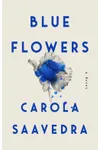
If you are reading in English, your primary entry point is Blue Flowers (originally published in Portuguese as Flores azuis in 2008 and translated by Daniel Hahn in 2020). It is her only full-length novel available in English. This epistolary work is an excellent introduction to Saavedra’s signature style—intimate, fragmented, and emotionally raw. The story unfolds through a series of letters sent to a man by an anonymous woman who was once his lover, alongside the narrative of a man recovering from a divorce. It is a haunting exploration of grief, connection, and the gaps in human relationships.
If you want a taste of her other works in English, you can search for the anthology The Best of Young Brazilian Novelists (Granta 121, 2012), which features a translated excerpt of her debut novel, Toda terça, under the title "Every Tuesday" (translated by Alison Entrekin).
For Portuguese-Language Readers: Two Paths
If you can read her work in its original Portuguese, you have two excellent choices for how to begin:
- The Chronological Path: Start with her debut novel Toda terça (2007) and follow her evolution as a writer. This allows you to see how her narrative structures transition from relatively straightforward character studies to highly experimental, fragmented, and multi-layered works.
- The Modern Masterpiece Path: Start with Com armas sonolentas (2018) or O manto da noite (2022). These novels showcase Saavedra at the height of her creative power, weaving complex narratives about ancestry, female identity, and displacement.
Complete Publication Order of Works
While her books do not share characters or plotlines, reading them in order of release highlights Saavedra's developing interest in experimental forms, diaries, theatrical elements, and themes of cultural exile. Here is her complete bibliography in publication order:
Fiction and Essay Collections
- Do lado de fora (2005) – Saavedra’s debut book, a collection of short stories that first established her focus on interpersonal friction and internal emotional landscapes.
- Toda terça (2007) – Her debut novel, which explores the psychological complexities of its characters through a series of weekly encounters.
- Flores azuis (Blue Flowers) (2008) – Her breakthrough epistolary novel that won the APCA Best Novel Award and was translated into English in 2020.
- Paisagem com dromedário (Landscape with Dromedary) (2010) – Set on a volcanic island, this novel centers on a woman processing grief and art through audio recordings. It won the Rachel de Queiroz Award.
- O inventário das coisas ausentes (Inventory of Absent Things) (2014) – A highly experimental novel split into notebooks and fiction, focusing on how we reconstruct a person who is no longer present.
- Com armas sonolentas (With Sleepy Weapons) (2018) – A powerful novel tracking three women whose lives are connected by themes of motherhood, abandonment, and exile.
- O Mundo Desdobrável: Ensaios para depois do Fim (2021) – A non-fiction collection of essays exploring literature, ancestral knowledge, feminine writing, and the modern world.
- O manto da noite (The Mantle of the Night) (2022) – A dreamlike journey through the Andes that blends prose, diaries, and theatrical dialogue to explore ancestry and collective memory.
What to Know Before You Start
Saavedra's writing is heavily influenced by her personal experiences of movement and displacement. Born in Chile in 1973, she moved to Brazil at the age of three, and subsequently lived in Spain, France, and Germany. This multicultural background is reflected in her characters, who frequently find themselves living between worlds, grappling with exile, or trying to reconstruct their identity in unfamiliar spaces.
Readers should expect experimental structures. Rather than linear narratives, Saavedra utilizes epistolary formats, audio transcripts, split notebooks, and even theatrical scripts. Her prose is dense, poetic, and focused more on the internal states of her characters than external plot progression. If you enjoy character-driven, lyrical contemporary literature in the vein of Clarice Lispector, Saavedra is a perfect fit.