


Where to Start Reading Carola Salisbury
If you are new to the Gothic romance novels of Carola Salisbury, the best place to begin is with her two most celebrated and widely read works: Dark Inheritance (1975) or The Winter Bride (1978). Because all of Salisbury's novels are written as standalone stories, you do not need to worry about character continuity or overarching series plots. Starting with these two books will give you an immediate taste of her signature atmospheric prose, Cornish coastal settings, and intelligent heroines facing ancestral mysteries.
The Recommended Reading Order
Since the novels are not connected, reading them in chronological order of publication is the most natural path. This allows you to appreciate how the author's style transitioned from traditional Victorian Gothic settings to broader historical backdrops, including Edwardian London, late 19th-century Venice, and revolutionary St. Petersburg. Below is the complete bibliography of the novels published under the Carola Salisbury pseudonym.
Publication Order of Standalone Novels
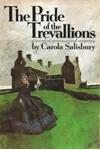
- The Pride of the Trevallions (1975) – Set in Cornwall, this debut established Salisbury's Gothic credentials. It is also known under the alternative title Mallion's Pride.
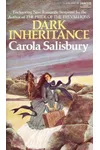
- Dark Inheritance (1975) – The story of Susannah Button, an orphaned governess who takes a post at the wealthy Dewaine family's grand Cornish estate, only to uncover a dark past that links to her own lineage.
- Dolphin Summer (1977) – Follows Annabel Trewella, a companion to an invalid on a luxury steam yacht sailing to North Africa, who discovers the ship hides deadly secrets.
- Schloss Mallion (1977) – A release associated with the German-language editions of Mallion's Pride / The Pride of the Trevallions, often listed separately in digital bibliographies.
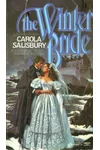
- The Winter Bride (1978) – Charity Carew becomes a secretary at a grim castle on the Cornish coast and is drawn into a terrifying legend about a beast that refuses to die.
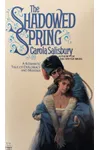
- The Shadowed Spring (1980) – Shifts the focus to Russia and Paris, following an eighteen-year-old girl named Anni who is drawn into political intrigue and revolutionary activities.
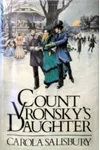
- Count Vronsky's Daughter (1980) – A creative historical romance following Anni, the daughter of Anna Karenina and Count Vronsky, as she tries to escape her mother's scandalous legacy in St. Petersburg and Paris.
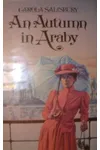
- An Autumn in Araby (1983) – A historical romance set against an exotic Middle Eastern backdrop, blending classic Gothic suspense with travelogue elements.
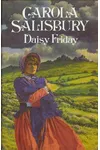
- Daisy Friday (1984) – A later, scarcer historical novel focusing on themes of family division, art, and political unrest.
- A Certain Splendour (1985) – An Edwardian-era tale following Faith Dangerfield, a wealthy commodore's daughter who must work as a hotel maid after her family loses its fortune, set against the backdrop of World War I.
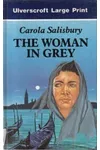
- Woman in Grey (1987) – Published posthumously, this Venetian Gothic mystery follows Isolda Mazzini-Forsca as she attempts to clear her name of murder in a hostile city.
Bibliographical Caveats & the Pierre Salinger Mix-Up
When searching online bibliographies or library catalogs, you will frequently find a book titled With Kennedy (published in 1966) listed as the first book by Carola Salisbury. This is a prominent database error. With Kennedy is actually a non-fiction memoir written by Pierre Salinger, the press secretary to President John F. Kennedy. Because of alphabetical library sorting or metadata issues, Salinger's memoir was erroneously merged with Salisbury's catalog. Carola Salisbury did not publish any books under this name until 1975.
What to Know Before You Start
Behind the pen name Carola Salisbury was John Michael "Mike" Butterworth (1924–1986). Butterworth was a highly versatile British writer and editor, best known in the comic book industry as the creator and scriptwriter of the legendary science-fantasy strip The Rise and Fall of the Trigan Empire. He also wrote crime fiction under his own name and published under other female pseudonyms, including Sarah Kemp and Janette Seymour.
Butterworth's background in visual scripting translated perfectly into his Gothic romances. Salisbury's books are highly descriptive, focusing heavily on setting, architectural detail, and dramatic pacing. The heroines are consistently written as strong, resourceful, and capable, distinguishing them from the more passive damsels in distress common in early Gothic pulp fiction. While the tone is atmospheric and suspenseful, it maintains a classic, accessible charm that appeals to fans of Victoria Holt and Phyllis A. Whitney.