




How to Navigate the Impossible Crimes of Carter Dickson
Carter Dickson is the most famous pen name used by John Dickson Carr, widely regarded as the ultimate master of the "locked-room" mystery. Under this pseudonym, Carr created some of the most ingenious, atmospheric, and baffling puzzles in the history of detective fiction. The primary star of the Carter Dickson library is Sir Henry Merrivale (affectionately known as "H.M." or "The Old Man"), a boisterous, cigar-chomping, aristocrat-sleuth whose antics become increasingly slapstick as the series progresses. In addition to Sir Henry, the pseudonym covers short story collections featuring Colonel March and a handful of fascinating standalone novels.
Because these golden age mysteries are episodic, you do not need to strictly read them in order to understand the plots. However, reading them in publication order allows you to follow the gradual transition of Sir Henry Merrivale from a grumpier, more serious figure into an eccentric, comical legend. If you prefer to jump straight to the highest-quality puzzles, you can opt for a curated, highlight-first approach.
The Best Starting Points for New Readers
If you want the absolute best introduction to the Carter Dickson universe, we recommend starting with one of these entry points:
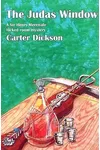
- The Judas Window (1938): Widely considered the pinnacle of the Sir Henry Merrivale series and one of the finest locked-room puzzles ever crafted. The story involves a man found dead inside a locked room with no way in or out, leaving a single suspect who claims innocence. Sir Henry's courtroom defense and explanation of the "Judas Window" is legendary.
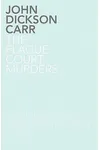
- The Plague Court Murders (1934): The debut novel for both the Carter Dickson pen name and Sir Henry Merrivale. This is the ideal starting point if you want to experience the atmospheric, gothic-tinged beginnings of the series and watch the characters grow from the start.
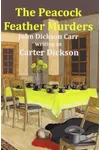
- The Peacock Feather Murders (1937): Also published under the title The Ten Teacups, this novel features a mind-bending puzzle where a murder takes place in a room under constant police observation. It is a perfect showcase of Dickson's flair for the impossible.
Publication Order of the Sir Henry Merrivale Books
For readers who wish to tackle the series as it was originally presented, here is the complete publication order. Note that many of these books were published under alternate titles in the US and UK:
- The Plague Court Murders (1934)
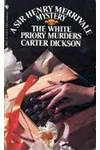
- The White Priory Murders (1934)
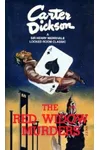
- The Red Widow Murders (1935)
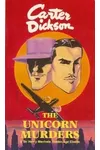
- The Unicorn Murders (1935)
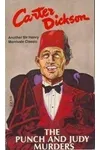
- The Punch and Judy Murders / The Magic Lantern Murders (1936)
- The Peacock Feather Murders / The Ten Teacups (1937)
- The Judas Window / The Crossbow Murder (1938)
- Death in Five Boxes (1938)
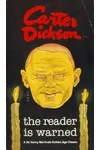
- The Reader Is Warned (1939)
- And So to Murder (1940)
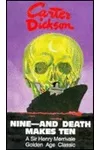
- Nine and Death Makes Ten / Murder in the Submarine Zone (1940)
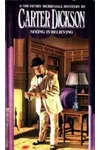
- Seeing Is Believing / Cross of Murder (1941)
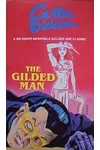
- The Gilded Man / Death and the Gilded Man (1942)
- She Died A Lady (1943)
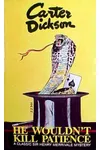
- He Wouldn't Kill Patience (1944)
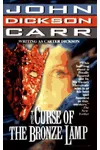
- The Curse of the Bronze Lamp / Lord of the Sorcerers (1945)
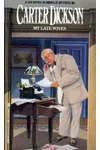
- My Late Wives (1946)
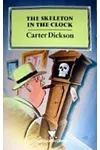
- The Skeleton in the Clock (1948)
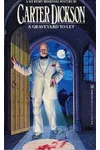
- A Graveyard to Let (1949)
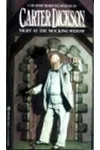
- Night at the Mocking Widow (1950)
- Behind the Crimson Blind (1952)
- The Cavalier's Cup (1953)
- Merrivale, March and Murder (1991)
Merrivale, March and Murder is a posthumous collection edited by Douglas G. Greene that gathers rare short stories featuring Sir Henry Merrivale and Colonel March, serving as a delightful final entry to the detective's career.
The Department of Queer Complaints (Colonel March)
Aside from Sir Henry Merrivale, Carter Dickson introduced another memorable investigator: Colonel March. Operating out of Scotland Yard's fictional Department D-3 (popularly known as the Department of Queer Complaints), March investigates cases that seem completely bizarre, supernatural, or flatly impossible.
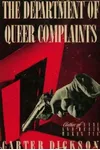
- The Department of Queer Complaints (1940): This is the key collection containing the primary Colonel March stories, such as "The New Invisible Man" and "The Footprint in the Sky." It is highly recommended for readers who enjoy shorter, fast-paced puzzles.
The character of Colonel March was so popular that it was adapted into the 1954 television series Colonel March of Scotland Yard, starring horror legend Boris Karloff in the title role.
Carter Dickson Standalone Novels
For a break from recurring detectives, Dickson penned three standalone novels that showcase different sides of his writing style:
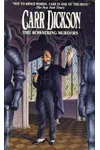
- The Bowstrings Murders (1933): This was actually the very first novel published under the Carter Dickson pseudonym. It is a dark, atmospheric castle mystery that predates the introduction of Sir Henry Merrivale.
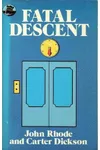
- Fatal Descent / Drop to His Death (1939): A unique collaborative novel co-authored with British mystery writer John Rhode (Cecil Street). This book features a murder committed inside a hermetically sealed elevator as it travels down its shaft, requiring two different investigators to combine their talents to crack it.
- Fear is the same (1956): The final book published under the Carter Dickson name. It stands out as an unusual blend of historical mystery and time travel, where two people from the 1950s find themselves transported back to Regency England in 1795.
What to Know Before You Start
Before diving into the world of Carter Dickson, keep the following in mind:
The Locked-Room Lecture
While John Dickson Carr's most famous "locked-room lecture" occurs in The Hollow Man (published under his own name and featuring Dr. Gideon Fell), the Carter Dickson books share the exact same philosophy of fair-play clueing. The author gives you all the tools required to solve the puzzle, but uses misdirection to hide the truth in plain sight.
Humor and Slapstick
In the early novels (such as The Plague Court Murders), Sir Henry Merrivale is a relatively serious character. However, as the series progresses into the 1940s and 1950s, Carr injects more and more physical comedy, culminating in books like The Cavalier's Cup, which function almost as light farces. If you prefer serious, gothic detection, stick to the 1930s novels.
Anthologies and Short Stories
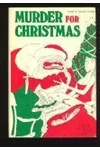
To fully experience Dickson's holiday-themed and short-form mystery writing, you can check out the posthumous anthologies Murder for Christmas (1987) and The Christmas Card Crime and Other Stories (2018), which collect various festive tales and contributions from the author alongside other Golden Age greats.