













Where to Start Reading Cassandra Clark
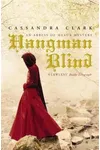
For readers diving into Cassandra Clark's richly detailed medieval mysteries, the best entry point is the publication order. The main timeline of her primary series begins with Hangman Blind (2008). In this debut, readers are introduced to Hildegard of Meaux, a Cistercian nun and widow who is in her early thirties, navigating the dangerous politics of York in the wake of the Peasants' Revolt. Starting here allows you to experience the character development and world-building exactly as the author intended.
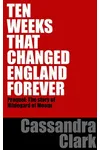
However, if you prefer a strictly chronological reading path, you should begin with the prequel novella Ten Weeks That Changed England Forever (2016). Set when Hildegard is a twenty-two-year-old widow, this story provides critical backstory, explaining the personal tragedy and choices that led her to take her monastic vows and enter the Abbey of Meaux.
The Abbess of Meaux Series (Hildegard of Meaux)
This is Cassandra Clark’s signature series. Set during the late 14th century, the novels follow Hildegard as she solves grizzly murders while caught in the crosshairs of the political instability under King Richard II. The books are best read in order due to the recurring cast, evolving relationships—especially the tension between Hildegard and Abbot Hubert de Courcy—and the progressing historical timeline.
- Hangman Blind (2008) – Hildegard's quest to establish a priory is disrupted by the discovery of five bloodied corpses.
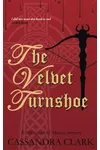
- The Red Velvet Turnshoe (2009) – Also published as The Velvet Turnshoe, this installment sends Hildegard to Europe to retrieve the Cross of Constantine.
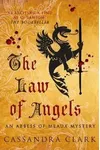
- The Law of Angels (2011) – Set during York’s Mystery Plays, Hildegard uncovers a deadly conspiracy.
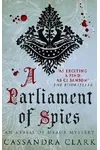
- A Parliament of Spies (2012) – Hildegard travels to London and finds herself entangled in courtly espionage.
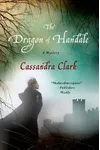
- The Dragon of Handale (2013) – Investigating a mysterious death at a priory in Cleveland.
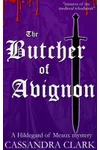
- The Butcher of Avignon (2014) – Hildegard is sent on a diplomatic mission to the Papal Court in Avignon.
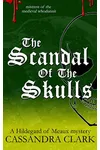
- The Scandal of the Skulls (2016) – Hildegard faces a mystery involving relics and political murders.
- Ten Weeks That Changed England Forever (2016) – Prequel novella detailing Hildegard's backstory at age twenty-two.
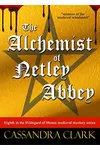
- The Alchemist of Netley Abbey (2017) – A mystery involving secret formulas and foreign agents on the south coast of England.
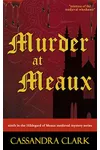
- Murder at Meaux (2018) – Hildegard returns to her home abbey to face crimes close to home.
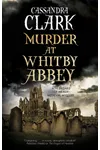
- Murder at Whitby Abbey (2019) – Hildegard investigates a death at the famous cliffside monastery.
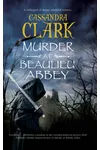
- Murder at Beaulieu Abbey (2021) – Hildegard is caught in the midst of royal rivalries at Beaulieu.
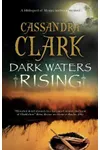
- Dark Waters Rising (2022) – The dramatic conclusion to Hildegard's long journey.
The Brother Chandler Series (The Broken Kingdom Trilogy)
Transitioning into the 15th century, Clark launched the Brother Chandler series. Set during the reign of Henry IV, this trilogy explores the Lancastrian usurpation through the eyes of Rodric Chandler, a renegade friar and spy. It offers a slightly darker, more politically focused view of medieval England, but carries the same meticulous historical accuracy. The books must be read in order:
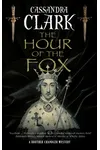
- The Hour of the Fox (2020)
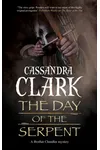
- The Day of the Serpent (2021)
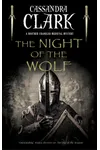
- The Night of the Wolf (2023)
The Sally Heywood Romances
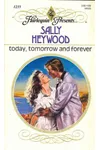
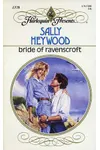
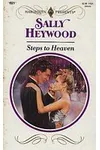
Long before Clark wrote historical crime fiction, she had a highly successful career writing contemporary romance novels under the pen name Sally Heywood. Writing primarily for Mills & Boon (Harlequin) between 1987 and 1994, she published over 30 titles, including Impossible To Forget (1987), Fantasy Lover (1988), and Steps To Heaven (1992). While these books are completely different in genre, they display the early storytelling chops and character dynamics that Clark would later refine in her historical mysteries.
What to Know Before You Start
Cassandra Clark does not write cozy, sanitised medieval mysteries. Her work is heavily grounded in the grim realities of 14th-century England—famine, plague, religious corruption, and political violence are ever-present. She drew inspiration directly from the authentic 1395 Chronicle of Meaux, ensuring the settings and cultural attitudes are historically accurate. The romantic tension between Hildegard and Abbot Hubert de Courcy provides a compelling emotional core to the series, but the primary focus remains on historical realism and suspense.