
Where to Start with Charles Duhigg: The Recommended Reading Path
Charles Duhigg is a Pulitzer Prize-winning investigative journalist who writes engaging narrative non-fiction. Unlike fiction series with a set chronological order, Duhigg’s work consists of standalone books that explore different facets of behavioral science, psychology, and neuroscience. However, they share a cohesive intellectual progression.
For the best reading experience, we recommend reading his books in their chronological publication order:
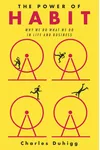
- The Power of Habit: Why We Do What We Do in Life and Business (2012)
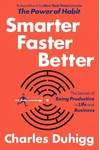
- Smarter Faster Better: The Secrets of Being Productive in Life and Business (2016)
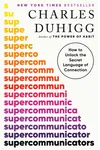
- Supercommunicators: How to Unlock the Secret Language of Connection (2024)
This reading path is designed to build your understanding of human behavior from the inside out. You begin with the subconscious routines that shape your daily life (habits), progress to how you structure your conscious focus and decision-making (productivity), and finally expand your focus outward to how you connect and communicate with other people (relationship building).
Publication Order of Charles Duhigg Books
If you prefer to follow the timeline of Duhigg's career as he developed these ideas, here is the complete chronological list of his books, including their full titles and original publication years:
- The Power of Habit: Why We Do What We Do in Life and Business (February 2012)
- Smarter Faster Better: The Secrets of Being Productive in Life and Business (March 2016)
- Supercommunicators: How to Unlock the Secret Language of Connection (February 2024)
Deep Dive: Core Concepts in Each Book
To help you decide which book fits your current personal or professional goals, here is a detailed breakdown of the themes, core frameworks, and real-world anecdotes that define each of Duhigg's books.
1. The Power of Habit (2012)
This is Charles Duhigg's breakout bestseller. It introduces readers to the neuroscience of habit formation and provides a practical framework for self-improvement and corporate efficiency.
- The Habit Loop: The core framework of the book. Duhigg explains that every habit is a neurological loop consisting of three parts: a Cue (the trigger), a Routine (the behavior), and a Reward (the benefit that tells the brain to repeat the loop).
- The Golden Rule of Habit Change: Duhigg argues that you cannot truly erase a bad habit. Instead, you must keep the same cue and the same reward, but insert a new, healthier routine in the middle.
- Keystone Habits: These are small habits that, when established, spark a positive chain reaction, automatically helping other healthy habits form in different areas of your life (such as regular exercise leading to better eating habits and financial discipline).
- Memorable Anecdotes: The book features stories about how Alcoa's CEO prioritized safety to revitalize the company, how Target predicts when customers are pregnant, and how Olympic swimmer Michael Phelps used mental visualization routines to win gold.
2. Smarter Faster Better (2016)
Following the success of his first book, Duhigg turned his investigative lens toward the science of productivity. Rather than suggesting quick-fix time management hacks, the book argues that true productivity is about managing how we think.
- Motivation and Autonomy: Duhigg shows that motivation is not a static trait but a muscle that can be trained. The key to triggering motivation is asserting control—turning a chore into a choice—and connecting immediate tasks to larger, deeply held values.
- Focus and Mental Models: To avoid "cognitive tunneling"—a state of panic where we blindly react to immediate stimuli—we must construct detailed mental models of how we expect our day or projects to unfold.
- Psychological Safety in Teams: Drawing on Google's internal research (Project Aristotle), Duhigg explains that the best teams aren't composed of the smartest individuals, but rather those who establish a culture of psychological safety, where members feel safe to speak up and share ideas.
- Memorable Anecdotes: Stories include the production chaos behind Disney's hit movie Frozen, the pilot decisions during the crisis of Qantas Flight 32, and the decision-making strategies of poker champion Annie Duke.
3. Supercommunicators (2024)
Duhigg's third book tackles the psychology and neuroscience of interpersonal communication. It explains why some people can connect with almost anyone, while others struggle, and provides a framework to master difficult conversations.
- The Three Types of Conversations: Duhigg argues that every discussion falls into one of three modes: Practical (What is this really about? Focused on decision-making and planning), Emotional (How do we feel? Focused on empathy and sharing feelings), or Social (Who are we? Focused on social identity and group alignment).
- The Matching Principle: Effective communication fails when people are having different types of conversations. Connection is achieved when speakers identify which mode is active and "match" each other's conversation type.
- The Neuroscience of Alignment: Duhigg details how when two people successfully connect, their brain waves and physiological responses physically synchronize, showing a shared mental state.
- Memorable Anecdotes: Features stories of CIA officers recruiting foreign agents, jury deliberations in crucial court cases, and how the writers of The Big Bang Theory structured their collaborative humor.
What to Know Before You Start: Continuity, Tone, and Actionable Advice
Charles Duhigg’s books are highly research-backed but read like page-turning journalism. He structures each chapter by introducing a gripping real-world story, cutting away to explain the scientific research behind it, and returning to show how the characters resolved their challenges using those insights.
Because there is no narrative continuity between the books, they can absolutely be read as standalones. If you are struggling with a specific issue, you can jump straight to the relevant title: read The Power of Habit if you want to change your personal routines, Smarter Faster Better if you want to optimize your work process or lead a team, and Supercommunicators if you want to improve your relationships, conflict resolution, or professional negotiation skills.