


Where to Start with Charles Williams
For readers looking to dive into the smoky, suspenseful world of Charles Williams, the best entry point depends on what style of crime fiction you prefer. Williams was a pioneer in two distinct subgenres: sweltering rural/backwoods noir (often termed 'land noir') and high-tension nautical thrillers ('blue-water noir').
If you want to experience his hallmark ocean suspense, start with Dead Calm (1963). It is widely considered one of the finest nautical suspense novels ever written, showcasing how Williams used isolation, storm-tossed seas, and small casts to build unbearable tension. If you prefer his gritty, small-town crime style, start with The Hot Spot (1953) (originally published as Hell Hath No Fury), which represents the peak of his moral gray areas, temptation, and desperation. Alternatively, you can begin at the very beginning with his blockbuster debut, Hill Girl (1951), which launched his career by selling over a million copies.
Understanding the Series and Universe
The vast majority of Charles Williams's bibliography consists of standalone novels. You do not need to follow a strict chronological storyline across his catalog. However, Williams did write two brief, highly entertaining duologies that should be read in order:
The John Ingram Books ('Blue-Water Noir')
This series features John Ingram, a boat broker and seasoned sailor who repeatedly finds himself caught in deadly situations on the high seas. You should read these in publication order, as the character development and tension carry over beautifully between the two volumes:
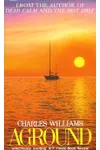
- Aground (1960): Introduces John Ingram as he searches for a stolen yacht, leading him into a web of conspiracy, salvage rights, and murder.
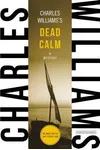
- Dead Calm (1963): Widely praised as Williams's masterpiece, this book follows Ingram and his wife on a yachting trip where they rescue a mysterious survivor from a sinking ship, sparking a claustrophobic struggle for survival.
The Uncle Sagamore Books
In stark contrast to his dark, cynical thrillers, the Uncle Sagamore books are lighter, comedic crime stories set in the American South. Narrated by a young boy named Billy, these novels follow the eccentric and clever bootlegger Uncle Sagamore as he outwits local authorities and rivals:
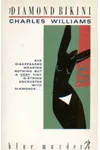
- The Diamond Bikini (1956): Introduces the backwoods setting, Uncle Sagamore, and a series of hilarious, fast-paced swindles.
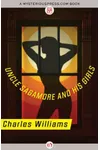
- Uncle Sagamore and His Girls (1959): Continues the comedic misadventures, focused on moonshining, local politics, and family schemes.
Publication Order vs. Chronological Order
Since almost all of Williams's books are standalone stories with completely distinct characters, settings, and plots, there is no master chronological order to worry about. The best way to experience his career is in publication order. This allows readers to track his evolution from raw, sensationalized rural paperbacks to highly polished, atmospheric psychological suspense novels.
The Renaming Caveats: Alternate Book Titles
When collecting and reading Charles Williams, you must be aware of the frequent retitling of his books across US and UK publishers, as well as modern reprints. You might inadvertently buy the same book twice under different names. Here are the major title changes to look out for:
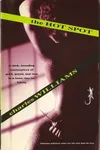
- Hell Hath No Fury (1953) was republished and popularized as The Hot Spot.
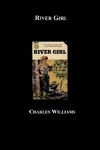
- River Girl (1951) was also published under the title The Catfish Tangle.
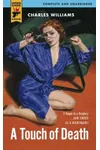
- A Touch of Death (1953) was also released as Mix Yourself a Redhead.
- Scorpion Reef (1955) was also released as Gulf Coast Girl.
- The Concrete Flamingo (1958) was also published as All the Way.
- Man on the Run (1958) was published in some editions as Man in Motion (note that the local database marks this as Man on the Run -Canc).
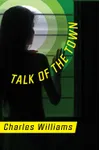
- Talk of the Town (1958) was also released as Stain of Suspicion.
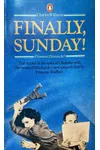
- Finally, Sunday! (1962) was originally published in the US as The Long Saturday Night.
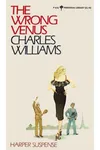
- The Wrong Venus (1966) was also published as Don't Just Stand There!
Complete Charles Williams Bibliography
Here is the full breakdown of Charles Williams's novels, organized by their respective categories as documented in the local database and historical publications.
John Ingram Duology
- Aground (1960)
- Dead Calm (1963)
Uncle Sagamore Duology
- The Diamond Bikini (1956)
- Uncle Sagamore and His Girls (1959)
Standalone Novels
Williams's standalone suspense novels are legendary for their tight pacing, maritime authenticity, and fatalistic characters. While Hill Girl (1951) and Girl Out Back (1958) are missing from some simplified database tables, they are essential components of his 22-novel bibliography:
- Hill Girl (1951) — The million-selling debut.
- River Girl (1951) (aka The Catfish Tangle)
- Big City Girl (1951)
- The Hot Spot (1953) (originally published as Hell Hath No Fury)
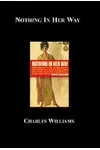
- Nothing In Her Way (1953)
- A Touch of Death (1953) (aka Mix Yourself a Redhead)
- Go Home, Stranger (1954)
- Scorpion Reef (1955) (aka Gulf Coast Girl)
- The Big Bite (1956)
- The Concrete Flamingo (1958) (aka All the Way)
- Man on the Run (1958) (listed in database as Man on the Run -Canc, also known as Man in Motion)
- Girl Out Back (1958) (also known as Operator)
- Talk of the Town (1958) (aka Stain of Suspicion)
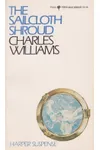
- The Sailcloth Shroud (1960)
- Finally, Sunday! (1962) (originally published as The Long Saturday Night)
- The Wrong Venus aka Don't Just Stand There (1966)
- And the Deep Blue Sea (1971)
- Man on a Leash (1973)
What to Know Before You Start: Tone and Cinematic Legacy
Charles Williams brought a unique level of realism to crime fiction. Having served in the U.S. Merchant Marine as a radioman for ten years, his descriptions of boat operations, navigation, and maritime weather in books like Dead Calm, Scorpion Reef, and Aground are exceptionally precise. Unlike the urban detectives of Raymond Chandler or Dashiell Hammett, Williams’s protagonists are usually everyday men—sailors, salesmen, or drifters—who get caught in a web of greed, lust, or false accusations.
This cinematic tension attracted many legendary filmmakers. Twelve of his novels were adapted into movies. Most notably, François Truffaut adapted The Long Saturday Night into his final film, the classic French comedy-mystery Finally, Sunday! (Vivement dimanche!) (1983). Additionally, Orson Welles spent years filming an uncompleted adaptation of Dead Calm titled The Deep, before Phillip Noyce successfully brought it to the screen in 1989 starring Nicole Kidman. Dennis Hopper also directed a steamy, critically acclaimed film adaptation of The Hot Spot in 1990.