
Recommended Reading Order for Dr. Felix Hoffmann
For the best experience, you should read the Dr. Felix Hoffmann series in its original publication order. Because each novel builds on the previous one's personal relationships, character developments, and lingering narrative threads—especially the evolving dynamic between Dr. Felix Hoffmann and his partner, Celine—going out of order will spoil major plot points.
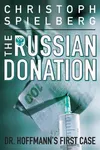
1. The Russian Donation (2001)
Original Title: Die russische Spende
This is where it all begins. Dr. Felix Hoffmann, a cynical and witty Berlin physician, is thrown into the role of a reluctant detective when one of his patients dies under highly suspicious circumstances. Felix uncovers a complex conspiracy involving hospital ethics, global medical commerce, and illicit trade. This debut won the prestigious Friedrich Glauser Prize for best crime debut, establishing Spielberg's reputation for highly authentic medical suspense.
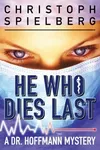
2. He Who Dies Last (2002)
Original Title: Denn wer zuletzt stirbt...
Looking for a bargain apartment in Berlin, Felix stumbles upon an unbelievably cheap condominium. The catch? The unit belongs to an elderly patient he treated just the day before—a patient who was perfectly healthy and had no intention of selling. Alongside Celine, Felix uncovers a scheme where elderly patients are targeted to hasten their deaths for real estate profit, ultimately leading to Felix himself being admitted as a patient under highly dangerous circumstances.
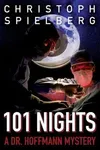
3. 101 Nights (2003)
Original Title: Hundertundeine Nacht
The stakes turn deeply personal. One hundred and one days after Celine leaves Berlin for a humanitarian mission in northern Iraq, a coffin containing her body is returned to Germany. The authorities accuse her of masterminding the suicide bombing that took her life. Refusing to believe the official story, a grieving Felix embarks on a dangerous investigation that takes him into international espionage and military conspiracies.
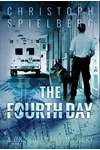
4. The Fourth Day (2011)
Original Title: Der vierte Tag (German original published in 2005)
A high-tension hostage situation unfolds inside the intensive care unit of Felix's hospital. A blind kidnapper demands a million euros, threatening to execute one doctor for every patient who dies on the ward. While trapped inside, Hoffmann must use his wits and medical knowledge to realize that the kidnapper’s financial demands are a smokescreen for a much deeper, more sinister agenda.
The German-Only Sequels
While the first four books were translated into English (primarily by AmazonCrossing in 2013), the series continued in German. If you read German, you can continue Hoffmann's journey with the following installments:
- Man stirbt nur dreimal (2015): Hoffmann returns to face new healthcare scandals and systemic corruption.
- Wiederbelebung (2017): Hoffmann is dragged into another high-stakes medical mystery dealing with resuscitation ethics and medical malfeasance.
- Wunderheilungen und andere unerwünschte Nebenwirkungen (2019): The latest installment centering on dubious medical cures and the dark underbelly of alternative medicine practices.
The Standalone Departure: Oskar Büscher
In addition to the Dr. Hoffmann series, Christoph Spielberg wrote a standalone mystery novel in 2014 titled Der Ein-Euro-Schnüffler (sometimes referenced in English databases with the character name Heinz Buscher, though the protagonist is actually named Oskar Büscher). Oskar is an unemployed engineer over fifty living on Hartz IV social benefits who takes on odd sleuthing jobs. It is a satirical, grounded look at modern German bureaucracy and economic struggles, distinct from the high-tension clinical settings of the Hoffmann series.
What to Know Before You Start
Before diving into Spielberg's bibliography, keep these key points in mind:
Clinical Authenticity: Christoph Spielberg is a practicing cardiologist based in Berlin. Unlike typical thrillers, his novels feature realistic hospital protocols, genuine ethical dilemmas, and believable medical procedures rather than sensationalized Hollywood medicine.
A Wit of His Own: Dr. Felix Hoffmann is not an action hero; he is self-deprecating, sarcastic, and frequently reluctant to get involved. The humor is dry and heavily shaped by the exhaustion of hospital ward shifts.
On-Screen Adaptations: The popularity of the Hoffmann series in Germany led to several television movie adaptations produced by the public broadcaster ZDF, bringing Spielberg's distinct mix of Berlin grit and clinical suspense to the screen.