



















How to Navigate the Mind-Bending Fiction of Christopher Priest
Christopher Priest (1943–2024) was one of British speculative fiction's most brilliant and elusive figures. Often associated with the "slipstream" genre—a liminal space where science fiction, psychological thriller, and literary fiction blur—Priest wrote stories that act like puzzles. His books are famous for their unreliable narrators, parallel histories, and realities that shift beneath the reader's feet. Because his work is so conceptually complex, figuring out where to start and how to approach his catalog can be daunting.
The good news is that almost all of Priest's works can be read as standalones. However, because he frequently revisited themes, settings, and structural devices, following a guided path will significantly enhance your reading experience. Below is the ultimate guide to navigating his major works, his shared worlds, and his commercial curiosities.
The Best Starting Points
If you are new to Priest's work, three novels offer the most rewarding entry points depending on your tastes:
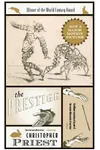
- For Thriller & Drama Fans: The Prestige (1995) — His most famous work, this Victorian-era tale follows two rival magicians locked in a deadly game of escalation. It won the James Tait Black Memorial Prize and was adapted into Christopher Nolan's acclaimed 2006 film. It is the perfect introduction to Priest's obsession with misdirection, dual identities, and secret histories.
- For Classic Sci-Fi Lovers: The Inverted World (1974) — A masterpiece of conceptual breakthrough. The story features a city that must constantly travel on tracks across a hostile, warping planet to keep up with a moving optimum point. It is a stunning exploration of perception and won the British Science Fiction Association (BSFA) Award.
- For Literary & Psychological Fiction Seekers: The Affirmation (1981) — This novel serves as the crucial bridge between Priest's psychological standalones and his Dream Archipelago sequence. It follows a man who, traumatized by grief, writes a manuscript about a fictional world called the Dream Archipelago, only for the boundaries between his real life and the manuscript to dissolve.
The Dream Archipelago: A Shared Psychic Landscape
The Dream Archipelago is Priest's most famous setting: a vast, unmappable network of islands situated in a warm, equatorial sea, bordered by two massive, warring superpowers to the north and south. The islands are subject to temporal distortions, bureaucratic anomalies, and psychological blockages, making them an ideal canvas for Priest's recurring themes of identity, memory, and war.
Because the Dream Archipelago is a thematic space rather than a linear narrative, there is no single "correct" reading order. However, reading them in publication order allows you to see how Priest's vision of the islands evolved over four decades. Here is the recommended sequence:
- The Affirmation (1981) — While technically set in London, it introduces the conceptual framework and psychological reality of the Archipelago.
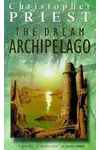
- The Dream Archipelago (1999 / expanded 2009) — This essential collection of short stories and novellas establishes the geography, culture, and rules of the islands. It includes early foundation pieces, such as the novella The Negation (1978).
- The Islanders (2011) — Widely considered one of Priest's late-career masterpieces, this novel is written in the form of a travel gazetteer. It provides a detailed guide to various islands while subtly weaving a dark murder mystery and connecting characters from the short story collection.
- The Adjacent (2013) — A complex novel about parallel dimensions and "adjacencies" that partially intersects with the Dream Archipelago, showing it as one of several overlapping realities.
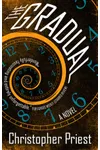
- The Gradual (2016) — Set directly within the Archipelago, this novel follows a composer who discovers that traveling between the islands via ship subjects travelers to severe, unpredictable time dilation.
- The Evidence (2020) — A detective novel set in the Archipelago that deconstructs the mystery genre, following a writer investigating a crime where the geography itself seems to have committed the offense.
H.G. Wells Homages and Alternate Histories
Priest was a lifelong admirer of H.G. Wells and served as the Vice-President of the H.G. Wells Society. Several of his works directly engage with Wells' legacy and alternate history:
- The Space Machine (1976) — A direct, affectionate homage to Wells' scientific romances. It ingeniously merges the plots of The Time Machine and The War of the Worlds, taking two Victorian protagonists to Mars and back during the Martian invasion.
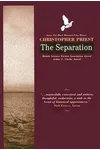
- The Separation (2002) — A brilliant alternate history of World War II focusing on twin brothers—one a pacifist, the other a bomber pilot—whose lives branch into parallel versions of history, investigating how individual decisions shape global events. It won both the Arthur C. Clarke and BSFA Awards.
Commercial Work, Pseudonyms, and Collaborations
During the 1980s and 1990s, Priest wrote commercial film novelizations under pseudonyms to keep his personal brand distinct from tie-in work. These include:
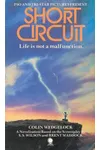
- Colin Wedgelock — Used to write the novelizations for the sci-fi comedy Short Circuit (1986) and the neo-noir thriller Mona Lisa (1986).
- John Luther Novak — Used to write the novelization for David Cronenberg's virtual-reality thriller eXistenZ (1999). True to form, Priest expanded the film's characters and psychological layers, turning it into a companion piece to his own works like A Dream of Wessex.
Additionally, Priest lent his writing talents to co-authoring the autobiographies of notable British public figures, including astronaut Helen Sharman's Seize the Moment (1993) and Olympic athlete Sally Gunnell's Running Tall (1994).
Christopher Priest's Complete Fiction in Publication Order
If you wish to trace Priest's development as an artist from his early speculative fiction to his final, highly polished slipstream novels, follow his complete list of standalone novels:
- Indoctrinaire (1970)
- Fugue for a Darkening Island (1972)
- The Inverted World (1974)
- The Space Machine (1976)
- A Dream of Wessex (1977)
- The Perfect Lover (1977)
- The Affirmation (1981)
- The Glamour (1984)
- Short Circuit (1986) — as Colin Wedgelock
- Mona Lisa (1986) — as Colin Wedgelock
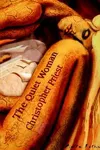
- The Quiet Woman (1990)
- The Prestige (1995)
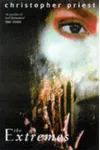
- The Extremes (1998)
- eXistenZ (1999) — as John Luther Novak
- The Separation (2002)
- The Islanders (2011)
- The Adjacent (2013)
- The Gradual (2016)
- An American Story (2018)
- Episodes (2019)
- The Evidence (2020)
- Expect Me Tomorrow (2022)
- Airside (2023)