
Where to Start with C.J. Washington
Because C.J. Washington writes standalone psychological and literary suspense novels rather than ongoing series, you have complete freedom in how you approach his work. There are no overarching story arcs or recurring characters to worry about. However, depending on your personal reading preferences, there are two distinct entry points:
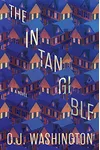
- Start with The Intangible (2022) if you prefer slow-burn psychological dramas centered on grief, neuroscience, and rare clinical conditions. This debut novel is character-driven, emotionally raw, and deeply analytical.
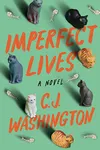
- Start with Imperfect Lives (2023) if you are in the mood for a faster-paced domestic suspense novel that relies on multiple viewpoints, secrets, and a puzzle-like structure where seemingly unrelated threads converge.
Publication Order of C.J. Washington's Novels
If you prefer to watch an author's style evolve, reading his books in order of release is the simplest method. Here are his standalone novels in order of publication:
1. The Intangible (2022)
Washington's debut novel introduces readers to two couples in Atlanta navigating profound personal crises. Amanda Jackson is a woman desperately wishing to be a mother who suffers a tragic miscarriage. In her grief, she develops pseudocyesis (a phantom pregnancy), a rare somatic condition where her body physically acts as though she is still pregnant despite medical confirmation to the contrary. Seeking to understand her condition, she crosses paths with Patrick Davis, a neuroscientist whose own life is collapsing. Patrick's brilliant wife, Marissa, is struggling with a secret guilt from her past and becomes obsessed with a mathematical formula she believes can communicate with the deceased. The book is an intimate, research-grounded look at how far the mind will go to protect itself from unbearable loss.
2. Imperfect Lives (2023)
His second release shifts gears toward a more suspenseful, multi-layered puzzle structure. The catalyst for the story is a deathbed confession by a contract killer named Cooper Franklin. This confession unleashes secrets that pull two women from completely different worlds into a shared orbit. Tamara Foster, a single mother and widow, starts to discover unsettling truths about her deceased husband's past. Meanwhile, Cindy Fremont is determined to defend the picture-perfect life she has fought hard to build. Shifting between multiple viewpoints, the novel slowly unravels how these characters are linked and explores how one secret can destroy the foundations of a seemingly perfect life.
Important Reading Caveats & Avoiding Mix-Ups
When searching for C.J. Washington's books on online retailers or platforms like Goodreads, it is easy to run into catalog confusion. There is another romance and motorcycle club (MC) novelist who publishing under a similar name. To ensure you are reading the correct author, keep these points in mind:
- The Literary/Suspense Author: The C.J. Washington featured in this guide is an Atlanta-based data scientist who specializes in neuroscience and artificial intelligence. He is the author of only The Intangible and Imperfect Lives, both published by Amazon Publishing (Little A imprint).
- Catalog Merges: If you see romance titles or motorcycle club series attributed to "C.J. Washington" on community platforms, these are catalog errors. He has not written any series, romance novels, or co-authored works in that genre.
What to Know Before You Start
Washington's background as a data scientist with a master's degree in computer science from the Georgia Institute of Technology heavily influences his writing. Instead of generic thrillers, his novels feel like intellectual puzzles. He uses scientific frameworks—whether it is mathematical equations or neurological pathways—to try to explain the chaotic nature of human grief. Furthermore, the seed for his debut novel, The Intangible, was planted decades ago by his father, who was an OB-GYN and had shared a story about treating a patient with pseudocyesis. Readers should prepare for emotionally heavy themes, as both books deal directly with death, loss, and psychological distress.