
Where to Start Reading Clare Carson
Clare Carson has written four novels: a contemporary crime thriller trilogy and a standalone historical mystery. Because her work is split into two distinct styles, your ideal starting point depends on what kind of mystery you enjoy most.
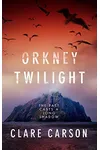
For readers who appreciate contemporary espionage, family drama, and psychological depth, the best starting point is Orkney Twilight (2014), the first book in the Sam Coyle Trilogy. Reading this trilogy in order is highly recommended, as the protagonist's personal journey, understanding of her father's past, and character growth build sequentially across the three novels.
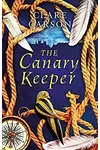
If you prefer historical crime fiction with gothic atmospheres and strong female protagonists, you should start with The Canary Keeper (2019). Because it is a standalone novel, it requires no prior knowledge of Carson's other works, making it an easy, self-contained entry point into her writing.
The Sam Coyle Trilogy in Detail
The core of Clare Carson's literary bibliography is the Sam Coyle Trilogy. This series is heavily inspired by Carson's real life as the daughter of a 1970s undercover policeman who served in London's Special Demonstration Squad. The novels blend the tension of Cold War spycraft with intense family drama, coming-of-age themes, and highly atmospheric British landscapes.
1. Orkney Twilight (2014)
In the trilogy's opening installment, readers are introduced to 18-year-old Sam Coyle in the 1980s. Sam has a strained, complicated relationship with her father, Jim, an undercover cop who struggles with alcohol and refuses to talk about his real work. When Jim takes an unexpected trip to the Orkney Islands—a place the family visited during Sam's childhood—Sam is sent along by her mother to keep an eye on him. As Sam and a journalist friend shadow Jim across the rugged island, she uncovers a web of covert operations, realizing she is being watched herself. The novel is widely praised for its slow-burn tension, exploration of father-daughter dynamics, and the haunting beauty of the Orkney landscape under the midnight sun.
2. The Salt Marsh (2016)
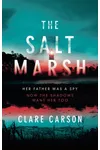
The second book shifts focus to the windswept, desolate coastal marshes of Kent and Norfolk. Years after Jim's death, Sam is trying to live a normal life, but she remains haunted by the tradecraft, paranoia, and memories of her childhood. When her boyfriend, Luke, suddenly vanishes in a thick sea fog, Sam is pulled back into the world of espionage and environmental conspiracies. As she searches for Luke, she uncovers deeper truths about the undercover operation that ultimately led to her father's demise, forcing her to decide whether to walk away from his shadow or follow in his footsteps as an operative.
3. The Dark Isle (2017)
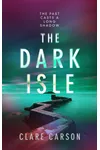
The final chapter of the trilogy features a dual-timeline narrative, moving between the sweltering heat of London in 1976 and the tense political atmosphere of 1989. In the 1970s timeline, a young Sam bonds with her childhood friend Anna on Orkney while their undercover fathers seek refuge. In the 1989 timeline, a twenty-something Sam returns to the island of Hoy to work on an archaeological dig and seek closure. When she spots a shadowy figure from her childhood—a man linked to her father's covert past—she is pulled into a final confrontation with the secrets, loyalties, and betrayals of the Cold War era.
The Standalone Historical Crime Novel
Following the completion of the Sam Coyle Trilogy, Carson took a detour into historical crime fiction, while keeping her signature focus on atmospheric settings and island mysteries.
The Canary Keeper (2019)
Set in 1855, this dark, gothic historical thriller moves between the gaslit, misty streets of Victorian London and the wild cliffs of the Orkney Islands. The story begins with the discovery of Tobias Skaill's body on the banks of the Thames. Witnesses claim a young woman in widow's weeds was an accomplice to the murder. The woman, Irish widow Branna "Birdie" Quinn, is entirely innocent but realizes she is being framed by corrupt police officers. Desperate to escape the gallows, Birdie flees to the remote Orkneys, tracing the dead man's past to uncover the real killer and clear her name. The book is celebrated for its compelling, willful protagonist and its stark contrast between urban Victorian squalor and remote island isolation.
Publication Order vs. Chronological Order
Because Carson's work is straightforward, organizing your reading plan is simple. Here is how the books fall in order of their release:
- Orkney Twilight (2014) — Sam Coyle Trilogy Book 1
- The Salt Marsh (2016) — Sam Coyle Trilogy Book 2
- The Dark Isle (2017) — Sam Coyle Trilogy Book 3
- The Canary Keeper (2019) — Standalone Novel
For the Sam Coyle Trilogy, the publication order matches the chronological development of Sam's life, moving from her late teens into her early twenties. While The Dark Isle contains extensive flashbacks to 1976, these flashbacks serve to answer mysteries established in the first two books. Therefore, reading the trilogy in chronological order of setting (starting with the 1976 flashbacks) is not recommended. Stick to the publication order for the best narrative flow.
What to Know Before You Start
Before diving into Clare Carson's novels, readers should keep a few stylistic elements in mind:
- Lyrical and Atmospheric Pacing: Carson's books are not fast-paced, action-heavy thrillers. Instead, they are character-driven mysteries that place a heavy emphasis on mood, description, and geographical settings.
- Personal Roots: Carson's depiction of undercover policing is uniquely realistic because her own father was an officer in the Special Demonstration Squad in the 1970s. The paranoia, secrets, and emotional strain experienced by Sam Coyle mirror the real-world experiences of families of undercover operatives.
- Orkney as a Character: The Orkney Islands play a central role in both the contemporary trilogy and the historical standalone. Carson treats the geography, climate, and folklore of the islands as active elements of the plot rather than simple backdrops.