





The Bar-20 Reading Order: Where to Begin?
When diving into Clarence Mulford's interconnected Western universe, readers generally face a choice between two paths: Publication Order (highly recommended) or Chronological Order.
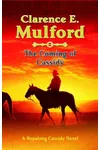
Reading in Publication Order allows you to experience the characters and the Bar-20 ranch as they originally evolved in Mulford's mind. The characters age, change, and face life-altering events in a sequence that makes the most narrative sense. However, if you prefer a strictly chronological timeline, you should start with the sixth published book, The Coming of Cassidy (1913), which serves as a prequel showing how a young Bill Cassidy first arrived at the Bar-20 ranch and acquired both his famous nickname and his trademark limp.
The Complete Clarence Mulford Bar-20 Book List
Below is the complete list of Mulford's Bar-20 books in order of publication. Some books were published under alternate titles or serialized in pulp magazines before their official book releases:
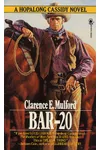
- Bar-20 (1906)
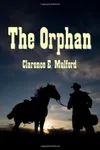
- The Orphan (1908)
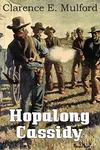
- Hopalong Cassidy (1910)
- Bar-20 Days (1911) – Also published as Hopalong Cassidy's Private War
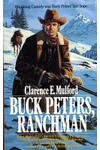
- Buck Peters, Ranchman (1912)
- The Coming of Cassidy (1913) – A prequel detailing Hopalong's origins
- The Man from Bar 20 (1918)
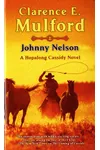
- Johnny Nelson (1920)
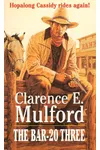
- Bar-20 Three (1921) – Also published as Hopalong Cassidy Sees Red
- Tex (1922)
- Bring Me His Ears (1922)
- H. C. Returns (1923) – Also published as Hopalong Cassidy Returns
- Black Buttes (1923)
- Rustler's Valley (1924)
- Cottonwood Gulch (1925)
- Hopalong Cassidy's Saddle Mate (1926) – Also published as Hopalong Cassidy's Protégé
- The Bar-20 Rides Again (1926)
- Corson of the J.C. (1928)
- Mesquite Jenkins (1928)
- Me An' Shorty (1929)
- The Deputy Sheriff (1930)
- Hopalong Cassidy and the Eagles Brood (1931)
- Mesquite Jenkins, Tumbleweed (1932)
- Round-Up (1933)
- Trail Dust (1934)
- On The Trail Of The Tumbling T (1935)
- Hopalong Cassidy Takes Cards (1937)
- Hopalong Cassidy Serves a Writ (1941)
Character Focus Paths & Subseries
While Hopalong Cassidy is the most famous figure of the Bar-20 saga, Mulford wrote several books focusing on other members of the outfit. If you want to follow specific characters, you can trace these subseries paths:
- The Johnny Nelson Path: Johnny Nelson begins as a hot-headed kid and grows into a mature protagonist. His main spotlight books are The Man from Bar 20 (1918) and Johnny Nelson (1920).
- The Tex Ewalt Path: Tex Ewalt is another key member of the Bar-20 group, and his primary standalone feature is Tex (1922).
- The Mesquite Jenkins Path: Mesquite Jenkins is introduced later in the series as Hopalong Cassidy's young protégé. He stars in Mesquite Jenkins (1928) and Mesquite Jenkins, Tumbleweed (1932).
- Buck Peters: The ranch manager takes center stage in Buck Peters, Ranchman (1912).
What to Know Before You Start: Book vs. Film
Readers coming to Clarence Mulford's books expecting the Hopalong Cassidy of the classic films or television series are in for a shock. The on-screen Hopalong, played by William Boyd, was a clean-cut, silver-haired, sarsaparilla-drinking hero who wore black and always fought fair.
In contrast, Mulford’s original literary Hopalong is a rough-and-tumble, spit-fire, hard-drinking cowboy with a red temper, a penchant for swearing, and a distinct limp from an early gunfight. Mulford's books are gritty, realistic, and historically grounded portrayals of early 20th-century frontier life, complete with authentic dialogue and period-accurate settings.
The Tex Burns / Louis L'Amour Tie-Ins
In the early 1950s, following the massive success of the Hopalong Cassidy television show, Doubleday commissioned a young, rising Western author named Louis L'Amour to write four new Hopalong Cassidy novels under the house pseudonym Tex Burns. These books aligned more closely with the grittier, original literary Cassidy than the TV version. The four books are:
- The Rustlers of West Fork (1951)
- The Trail to Seven Pines (1951)
- The Riders of High Rock (1951)
- Trouble Shooter (1952)