


















Where to Start Reading Clifford D. Simak
Because Clifford D. Simak did not write traditional multi-book series, you can read his bibliography in almost any order. However, to truly appreciate his signature style—often called 'pastoral science fiction'—there are three clear entry points depending on what you enjoy most:
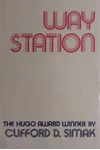
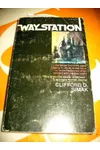
- The Masterpiece: Way Station (1963) — Originally serialized as Here Gather the Stars, this Hugo-winning novel is the ultimate Simak starting point. Set in rural Wisconsin, it follows a lonely Civil War veteran who secretly runs a hidden galactic transit station. It perfectly blends everyday rural charm with cosmic wonder.
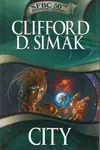
- The Conceptual Classic: City (1952) — A poignant, philosophical 'fix-up' novel told through eight linked stories (with a ninth added in later editions). It is framed as a series of mythical tales told by intelligent dogs about a long-lost species called 'Man,' overseen by a multi-generational robot helper named Jenkins.
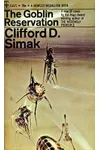
- The Quirky Science Fantasy: The Goblin Reservation (1968) — If you want something lighter, faster, and more whimsical, start here. It features time travel, bio-engineered prehistoric beasts, and legendary creatures like goblins and trolls residing on an academic reservation.
Understanding Title Variations and Serializations
Simak published heavily in pulp and digest magazines before his works went to print as books. This has led to several title variations that can confuse readers trying to track down his novels. Below are the key alternate titles to keep in mind:
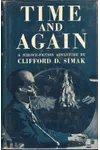
- Time and Again (1950) — Also published in paperback editions under the title First He Died. The original magazine serialization was titled Time Quarry.
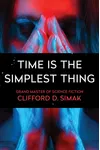
- Time Is the Simplest Thing (1961) — Serialized in Astounding Science Fiction under the title The Fisherman.
- Way Station (1963) — Serialized in Galaxy Magazine under the title Here Gather the Stars.
- Mastodonia (1978) — Published in the United Kingdom under the title Catface.
If you see these alternative titles on online shelves or secondhand bookstores, know that they are the exact same books!
From Short Story to Novel: Key Expansions
Simak frequently expanded his most successful short stories into full-length novels. If you are exploring his short fiction, you should be aware of these direct connections:
Project Mastodon (1955) to Mastodonia (1978)
In 1955, Simak published the novelette Project Mastodon in Galaxy magazine, describing a group of time-travelers who visit the Pleistocene era and attempt to declare it an independent country named Mastodonia. Twenty-three years later, he expanded this concept into the full novel Mastodonia (also known as Catface), adding new characters, a stranded cat-faced alien, and a deeper exploration of temporal pathways.
City (1944–1973)
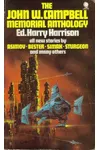
The stories that make up City were originally published in Astounding Science Fiction between 1944 and 1951. Simak added narrative 'bridges' to connect them when they were compiled in 1952. In 1973, Simak wrote a final concluding short story titled 'Epilog' as a tribute to the late editor John W. Campbell. Modern editions of the book generally contain all nine segments, making them the most complete version of the story.
A Database Caveat: Prehistoric Man (1971)
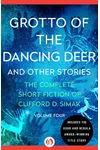
Some automated book databases and lists mistakenly categorize Simak's 1971 book Prehistoric Man: The Story of Man's Rise to Civilization as one of his standalone science fiction novels. In reality, this is a work of anthropologically focused non-fiction. While Simak's love for early human history and cave art heavily inspired his award-winning fiction (such as the short story Grotto of the Dancing Deer), readers looking for speculative fiction should skip this title or treat it strictly as informational reading.
Co-Authored Works and Collaborations
Simak spent the vast majority of his career writing alone, but there are two notable collaborations to look out for:
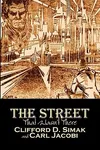
- The Street That Wasn't There (1941) — A classic reality-warping short story co-authored with his friend and fellow journalist Carl Jacobi.
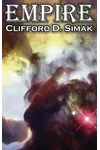
- Empire (1951) — Though credited solely to Simak, this novel was originally drafted by legendary editor John W. Campbell in the late 1928, and Simak undertook a complete rewrite at Campbell's request. Campbell declined to share credit or payment for the final book.