








How to Read Clifford Irving
Clifford Irving is famous for his audacious real-life literary hoaxes, but he was also a highly accomplished novelist. His work spans gripping legal thrillers, fast-paced spy novels co-authored with Herbert Burkholz, epic historical fiction, and fascinating true-crime books. Since his books are categorized into distinct series and standalone categories, the best way to read them is by grouping them by series or style rather than attempting a strict chronological read-through.
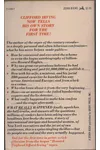
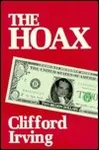
For readers who want to experience Irving's fiction first, we recommend starting with his acclaimed legal thriller Trial (1990) or diving into his spy fiction. If you are intrigued by his real-life exploits, his nonfiction masterpiece The Hoax (1981) is the ultimate starting point.
The Eddie Mancuso & Vasily Borgneff Spy Series
Co-authored with his boyhood friend Herbert Burkholz, this spy-thriller duology features Manhattan-based operative Eddie Mancuso and Moscow elite agent Vasily Borgneff. These books should be read in publication order:
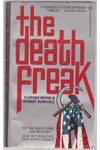
- The Death Freak (1978) - Mancuso and Borgneff try to retire from their respective agencies, only to find themselves targets.
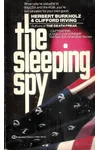
- The Sleeping Spy (1983) - The duo returns for another high-stakes international thriller.
The Legal Novels
Irving's legal thrillers are highly praised for their courtroom accuracy and intense drama. While they are grouped together as his "Legal Novels," they feature different protagonists and function primarily as standalone stories connected by theme rather than a continuous narrative. You can read them in any order, but publication order remains the most popular path:
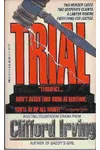
- Trial (1990) - Follows Warren Blackburn, a struggling defense attorney in Houston who is handed two complex murder cases that could redeem or destroy him.
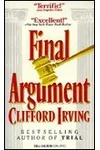
- Final Argument (1993) - A prestigious lawyer discovers that a landmark conviction he secured years ago may have sent an innocent man to death row.
- The Spring (1996) - Attorney Dennis Conway moves to a quiet Colorado town, only to be forced to defend his new family in a shocking murder trial.
- Boy on Trial (2014) - A juvenile court drama focusing on a young television star accused of murdering his girlfriend's father.
Standalone Novels
Irving's standalone novels range from contemporary dramas to sweeping historical epics. They can be read in any order. Key highlights include:
- The Losers (1959) - A tense, character-driven story of relationships and moral compromise.
- Stranger (1961) - An early dramatic exploration of identity.
- The Valley (1962) - A Western-themed historical epic set in New Mexico.
- The 38th Floor (1968) - A political thriller centered on the United Nations during a global crisis.
- Project Octavio (1976) - A conspiratorial thriller written shortly after Irving's release from prison.
- Tom Mix and Pancho Villa (1982) - A critically acclaimed historical novel blending real figures from the Mexican Revolution with fictional exploits.
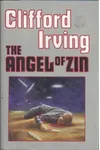
- The Angel of Zin (1984) - A haunting mystery set in a Polish concentration camp during WWII.
- Clash by Night (2014) - A late-career thriller exploring historical tension and personal conflict.
Essential Nonfiction and True Crime
No reading guide for Clifford Irving is complete without his nonfiction. These works detail either his own criminal exploits or those of other infamous figures:
- Spy (1968) - An early look at modern espionage co-authored with Herbert Burkholz.
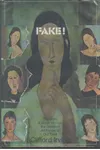
- Fake! The Story of Elmyr de Hory, the Greatest Art Forger of Our Time (1969) - A biography of the notorious art forger Elmyr de Hory, which inspired Orson Welles's documentary F for Fake.
- The Battle of Jerusalem (1970) - A historical account of the conflict.
- What Really Happened (1972) - A detailed analysis of the controversial trial of Minot Jelke.
- The Hoax (1981) - Irving's autobiographical account of how he fabricated the memoirs of billionaire Howard Hughes, which was later adapted into a major film.
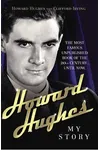
- Howard Hughes (1982) - The actual text of the infamous fabricated autobiography, eventually published as a curiosity.
- Daddy's Girl (1988) - A true-crime account of a high-profile Houston murder trial.
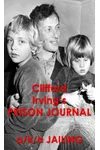
- Clifford Irving's Prison Journal (2014) - A raw memoir of his 17-month sentence in federal prison following the Hughes hoax.