
How to Read the Flaxborough Chronicles: The Recommended Start
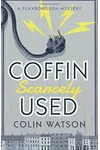
For readers diving into the fictional, gossip-ridden, and deceptively polite Lincolnshire town of Flaxborough, the recommended starting point is the very first book: Coffin, Scarcely Used (1958). Unlike many detective series where characters and styles shift dramatically after the debut, Watson’s signature combination of dry humor, biting social satire, and solid police procedural work is fully formed right from the opening pages.
Starting at the beginning allows you to watch the quiet, decent, and politely relentless Detective Inspector Walter Purbright settle into his role. It also introduces the town of Flaxborough itself, which serves as a crucial recurring character. Watson based Flaxborough heavily on the market town of Boston, Lincolnshire, where he worked as a journalist. Seeing the town's social hierarchy, civic hypocrisies, and eccentric residents establish themselves makes subsequent entries much richer.
However, if you want a taste of the series at its absolute best before committing to the full run, you could also start with the fourth novel, Lonelyheart 4122 (1967). This book introduces the beloved, whisky-sipping, domino-playing, and utterly charming conwoman Miss Lucilla Edith Cavell Teatime. Miss Teatime is a brilliant foil to Inspector Purbright's law-abiding decency, and her introduction marks the peak of Watson's comic styling. If you choose this path, you can easily go back to the first three books without feeling lost, as the continuity is loose.
Flaxborough Chronicles: Publication Order
Colin Watson wrote twelve novels in the Flaxborough Chronicles between 1958 and 1982. Reading them in publication order is highly recommended, as it allows you to appreciate the gradual sharpening of Watson's satirical edge and the developing dynamics between the recurring local characters. Note that several titles were renamed for the United States market, which can make tracking down specific copies confusing. Below is the complete list in publication order with their alternative US titles:
- Coffin, Scarcely Used (1958) – Inspector Purbright investigates the suspicious death of a local newspaper proprietor and uncovers a highly unusual illegal operation beneath the town's respectable surface.
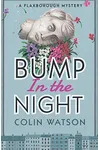
- Bump in the Night (1960) – The quiet town of Chalmsbury (a nearby neighbor of Flaxborough) is rocked by a series of nighttime explosions targeting public monuments.
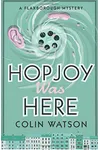
- Hopjoy Was Here (1962) – Watson satirizes the spy thriller genre as Inspector Purbright is forced to collaborate with two absurdly conspiratorial secret agents after an apparent murder.
- Lonelyheart 4122 (1967) – The brilliant introduction of conwoman Miss Lucilla Teatime, who crosses paths with Purbright during an investigation into a suspicious matrimonial agency.
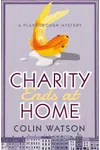
- Charity Ends at Home (1968) – Purbright looks into the suspicious death of an unpopular citizen, exposing the competitive, petty, and often malicious world of local charity organizations.
- The Flaxborough Crab (1969) – Published in the US as Just What the Doctor Ordered. Purbright investigates a bizarre geriatric groper nicknamed "the Crab" and stumbles into a web of local medical malpractice and secret potions.
- Broomsticks Over Flaxborough (1972) – Published in the US as Kissing Covens. Watson turns his satirical eye to the occult, superstition, and modern marketing as a local housewife disappears during a witchcraft demonstration.
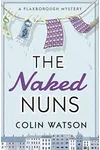
- The Naked Nuns (1975) – Published in the US as Six Nuns and a Shotgun. A fast-paced, highly comical caper involving a group of visiting American nuns, local gangster activities, and a massive misunderstanding.
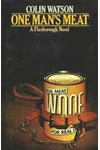
- One Man's Meat (1977) – Published in the US as It Shouldn't Happen to a Dog. Purbright investigates a series of bizarre incidents, including a mysterious death and a pet dog with suspicious appetites.
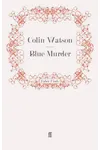
- Blue Murder (1979) – The eleventh book features Purbright investigating a series of accidents in the local industrial and business sectors, highlighting the greed of Flaxborough's self-made elite.
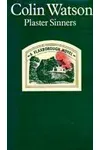
- Plaster Sinners (1980) – Miss Lucilla Teatime plays a central role in this mystery involving antique auctions, historical artifacts, and a very clever swindle.
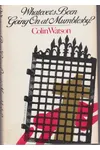
- Whatever's Been Going On at Mumblesby? (1982) – The final book in the series sees Purbright visiting the nearby village of Mumblesby to investigate a death that the local gentry would much rather keep quiet.
Chronological Order and Continuity Caveats
Are there any chronological deviations in the Flaxborough Chronicles? Fortunately for readers, the chronological order matches the publication order exactly. Watson did not write prequels or jump around in time. The books progress naturally through the late 1950s, the swing of the 1960s, and into the late 1970s and early 1980s.
However, continuity between the books is quite relaxed. While characters like Inspector Purbright, Sergeant Love, and Miss Lucilla Teatime recur, each mystery is completely self-contained. You do not need to remember clue details or subplots from previous books to enjoy the next. The only real continuity consists of recurring jokes, character traits, and the changing social landscape of Flaxborough as it modernizes. Therefore, if you happen to find a random copy of one of the later books in a secondhand bookshop, you can safely read it as a standalone without spoiling earlier mysteries.
Spin-Offs, Non-Fiction, and Television Adaptations
Colin Watson did not write any direct spin-off fiction or short story collections set in Flaxborough. However, there are two crucial companion works that any fan of his writing should explore:
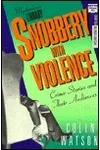
Snobbery with Violence (1971)
This is Watson's famous work of non-fiction. Subtitled Crime Stories and Their Audience, it is a sharp, witty, and highly insightful study of the social attitudes, class prejudices, and formulaic conventions found in British detective fiction between the World Wars. Watson critiques legendary authors such as Dornford Yates, Edgar Wallace, and even Agatha Christie. It is in this book that Watson popularized the term "Mayhem Parva" to describe the cozy, unrealistically peaceful English village setting where fictional murders occurred. Reading this book gives you a wonderful window into Watson's own writing philosophy and why he chose to subvert these cozy tropes in his own fiction.
Murder Most English (1977 BBC TV Series)
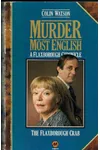
In 1977, the BBC adapted four of Watson's novels into a highly regarded four-part television series titled Murder Most English: A Flaxborough Chronicle. The series starred Anton Rodgers as a perfectly cast, understated Inspector Purbright, Christopher Timothy as the slightly dim Sergeant Love, and Brenda Bruce as the formidable Miss Lucilla Teatime. The episodes adapted Coffin, Scarcely Used, Hopjoy Was Here, Lonelyheart 4122, and The Flaxborough Crab. If you can find copies of this series, it is a delightful visual companion that captures the dry, low-key, and satirical tone of the books beautifully.
What to Know Before You Start
Before you begin reading Colin Watson, it is helpful to adjust your expectations regarding the tone. While these books are cataloged as cozy mysteries, they are quite different from standard village mysteries. Watson's tone is highly satirical, ironic, and dry. He is less interested in the intellectual puzzle of who committed the crime and far more interested in exposing the greed, hypocrisy, snobbery, and eccentricity of the English middle and upper classes. The crimes are often bizarre and dark, yet handled with a light, humorous touch. If you enjoy the dry wit of E.F. Benson’s Mapp and Lucia stories or the satirical mystery style of Reginald Hill, you will feel right at home in Flaxborough.