
Recommended Reading Pathways
Because Colum McCann does not write sequential series, there is no single narrative line to follow from his first book to his last. Instead, his bibliography consists of richly textured standalone novels, short story collections, and non-fiction works that are interconnected by theme rather than character. However, deciding where to start can be daunting given the structural complexity of his later works. Here are the three best entry points into his writing, depending on what kind of reader you are:
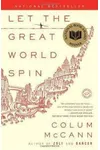
- The Modern Masterpiece Route (Highly Recommended): Start with Let the Great World Spin (2009). This National Book Award winner is McCann’s breakthrough novel. It is a stunning, multi-voiced portrait of New York City in the summer of 1974, anchored by Philippe Petit’s real-life tightrope walk between the Twin Towers. It showcases his signature style: drawing together a disparate cast of characters whose lives collide in unexpected, redemptive ways.
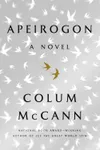
- The Experimental and Heart-Wrenching Route: Start with Apeirogon (2020). If you want to experience the pinnacle of McCann’s non-linear, hybrid style, this is the book to read. It tells the real-life story of Bassam Aramin (a Palestinian) and Rami Elhanan (an Israeli), two fathers united by the tragic loss of their daughters. Structured in 1,001 short, mosaic-like chapters, it is a powerful exploration of grief, empathy, and the possibility of peace.
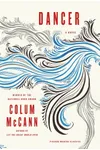
- The Lyrical Biography Route: Start with Dancer (2003). For those who enjoy historical fiction blended with artistic biography, this novel reimagines the life of legendary ballet dancer Rudolf Nureyev. Through the eyes of those who knew him—from his dance instructors in the Soviet Union to his companions in the hedonistic scene of 1970s New York—McCann constructs a vibrant, kaleidoscopic portrait of genius and exile.
Publication Order of Standalone Novels
Reading Colum McCann in order of publication allows you to witness his development from a lyrical, character-focused storyteller into a pioneering practitioner of "poetic realism" and experimental narrative structures. Here is the chronological list of his standalone novels:
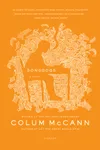
- Songdogs (1995): McCann’s debut novel follows Conor Lyons, a young man reconstructing the lives of his estranged parents—an Irish photographer who documented the Spanish Civil War and his beautiful, enigmatic Mexican mother. It is a sensory journey that spans Ireland, Spain, Mexico, and the American West.
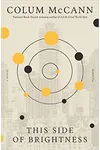
- This Side of Brightness (1998): This ambitious novel spans seventy years of New York City history. It contrasts the lives of the "sandhogs" who built the subway tunnels under the East River in the early 20th century with the lives of the homeless people who occupied those same tunnels in the 1980s, centering on a multi-generational family drama.
- Dancer (2003): A fictionalized, highly poetic retelling of the life of Russian ballet star Rudolf Nureyev. The book moves from Nureyev’s childhood in wartime Russia to his defection to the West, capturing the physical toll of dance and the dizzying highs of fame.
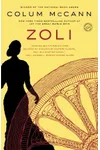
- Zoli (2006): Inspired by the life of the Romani poet Bronisława Wajs (known as Papusza), this novel tells the story of a Slovak Romani woman whose songs are written down and published, leading to her exile from her community. It explores themes of voice, culture, betrayal, and displacement.
- Let the Great World Spin (2009): Set on a single day in August 1974, this novel brings together a Dublin-born monk living in the Bronx, a group of streetwalkers, a wealthy Upper East Side judge, and mothers mourning their sons lost in the Vietnam War, all witnessing Philippe Petit’s high-wire walk.
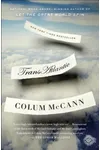
- TransAtlantic (2013): A sweeping novel that connects three iconic historical crossings—Frederick Douglass’s 1845 visit to Ireland, Alcock and Brown’s first non-stop transatlantic flight in 1919, and Senator George Mitchell’s role in the 1998 Good Friday peace talks—with the stories of four generations of fictional women.
- Apeirogon (2020): A genre-defying work named after a polygon with an infinite number of sides. It weaves history, science, geography, and art around the core stories of Bassam Aramin and Rami Elhanan, seeking to understand the infinite facets of the Israeli-Palestinian conflict.
- Twist (2025): McCann’s most recent novel follows Anthony Fennell, an Irish playwright and journalist who boards an ocean-going cable-repair ship off the West Coast of Africa. As the crew repairs severed fiber-optic lines on the ocean floor, the story examines the fragile physical infrastructure of our digital world and the human search for deep connection.
The Power of Short Fiction
In addition to his novels, McCann is a highly decorated short story writer. His short fiction collections are excellent entry points for readers looking for quick, punchy demonstrations of his prose style. They should be read in the following order:
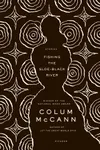
- Fishing the Sloe-Black River (1994): McCann's debut collection contains twelve stories exploring themes of exile, displacement, and the longing for home. Characters move between Ireland, England, and the United States, dealing with the quiet aches of departure and memory.
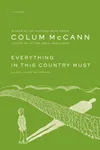
- Everything in This Country Must (2000): This slim, devastating collection consists of a novella and two short stories set during the Troubles in Northern Ireland. It explores how political violence shapes the lives of children and young adults, showing how the weight of history impacts personal lives.
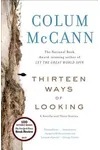
- Thirteen Ways of Looking (2015): A collection consisting of a title novella and three short stories. The title piece, inspired by the Wallace Stevens poem, follows a retired judge in Manhattan who is assaulted on a street corner, using security camera footage and multiple viewpoints to reconstruct his final day.
Non-Fiction and Collaboration
Readers looking to understand McCann's philosophy on writing and empathy will find these non-fiction works invaluable:
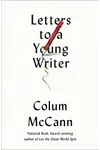
- Letters to a Young Writer (2017): A collection of practical, encouraging, and blunt essays aimed at aspiring authors. Drawing on his years of teaching in the MFA program at Hunter College, McCann shares insights on voice, style, the necessity of failure, and the moral duty of the storyteller.
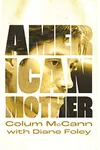
- American Mother (2024): Written in collaboration with Diane Foley, this non-fiction book tells the story of James Foley, the American journalist captured and executed by ISIS in 2014. It focuses on Diane’s search for answers, her courageous meeting with one of her son’s captors, and her work establishing the James W. Foley Legacy Foundation.
What to Know Before You Start
To fully appreciate Colum McCann’s bibliography, it is helpful to keep a few key concepts in mind:
The Blending of Fact and Fiction: McCann is a master of what is sometimes called "faction" or biographical fiction. He frequently places real historical figures (like Frederick Douglass, Rudolf Nureyev, George Mitchell, and Philippe Petit) alongside fictional characters. In books like Apeirogon and American Mother, the characters are entirely real people, but McCann uses the tools of fiction—interiority, narrative pacing, and poetic prose—to bring their experiences to life.
Non-Linear and Fragmented Structures: While his early novels like Songdogs follow relatively traditional structures, his later works are highly complex. TransAtlantic shifts back and forth across centuries, while Apeirogon is structured as a series of 1,001 numbered fragments that mirror the structure of One Thousand and One Nights. Do not expect straight chronological timelines; instead, let the patterns and themes guide you through the story.
The Empathy Project (Narrative 4): McCann is the co-founder of Narrative 4, a global non-profit organization that promotes empathy through the exchange of stories. This philosophy—that sharing stories is a radical act of connection that can heal cultural and political divides—runs through all of his work. Understanding his belief in the "democracy of storytelling" provides a helpful lens for reading his novels, which consistently give voice to marginalized individuals.