
The Recommended Reading Path for D. Gideon’s Books
When diving into the post-apocalyptic world created by D. Gideon (the pen name of author Drew Gideon), the path forward is straightforward but highly critical. The author’s work is concentrated entirely in her flagship series, the Sunfall trilogy. Because this series tells one continuous, chronological story with a consistent cast of characters, there is only one recommended reading path: publication order.
Attempting to read these books out of order will ruin the overarching plot, spoil critical character arcs, and leave you confused about the timeline of the global crisis. The story begins in the immediate aftermath of a solar disaster and follows the characters as they adapt to a world without electricity, transition into a long journey home, and finally attempt to build a new society. None of these novels are designed to be read as standalones.
D. Gideon Books in Publication Order
Here is the complete list of D. Gideon’s novels in the order they were published and released to the public:
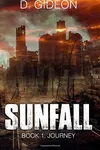
- Journey (2016) – The novel that introduces the solar disaster and the initial collapse of the power grid, centering on Ripley Miller's struggle to escape her university campus.
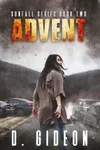
- Advent (2017) – The direct sequel focusing on the perilous trek across a crumbling Maryland as the characters search for supplies and safety.
- Impact (2019) – The concluding chapter of the trilogy, shifting focus to small-town politics, the approach of winter, and the long-term reality of a world without power.
Chronological Timeline and Narrative Flow
The chronological order matches the publication order exactly. The narrative timeline of the Sunfall universe is exceptionally tight and flows without major time skips:
- Phase 1: The Collapse (Journey): The story kicks off with a massive coronal mass ejection (CME)—a solar event similar to the historic Carrington Event—striking the Earth. The global electrical grid is instantly fried. Ripley Miller, a veterinary student at the University of Maryland, is stranded on a weapon-free campus. Meanwhile, the perspective shifts back and forth between Ripley's group and her family and friends back in her hometown of Snow Hill, Maryland, establishing how both urban and rural communities handle the immediate panic.
- Phase 2: The Trek (Advent): Picking up right where the first book ends, the narrative tracks Ripley and her companions as they attempt to walk home across the state. This phase highlights the rapid deterioration of law and order, resource scarcity, and the psychological toll of survival.
- Phase 3: The Reconstruction & Politics (Impact): The final book transitions from the immediate panic of the journey to the realities of long-term survival in Snow Hill. As winter approaches, the community must figure out how to allocate food and resources, deal with the arrival of the National Guard, navigate local political corruption, and handle mysterious deaths within their borders.
What to Know Before You Start: Tone and Prepper Realism
Before you pick up the first book, it is helpful to understand what sets D. Gideon apart from other post-apocalyptic writers. Drawing from her personal background as a self-described prepper, Drew Gideon infuses the Sunfall series with a heavy dose of realism that eschews many of the genre’s most common tropes:
- No Over-the-Top Weaponry: You won’t find characters stumbling upon secret military bunkers or engaging in endless, action-movie style shootouts. The focus is on basic survival gear, resourcefulness, and human grit.
- Female-Led Survival: The series breaks away from male-dominated survivalist narratives by placing strong, flawed, and highly capable female leads—such as Ripley Miller and the older matriarch Dotty Parker—at the center of the action.
- A Focus on Community: While there is plenty of danger and betrayal, the books emphasize that long-term survival depends heavily on small-town collaboration, agricultural preparation, and community organization.
A Closer Look at the Sunfall Trilogy
Journey (2016)
In the opening volume, we meet Ripley Miller, a tomboyish veterinary student whose life is derailed when the CME hits. Stranded at her university, she has to form alliances with fellow students to escape. Back in Snow Hill, Corey’s grandmother, Dorothy "Dotty" Parker, tries to maintain order on her farm as modern infrastructure vanishes. The book is highly praised for showing the sudden transition from modern convenience to absolute reliance on basic preparedness.
Advent (2017)
The second book increases the pacing as Ripley’s group begins their grueling walk home. Scarcity has set in, and the initial shock of the disaster has turned into cold desperation for many survivors they meet along the way. Ripley has to balance her own moral compass against the cynical survival advice of companions like Marco, who understand just how quickly human nature sours under pressure.
Impact (2019)
The final entry brings the main characters back to Snow Hill, but the safety they hoped to find is threatened by internal conflicts. The local Mayor begins taking on dictatorial powers, and the arrival of military remnants complicates the town's autonomy. Impact explores the dark side of small-town politics, showing that once physical survival is secured, the battle for how society should be run begins.