






Where to Start Reading D.H. Lawrence
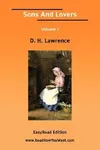
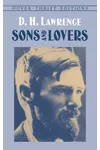
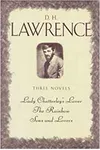
D.H. Lawrence was one of the most passionate, lyrical, and controversial figures of modernist English literature. Because his work ranges from autobiographical mining-town drama to highly symbolic multi-generational sagas and heavily censored depictions of physical intimacy, choosing where to start can feel daunting. We recommend beginning your journey with his breakthrough masterpiece, Sons and Lovers (1913). This semi-autobiographical coming-of-age novel tracks the struggles of Paul Morel as he navigates the suffocating love of his mother, the harshness of a Nottinghamshire colliery town, and his first romantic relationships. Grounded and intensely emotional, it introduces all of Lawrence’s core themes—class conflict, the clash between modernity and nature, and the complexity of desire—without the dense, experimental symbolism of his later period.
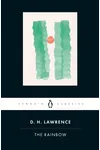
If you prefer a sweeping, poetic saga, your alternative starting point is The Rainbow (1915). This ambitious novel tracks three generations of the Brangwen family. However, if you choose this path, be prepared for a multi-book commitment: it must be read before its direct sequel, Women in Love (1920). For readers looking for a shorter entry point, Lawrence was also a master of the novella. Starting with The Fox (1923), a tense and psychological story set on a farm during World War I, is a fantastic way to sample his prose style before committing to his larger novels.
The Brangwen Family Series
The Brangwen Family books represent the peak of Lawrence’s artistic ambition. Originally conceived as a single massive manuscript titled The Sisters, Lawrence ultimately split the story into two distinct, sequential novels. Together, they follow the evolution of the Brangwen family in the English Midlands, charting the transition from rural agricultural life to the mechanical grind of the industrial age.
- The Rainbow (1915): This novel spans from the 1840s to the early 1900s, chronicling three generations of the family. The narrative reaches its climax with Ursula Brangwen’s struggle for independence, education, and spiritual self-fulfillment in a changing world. It was immediately banned in Great Britain upon release due to its frank treatment of female sexuality and relationships.
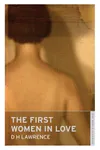
- Women in Love (1920): Set a few years after the events of the first book, this sequel focuses on Ursula Brangwen and her sister Gudrun. It explores their intense, passionate, and destructive relationships with two men, Rupert Birkin and Gerald Crich. The novel delves deeper into Lawrence’s philosophical musings on the decay of Western civilization post-industrialization and must be read second, as it relies heavily on the character groundwork laid in The Rainbow.
The Sons and Lovers Books: Original vs. Drafts
In many publication lists, you will find entries referring to "Sons and Lovers Volume I" and "Sons and Lovers Volume II," alongside the draft version Paul Morel. Here is the practical breakdown of how these relate to each other:
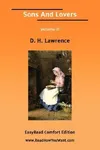
- Sons and Lovers (1913): The definitive novel was published as a single cohesive volume in 1913. However, due to its length and formatting in modern paperbacks or digital editions, publishers occasionally split the text into Volume I and Volume II. There is no narrative difference; they are simply the first and second halves of the same book.
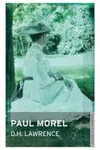
- Paul Morel (published posthumously in 2003): This was Lawrence's original working title. He rewrote the manuscript four times to refine the autobiographical elements before it was published as Sons and Lovers. The 2003 publication of Paul Morel by Cambridge University Press is an academic reconstruction of his early drafts. It is a fascinating read for scholars wanting to trace Lawrence's creative process, but general readers should stick to the standard 1913 version.
The Lady Chatterley's Lover Variants
D.H. Lawrence's most notorious novel, Lady Chatterley's Lover (1928), went through three distinct written versions, each of which has been published and offers a different reading experience:
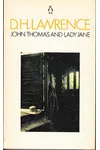
- John Thomas and Lady Jane (Written 1927, Published 1972): This is the second draft of the novel. It features a gentler, more rural gamekeeper named Parkin (who becomes Mellors in the final version) and places a greater emphasis on the class contrasts and the tender, emotional connection between the lovers. Many literary critics actually prefer this version for its warmth and reduced focus on the heavy industrial polemics of the final edition.
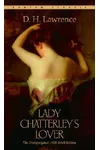
- Lady Chatterley's Lover (1928): The third and final version, printed privately in Florence in 1928 and banned in the UK and US for decades. This version is more explicit, politically charged, and features the character of Mellors as a more sophisticated, former British Army officer. This is the version that sparked the landmark obscenity trials of 1960.
Collaborations and Standalones
Beyond his famous works, D.H. Lawrence wrote several standalone novels that explore different regions and cultures, often reflecting his nomadic lifestyle in his later years:
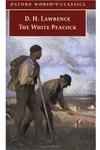
- The White Peacock (1911): His debut novel, set in the Nottinghamshire countryside, focusing on unhappy marriages and social class. It is lyrically beautiful but lacks the maturity of his later novels.
- The Trespasser (1912): A dramatic, tragic novel based on the diary of a friend, detailing a brief affair on the Isle of Wight.
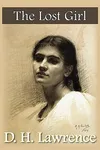
- The Lost Girl (1920): Winner of the James Tait Black Memorial Prize, this novel details the life of Alvina Houghton as she escapes her provincial English upbringing to join an itinerant theater troupe and move to Italy.
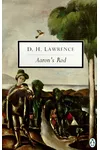
- Aaron's Rod (1922): A post-war novel following a flute player who leaves his family to travel through Italy, exploring themes of leadership, art, and male companionship.
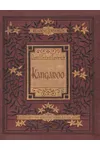
- Kangaroo (1923): Set in Australia, this semi-autobiographical novel reflects Lawrence's brief stay in New South Wales, detailing local political tensions and fringe movements.
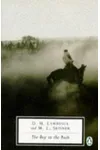
- The Boy in the Bush (1924): A unique collaboration with Australian writer Mollie Skinner. During his travels, Skinner handed Lawrence a rough manuscript. He heavily rewrote it, adding his signature psychological depth and philosophy to her vivid depiction of the Western Australian wilderness in the 1880s. It stands as a fascinating hybrid of bush adventure and Lawrentian romance.
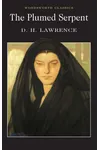
- The Plumed Serpent (1926): A controversial, complex novel set in Mexico, focusing on the revival of the ancient Aztec religion amidst political turmoil.
Practical Reader Advice and Continuity Caveats
When reading D.H. Lawrence, chronological publication order is highly recommended. His writing style shifted from the traditional realism of his early work (The White Peacock, Sons and Lovers) to the highly symbolic, modernist prose of his middle period (The Rainbow, Women in Love), and finally to the polemical, raw focus of his late novels. Reading them in order allows you to appreciate how his worldview and literary voice evolved. Furthermore, remember that his shorter fiction contains some of his most potent writing. Novellas like The Virgin and the Gipsy and St. Mawr are incredibly tightly structured and provide the same thematic punch as his longer, more rambling novels.