





















Where to Start: The Recommended Reading Path
Daniel Defoe was an incredibly prolific writer, publishing hundreds of pamphlets, essays, and novels under various pseudonyms. For the modern reader, the best entry point is undoubtedly his most famous work, Robinson Crusoe (1719). Not only does it represent the dawn of the English realistic novel, but it also captures Defoe’s signature style of deep internal monologue, survivalist detail, and moral introspection.
Once you have journeyed with Crusoe, you should transition to Moll Flanders (1722). This book offers a brilliant contrast to the isolation of Crusoe. It is a lively, picaresque, urban adventure featuring a resilient female protagonist navigating poverty, crime, and redemption in London. It shows Defoe's knack for creating complex, morally grey, and highly empathetic characters.
After these two core masterpieces, dive into A Journal of the Plague Year (1722). This work showcase Defoe's ability to blend investigative journalism with historical fiction. It provides a terrifying, atmospheric, and highly detailed account of the Great Plague of London in 1665, written so convincingly that for decades it was mistaken for an actual eyewitness diary.
For those interested in maritime adventures and historical mysteries, follow this with Captain Singleton (1720) and Roxana: The Fortunate Mistress (1724) to round out the very best of Defoe's long-form prose fiction.
The Robinson Crusoe Trilogy
Many readers do not realize that Robinson Crusoe is actually part of a trilogy. However, the sequels vary wildly in style and are rarely packaged together. Here is how they break down in order:
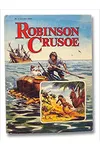
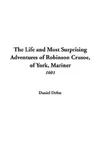
- Robinson Crusoe (1719) – Also published in some early editions under the longer title The Life and Most Surprising Adventures of Robinson Crusoe, of York, Mariner. This is the classic tale of shipwreck, survival, and Friday that everyone knows.
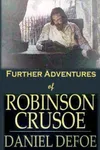
- Further Adventures of Robinson Crusoe (1719) – Published later the same year, this direct sequel follows Crusoe as he returns to his island, travels through Madagascar, and makes a massive overland journey across Asia and Russia.
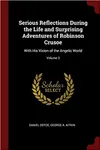
- Serious Reflections During the Life and Surprising Adventures of Robinson Crusoe (1720) – Rather than an adventure novel, this final volume is a collection of moral, philosophical, and religious essays written from the perspective of Crusoe, reflecting on solitude and faith.
Publication Order of Standalone Novels
If you prefer to read Defoe's major fictional works in the order they were originally presented to the 18th-century public, follow this publication sequence:
- The Consolidator (1705) – A satirical political fantasy involving a trip to the moon.
- The Apparition of Mrs. Veal (1706) – A brief, famous, and remarkably realistic ghost story.
- The King of Pirates (1719) – A fictionalized biography of the pirate Captain Avery.
- Captain Singleton (1720) – A two-part adventure focusing on a trek across Africa and pirate exploits in the Indian Ocean.
- Memoirs of a Cavalier (1720) – A historical novel set during the Thirty Years' War and the English Civil War.
- Moll Flanders (1722) – The trials and tribulations of a woman born in prison who climbs and falls through London society.
- Colonel Jack (1722) – The story of an orphaned pickpocket who goes to Virginia and seeks to become a gentleman.
- A Journal of the Plague Year (1722) – An immersive, fictionalized account of the 1665 Great Plague of London (often reprinted as History of the Plague in London).
- Roxana: The Fortunate Mistress (1724) – Defoe’s final novel, tracing the moral decline and financial success of a high-class courtesan.
- The Pirate Gow (1725) – A detailed account of the real-life pirate John Gow, blending true crime with adventure narrative.
Understanding London's Plague Chronicles
In Defoe's bibliography, you will frequently see two titles listed: A Journal of the Plague Year and History of the Plague in London. It is important to know that these are essentially the same work. The book was published in 1722 under the initials 'H.F.', representing Defoe’s uncle Henry Foe, who lived through the actual plague of 1665 when Defoe himself was only five years old. The narrative relies heavily on official mortality statistics and personal family memories to create a highly accurate, yet ultimately fabricated, first-person journal. Readers should not buy both titles expecting different content.
The Pirate Debates: Defoe vs. Charles Johnson
One of the biggest controversies in Defoe’s catalog surrounds A General History of the Pyrates (1724). Originally published under the pseudonym Captain Charles Johnson, this book is the primary source for almost everything modern pop culture believes about the Golden Age of Piracy, including black flags, peg legs, and walking the plank. For decades, 20th-century scholars attributed this work entirely to Daniel Defoe. However, modern research has thrown this attribution into serious doubt. Many historians now believe the book was written by publisher and former merchant sailor Nathaniel Mist, or perhaps was a collaborative project between Mist and Defoe. Because of this uncertainty, readers should approach it as a fascinating companion piece to Defoe's pirate novels like Captain Singleton and The King of Pirates rather than a definitive solo work.
What to Know Before You Start
Reading 18th-century literature requires adjusting to a different narrative pace. Defoe did not write with modern chapter breaks; his novels are long, continuous blocks of prose that read like real diaries or memoirs. This was deliberate: Defoe wanted his readers to believe his stories were genuine autobiographies rather than manufactured fiction. Keep in mind that he was also a moralist; his characters often commit crimes or live wild lives, but they almost always undergo a period of intense religious repentance before the book ends. Embracing this unique structure and tone will help you fully appreciate the genius of the man who helped invent the modern novel.