





Where to Start with Daniel Easterman
Because all of Daniel Easterman’s thrillers are written as standalone novels, you have complete freedom in how you approach his bibliography. You do not need to worry about missing character arcs or prior plot lines. However, because his style evolved and he explored distinct themes across different decades, certain books serve as much better entry points than others.
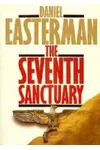
If you want to experience the classic Easterman formula at its absolute best, start with The Seventh Sanctuary (1987). This archaeological thriller showcases his deep understanding of Middle Eastern history and religious mythology, wrapping it in a high-velocity conspiracy plot. For those interested in theological mysteries and espionage, The Judas Testament (1994) is another excellent starting point that rivals the works of Umberto Eco and Dan Brown. If you prefer his atmospheric horror writing under the Jonathan Aycliffe pen name, the undisputed starting point is the terrifying cult-classic ghost story Naomi's Room (1991).
The Daniel Easterman Thrillers (Publication Order)
Writing under the Easterman pseudonym, Dr. Denis MacEoin crafted twenty-six years of fast-paced, intellectually challenging international thrillers. While these books are standalones, reading them in publication order lets you see how his narratives shifted from academic, archaeological mysteries to post-9/11 geopolitical action thrillers. Here is the chronological list of his thrillers by original publication date:
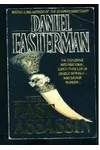
- The Last Assassin (1984/1985) – Easterman's debut, drawing heavily on Iranian history and political unrest.
- The Seventh Sanctuary (1987) – An archaeological search for a lost city that intersects with modern geopolitical conspiracies.
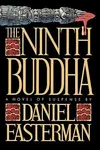
- The Ninth Buddha (1989) – Set in the Himalayas, blending espionage with Buddhist mysticism during the early 20th century.
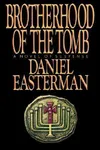
- Brotherhood of the Tomb (1989) – A dark thriller involving an ancient Christian sect and murders across Europe.
- Night of the Seventh Darkness (1991) – A high-stakes adventure set against a backdrop of voodoo, cults, and Caribbean politics.
- Name of the Beast (1992) – A apocalyptic, fast-paced thriller exploring prophecy and ancient Egyptian mysticism.
- The Judas Testament (1994) – A scholar discovers a controversial manuscript allegedly written by Jesus, setting off a deadly international pursuit.
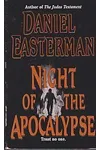
- Night of the Apocalypse (1995) (Also published as Day of Wrath) – A pulse-pounding thriller involving religious fanaticism and a global conspiracy.
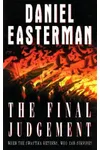
- The Final Judgement (1996) – An exploration of religious extremism and international terror networks.
- Incarnation (2000) – Set in northern India, featuring a young boy who claims to possess the memories of a deceased British intelligence officer.
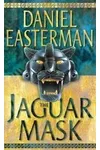
- The Jaguar Mask (2001) – A thriller that plunges into South American mythology, ancient ruins, and drug cartels.
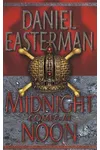
- Midnight Comes at Noon (2002) – A tense thriller involving the sudden destruction of a quiet English village and an international conspiracy.
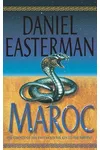
- Maroc (2003) – A mystery that moves between the United Kingdom and Morocco, uncovering dark family secrets and espionage.
- Sword (2008) – A Cairo-based thriller centered around an ancient sword rumored to have belonged to the Prophet Muhammad.
- Spear of Destiny (2009) – A pulse-pounding hunt for a legendary relic tied to World War II history and religious power.
The Jonathan Aycliffe Gothic Ghost Stories
In addition to his political and religious thrillers, MacEoin possessed a remarkable talent for classic, chilling ghost stories. Writing as Jonathan Aycliffe, he crafted atmospheric, deeply unsettling tales of supernatural horror that focused on grief, haunted spaces, and inescapable curses. Like his thrillers, these are standalone works and can be read in any order:
- Naomi's Room (1991) – A devastating and highly acclaimed haunted house novel about a grieving father and a malevolent presence.
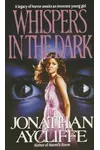
- Whispers in the Dark (1992) – A gothic tale centering on childhood memories, ancient houses, and spirits.
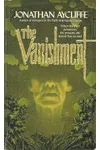
- The Vanishment (1994) – A mystery involving a husband seeking his wife after she vanishes inside a haunted cliffside mansion.
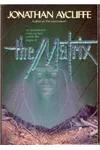
- The Matrix (1995) – A supernatural thriller that delves into the occult, dark magic, and demonic forces.
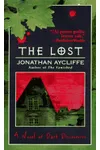
- The Lost (1996) – An eerie tale of supernatural encounters set in the historic streets of Romania.
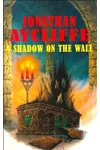
- A Shadow on the Wall (1999) – A classic ghost story following an academic who encounters terrifying apparitions in an old English manor.
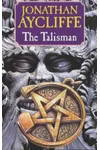
- The Talisman (1999) – A cursed antique object brings terror and misfortune to its owners.
- A Garden Lost in Time (2004) – A hauntingly beautiful novel of lost memories, ghosts, and a mysterious garden.
- The Silence of Ghosts (2013) – Set during World War II, this story follows evacuee children sent to a remote estate that harbors dark secrets.
What to Know Before You Start: Tone and Themes
Dr. Denis MacEoin’s writing is heavily influenced by his real-life academic background. Having earned a Ph.D. from Cambridge in Persian Studies and having taught Arabic and Islamic Studies, MacEoin infused the Daniel Easterman novels with incredibly accurate linguistic, cultural, and historical details. Readers should expect intellectually challenging plots that tackle complex religious structures, ancient texts, and real-world geopolitical tensions. His works do not shy away from controversial topics, regularly addressing the dangers of religious fanaticism across various faiths.
Conversely, the Jonathan Aycliffe novels strip away the global scale and high-tech espionage of the thrillers, trading them for quiet, slow-burning dread. If you are transitioning from Easterman to Aycliffe, prepare for a major shift in pacing; the Aycliffe books are short, intense, and heavily focused on psychological atmosphere and traditional supernatural occurrences.