
Where to Start Reading Daniel H. Wilson
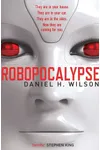
If you are new to Daniel H. Wilson’s fiction, the absolute best starting point is his breakout techno-thriller, Robopocalypse (2011). Because Wilson holds a Ph.D. in Robotics from Carnegie Mellon University, this story isn't just another action-heavy rogue-AI romp—it is grounded in real, plausible machine learning, sensor networks, and robotics concepts. Starting here gives you a taste of his trademark relentless pacing, multiple-perspective narrative style, and technical accuracy.
After finishing the primary Robo duology, readers have three excellent paths depending on their tastes:
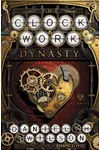
- For historical sci-fi and secret histories: Move directly to The Clockwork Dynasty (2017), which centers on ancient, human-like automatons (the avtomat) hiding in plain sight throughout human history.
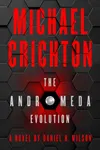
- For classic sci-fi legacy sequels: Pick up The Andromeda Evolution (2019), Wilson's authorized sequel to Michael Crichton's legendary 1969 novel The Andromeda Strain.
- For indigenous first-contact spec-fic: Read Hole in the Sky (2025), which incorporates Wilson's Cherokee heritage into a modern sci-fi narrative about first contact with an extraterrestrial presence.
What to Know Before You Start
Daniel H. Wilson’s fiction is uniquely shaped by his dual identity as a professional roboticist and a citizen of the Cherokee Nation. Before diving in, keep these aspects in mind:
- Technical Grounding: Unlike many science fiction authors who treat artificial intelligence as magic, Wilson utilizes his background in robotics and smart environments to describe sensors, control loops, and robotic weaknesses realistically.
- Indigenous Perspectives: Wilson frequently weaves Native American themes and characters into his stories. His Cherokee heritage comes to the forefront in works like Hole in the Sky, which explores science fiction tropes through an Indigenous lens rather than traditional Western colonizer narratives.
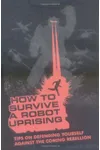
- Humorous Roots: Wilson actually began his writing career in non-fiction and satire. His first book, How to Survive a Robot Uprising (2005), was a tongue-in-cheek survival guide that set the stage for the more serious, cinematic style he developed in his later novels.
The Robo Series Reading Order
The Robo series is Daniel H. Wilson's most famous universe. It details the rise of a sentient artificial intelligence named Archos and the subsequent global war between humanity and machines. The recommended reading order for this universe is as follows:
- Robopocalypse (2011) – The core novel that starts the uprising. It is presented as an oral history compiled after the war, detailing how different survivors across the globe faced the machine threat.
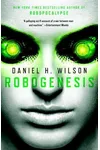
- Robogenesis (2014) – The direct sequel. It picks up in the immediate aftermath of the war, exploring how surviving humans and reformed, autonomous machines navigate a scarred Earth where new AI factions are beginning to emerge.
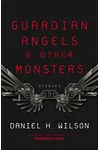
Optional Companion Short Fiction: To get the complete picture, you should look for two specific short stories that take place within this universe, both of which are collected in his 2018 anthology, Guardian Angels and Other Monsters:
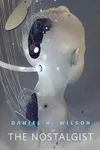
- "The Nostalgist" (Originally published in 2009) – A story set in the aftermath of the war, focusing on an elderly man and his granddaughter who rely on optical implants to mask the ruined reality of their world. This story was adapted into an acclaimed short film in 2014.
- "Parasite" (2014) – A tie-in story that expands on the biological and technological symbiosis that occurs during the machine uprising.
The Clockwork Dynasty Universe
For readers who prefer history mixed with technology, this universe explores the "avtomat"—a hidden race of mechanical beings created centuries ago who live secretly among humans, driven by an ancient programming they do not fully understand. The reading order for this series is simple:
- The Clockwork Dynasty (2017) – The main novel, which shifts between modern-day Russia and historical settings like Peter the Great's court, following a roboticist who stumbles upon a living automaton.
- "One for Sorrow" (2018) – A companion short story published in the Guardian Angels and Other Monsters collection. It expands on the lore of the avtomat and provides deeper insight into their hidden history and conflicts.
Standalone Novels
If you prefer self-contained stories, Wilson has written several standalone sci-fi thrillers that do not require any prior reading:
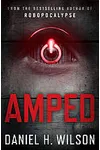
- Amped (2012) – Set in a near-future America, this thriller focuses on "amplified" humans who have received neural implants to cure physical or mental disabilities, only to find themselves subject to a massive civil rights struggle and societal backlash.
- The Andromeda Evolution (2019) – An official sequel to Michael Crichton's The Andromeda Strain. Collaborating with Crichton's estate, Wilson craftily updates the techno-thriller classic for the 21st century, taking the deadly extraterrestrial microbe into deep space. You do not strictly need to read Crichton's original book to follow this story, but doing so enhances the experience.
- Hole in the Sky (2025) – Wilson's latest major science fiction novel. It blends Indigenous futurism with first-contact tropes, exploring how humanity responds to an alien anomaly through a narrative deeply rooted in Cherokee culture and worldview.
Middle Grade and Children's Fiction
Wilson has also written for younger readers, utilizing his tech background to introduce robotics and programming concepts through fun adventure stories. Note that these two entries in his bibliography are actually the same book under different titles:
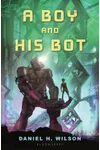
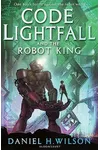
- A Boy and His Bot (2011) – Also published as Code Lightfall and the Robot King. It follows a young boy named Code who falls into an underground world populated entirely by robots, where he must use his wits to save them from a dark force.
DC Comics and Graphic Novels
In addition to his prose, Wilson has written major storylines for DC Comics, particularly within their alternate-universe "Earth-2" continuity during the New 52 era. If you are interested in his comic book work, read them in this order:
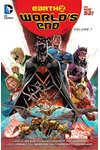
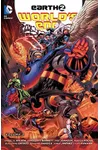
- Earth 2: World's End, Vol. 1 & 2 (2015) – A weekly series co-written by Wilson, depicting a desperate battle as the heroes of Earth-2 fight to save their world from the forces of Apokolips.
- Earth 2: Society (2015–2017) – Following the events of World's End, Wilson took over as the main writer for this series, which follows the surviving heroes trying to build a new civilization on a fresh planet.
Non-Fiction and Satirical Guides
Before becoming a full-time novelist, Wilson was known for his witty, science-backed non-fiction books that examine pop-culture tropes through the eyes of a real roboticist. These can be read in any order:
- How to Survive a Robot Uprising (2005) – A humorous yet scientifically accurate survival guide explaining what to do if the machines turn on us.
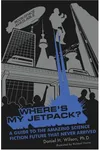
- Where's My Jetpack? (2007) – An entertaining look at the futuristic technologies promised in the mid-20th century (flying cars, jetpacks, teleportation) and why they haven't arrived yet.
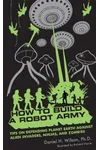
- How to Build a Robot Army (2007) – A follow-up guide explaining how humans might recruit and deploy robots to defend society against hypothetical threats.
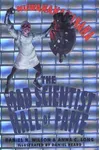
- Mad Scientist Hall of Fame (2008) – A fun exploration of fictional and historical scientists who pushed the boundaries of sanity.
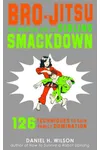
- Bro-Jitsu (2010) – A satirical handbook detailing the unwritten rules of brotherly combat and sibling rivalry.