

Where Should You Start Reading Daniel H. Pink?
Daniel H. Pink’s books are all standalone non-fiction works, meaning you do not need to follow a strict chronological timeline. You can jump into any book that matches your current personal or professional needs. However, navigating his bibliography is much easier when you have a roadmap based on your goals. Here are the three best entry points depending on what you want to achieve:
The Best Overall Starting Point: Drive (2009)
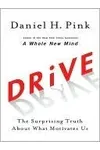
If you only read one book by Daniel Pink, make it Drive: The Surprising Truth About What Motivates Us. It is his breakout international bestseller and serves as the perfect introduction to his style of combining behavioral science with practical advice. In it, Pink outlines why traditional carrot-and-stick (extrinsic) motivators fail in the modern workplace. Instead, he explains the three pillars of true intrinsic motivation: Autonomy (the desire to direct our own lives), Mastery (the urge to get better at something), and Purpose (the yearning to do what we do in the service of something larger).
The Best Starting Point for Productivity: When (2018)
If you want immediate, daily actionable advice on how to structure your day, start with When: The Scientific Secrets of Perfect Timing. Rather than focusing on "how" to do things, this book focuses on the neglected dimension of "when." Pink compiles research from psychology, biology, and economics to show how our biological clocks (chronotypes) affect our cognitive abilities throughout the day, helping you schedule meetings, creative tasks, and restorative breaks for maximum efficiency.
The Best Starting Point for Career Growth: A Whole New Mind (2005)
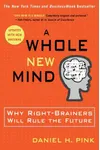
For those feeling stuck in their professional life or looking to future-proof their skills in a world of automation and outsourcing, A Whole New Mind: Why Right-Brainers Will Rule the Future is the perfect place to begin. Pink explains why logical, left-brain analytical skills are no longer enough to stand out in the conceptual economy, and why right-brain capabilities like design, story, symphony, empathy, play, and meaning are essential for future success.
Daniel H. Pink Books in Publication Order
If you prefer to see the chronological evolution of Daniel H. Pink's ideas, reading them in publication order is a rewarding journey. Over the course of two decades, his focus shifted from macro-level workplace trends (like freelancing and right-brain economics) to individual psychological traits (like motivation, persuasion, timing, and regret). Here is the complete list of his books in order of release:
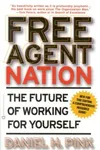
1. Free Agent Nation: The Future of Working for Yourself (2001)
Pink's debut book is an analytical and prophetic look at the rise of the independent workforce. Written at the dawn of the internet era, it documents how freelancers, contractors, and solo entrepreneurs were shifting away from traditional corporate career paths. While some of the technology references are dated, the core insights about self-determination remain highly relevant.
2. The Seven Dirty Words of the Free Agent Workforce (2001)
Published as a companion booklet to his debut, this short work defines the outdated corporate terms that independent workers need to discard to fully embrace a self-employed mindset. It is a quick, punchy read aimed specifically at freelancers looking to shift their professional identity.
3. A Whole New Mind: Why Right-Brainers Will Rule the Future (2005)
Pink outlines the transition from the Information Age (built on logical, linear, left-brain skills) to the Conceptual Age (built on creative, empathetic, right-brain skills). He details the six essential human senses—Design, Story, Symphony, Empathy, Play, and Meaning—that professionals must develop to thrive in the modern economy.
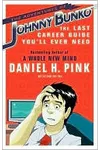
4. The Adventures of Johnny Bunko: The Last Career Guide You'll Ever Need (2008)
This is Pink's most unique book in terms of format. Illustrated by Rob Ten Pas, it is the first business book ever written in the style of Japanese manga (comic book). It follows a frustrated corporate worker named Johnny Bunko who receives advice from a supernatural career counselor. The book distills career wisdom into six memorable lessons, including "there is no plan" and "make excellent mistakes."
5. Drive: The Surprising Truth About What Motivates Us (2009)
This book bridges the gap between what science knows and what business does regarding motivation. Pink leverages decades of behavioral research to show that performance and satisfaction are driven by the deep-seated human need to direct our own lives, to learn and create new things, and to do better by ourselves and our world.
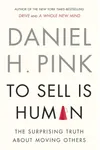
6. To Sell Is Human: The Surprising Truth About Moving Others (2012)
In this book, Pink redefines sales. He argues that one out of every nine workers is in sales, but the other eight are also in sales—meaning they spend their time persuading, negotiating, and influencing others. He offers practical tools to master this "non-sales selling," including new ways to pitch, understand others' perspectives, and make your messages clearer.
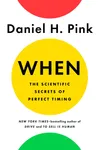
7. When: The Scientific Secrets of Perfect Timing (2018)
Drawing on research from chronobiology and social psychology, Pink explores how timing affects our performance. He provides advice on the optimal times to exercise, take exams, change jobs, or take breaks, turning timing from an intuitive art into a precise, actionable science.
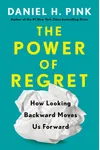
8. The Power of Regret: How Looking Backward Moves Us Forward (2022)
Pink's latest work focuses on a commonly misunderstood emotion: regret. Pulling from his World Regret Survey (which collected regrets from over 16,000 people in 105 countries), he argues that regret is not something to be avoided, but a powerful tool for self-improvement. He classifies regret into four core types and explains how to use them to make better decisions and build a more meaningful life.
What to Know Before You Start
Daniel Pink's writing style is heavily influenced by his background as a political speechwriter (specifically for Vice President Al Gore in the late 1990s). Because of this, his books are exceptionally clear, structured around memorable frameworks, and written with a conversational, friendly tone. He acts as a translator between academia and the general public, synthesizing complex meta-analyses and laboratory studies into simple, actionable steps for everyday readers. If you enjoy authors like Malcolm Gladwell, Adam Grant, or Charles Duhigg, you will feel right at home with Daniel Pink's work.