

Recommended Pathways: Where to Start?
Daniel Kehlmann is a master of blending highbrow philosophy with snappy, accessible storytelling. Because almost all of his books are standalone works, you can pick up whichever grabs your attention. However, depending on your reading tastes, we recommend three distinct entry paths to get the absolute best introduction to his work:
Path 1: The Historical Breakthrough (Highly Recommended)
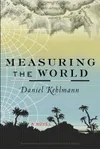
If you love historical fiction that doesn't take itself too seriously, start with Measuring the World (2006). This globally acclaimed novel reimagines the lives of two eccentric German geniuses in the nineteenth century: the geographer Alexander von Humboldt and the mathematician Carl Friedrich Gauss. It is funny, sharp, and a brilliant satire on the German Enlightenment.
Path 2: The Grim Medieval Masterpiece
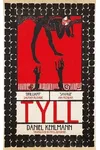
If you prefer a darker, more epic feel with elements of folklore, pick up Tyll (2020). Kehlmann takes the traditional German folklore figure of Tyll Eulenspiegel and transports him to the bleak, chaotic landscape of the Thirty Years' War. It's a rich, episodic novel that acts as both a historical reconstruction and a work of magical realism.
Path 3: The Swift, Creepy Novella
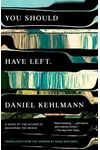
For readers who want something quick, intense, and modern, start with You Should Have Left (2017). This eerie, meta-fictional horror novella details a screenwriter's descent into madness while staying in a remote house in the Alps. It is a rapid read that shows off Kehlmann's ability to play with space, time, and narrative structure.
Daniel Kehlmann's Books in Publication Order
While Kehlmann's novels are standalone, reading them in order of their English translations lets you witness his growth from a developer of clever, satirical character studies to a master of sweeping historical and metaphysical epics. Below is the list of his novels available in English translation:
- Measuring the World (2006) – Originally published in German as Die Vermessung der Welt (2005). Translated by Carol Brown Janeway.
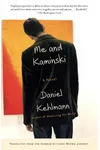
- Me and Kaminski (2008) – Originally published in German as Ich und Kaminski (2003). Translated by Carol Brown Janeway.
- Fame: A Novel in Nine Episodes (2010) – Originally published in German as Ruhm (2009). Translated by Carol Brown Janeway.
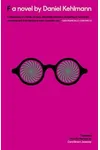
- F (2014) – Originally published in German as F (2013). Translated by Carol Brown Janeway.
- You Should Have Left (2017) – Originally published in German as Du hättest gehen sollen (2016). Translated by Ross Benjamin.
- Tyll (2020) – Originally published in German as Tyll (2017). Translated by Ross Benjamin.
- The Director (2025) – Originally published in German as Lichtspiel (2023). Translated by Ross Benjamin.
The Untranslated Early Works
Before his international breakthrough with Measuring the World, Kehlmann published three early novels in Germany. As of mid-2026, these have not received official English translations, though you may find them referenced in academic works under literal English titles:
- Beerholms Vorstellung (1997; literally "Beerholm's Performance") – His debut novel about a stage magician who begins to believe he possesses real magic.
- Mahlers Zeit (1999; literally "Mahler's Time") – A philosophical story centering on a physicist who discovers a formula that could control time.
- Der fernste Ort (2001; literally "The Remotest Place") – A psychological narrative about a young man who decides to fake his own death to start a new life.
Unpacking the Standalone Novels
Each of Kehlmann's major works explores distinct themes, but they all share his signature sharp wit and philosophical playfulness. Here is what to expect from his translated novels:
Measuring the World (2006)
This is the book that turned Kehlmann into a literary sensation, selling millions of copies worldwide. By contrasting the practical, explorer lifestyle of Alexander von Humboldt with the reclusive, grumpy genius of Carl Friedrich Gauss, Kehlmann highlights the absurdity of human attempts to fully measure and categorize the wild, chaotic natural world.
Me and Kaminski (2008)
A biting, satirical look at the art world. The story follows Sebastian Zöllner, a deeply disingenuous, ambitious journalist who seeks to secure his own fame by writing an unauthorized biography of Manuel Kaminski, an aging, blind painter who was once championed by Picasso. It is a hilarious road-trip story about exploitation, aging, and the subjectivity of truth.
Fame: A Novel in Nine Episodes (2010)
This experimental work consists of nine interconnected stories exploring the digital age, identity theft, and the loss of reality in a hyper-connected world. Characters slide in and out of each other's lives, dealing with cell phones, double lives, and the strange feeling that they might just be characters in someone else's book.
F (2014)
Centering on three brothers—a fake priest, a fraudulent art dealer, and an unsuccessful investment advisor—who are all masters of deception. Kehlmann creates a tragicomic puzzle box about family ties, fate, religion, and the various lies we tell ourselves to survive in modern society.
You Should Have Left (2017)
Written in the form of a journal, this claustrophobic horror story is about a writer trying to craft a sequel to his hit screenplay. As he and his family isolate themselves in a modern, architecturally unsettling house in the Alps, the physical dimensions of the house start to shift, reflecting the cracking state of his marriage and mind.
Tyll (2020)
Set during the brutal devastation of the Thirty Years' War, this historical novel follows Tyll Eulenspiegel, a legendary jester who navigates a land torn apart by religious wars, witch trials, and political chaos. Through Tyll's eyes, Kehlmann reflects on art, survival, and the power of performance in the darkest periods of human history.
The Director (2025)
Kehlmann's latest translated novel, The Director (originally Lichtspiel), turns its lens toward G.W. Pabst, one of the greatest film directors of the Weimar Era. Having fled to Hollywood, Pabst returns to Austria to visit his family and finds himself trapped under the Nazi regime, forced to make a movie for the Minister of Propaganda. It is a powerful, tragicomic exploration of artistic collaboration, moral compromise, and the nature of cinema.
Daniel Kehlmann's Plays in English
In addition to his novels, Kehlmann is a celebrated playwright whose works frequently examine artistic ego and moral suspense. Two of his prominent plays have been translated into English by the acclaimed translator and playwright Christopher Hampton:
- The Mentor (2017) – A sharp comedy that pits an aging, arrogant, and long-past-his-prime literary giant against a talented, modern young writer in a remote retreat. It explores literary jealousy and the commercialization of art.
- Christmas Eve (2017) – A fast-paced, real-time thriller set during a tense police interrogation. A philosophy professor suspected of planning a terrorist attack is grilled by a state security officer on Christmas Eve, raising critical questions about individual liberty and national security.
What to Know Before You Start
To fully enjoy Kehlmann's catalog, keep these three key elements in mind:
- The Magical Realism Connection: While Kehlmann writes in German and is deeply rooted in European history, he has cited Latin American magical realism (such as Gabriel García Márquez) as a major influence. Don't be surprised when physical spaces bend, ghosts appear, or folklore figures come to life.
- Translators Matter: Kehlmann's prose in English is shaped by two masterful translators. Carol Brown Janeway translated his early books, capturing his dry, crisp wit. Ross Benjamin has translated his later, more complex works like You Should Have Left, Tyll, and The Director, preserving their rhythmic and linguistic nuance.
- Film Adaptations: If you enjoy his books, look out for their screen counterparts. Me and Kaminski was adapted into a highly praised 2015 comedy starring Daniel Brühl, while You Should Have Left was adapted into a 2020 psychological horror movie starring Kevin Bacon and Amanda Seyfried.