


Where Should You Start Reading Daniel Keyes?
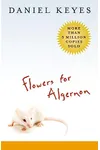
For almost every reader, the non-negotiable entry point is Flowers for Algernon. Initially published as a Hugo Award-winning short story in 1959 and later expanded into a Nebula Award-winning novel in 1966, this masterpiece established Keyes' signature style: combining deep psychological realism with emotional resonance. Reading the novel first allows you to experience the diary-style progression of Charlie Gordon as his intelligence peaks and declines alongside a lab mouse named Algernon.
Once you have finished his signature work, the ideal reading path branches depending on your interests. If you prefer grounded, true-to-life psychological profiles, you should transition directly to his true-crime and psychological biography books. If you want to explore how he developed these themes in fiction, his standalone novels offer excellent companion pieces.
The Billy Milligan Series
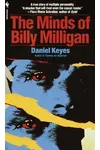
Keyes’ most famous non-fiction project centers on Billy Milligan, a man diagnosed with dissociative identity disorder (then called multiple personality disorder) who was acquitted of major crimes in a landmark 1970s legal case. To read this series correctly, follow the publication sequence:
- The Minds of Billy Milligan (1981): This book reconstructs Billy’s childhood, the crimes he was accused of, and the therapeutic process that revealed his twenty-four distinct personalities. It reads like a psychological thriller but is entirely grounded in Keyes’ extensive interviews and court documents.
- The Milligan Wars (1994): This sequel documents Milligan’s controversial treatment inside state psychiatric institutions and his struggle for release.
A Crucial Note for English Readers
If you are looking for an English copy of The Milligan Wars, you will likely run into a roadblock. Due to ongoing legal disputes and movie rights complications in the United States, the English-language version of the book has never been officially published. However, the book was translated and widely released in foreign markets, including Japan (1994), Hungary, and Ukraine. For English readers, your best option is to track down imported translations or wait for legal resolutions to clear the path for a domestic release.
Standalone Novels: Exploring the Fictional Mind
Before and after writing about real cases of dissociative identity disorder, Keyes wrote gripping fiction that explored identical psychological themes. These can be read in any order, but reading them chronologically shows his evolving fascination with human psychology:
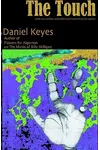
- The Touch / The Contaminated Man (1968): Keyes' second novel explores the psychological, social, and physical isolation of a young couple exposed to radioactive dust after an industrial accident. It was later re-edited and republished in 1977 under the title The Contaminated Man.
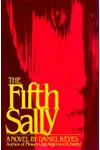
- The Fifth Sally (1980): Published just a year before his biography of Billy Milligan, this novel tells the story of Sally Porter, a quiet woman unaware that she harbors four distinct, vibrant, and sometimes dangerous alternate personalities. It acts as a fascinating fictional precursor to his real-world work on Milligan.
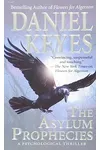
- The Asylum Prophecies (2009): Keyes' final novel is a fast-paced political and psychological thriller. It follows Raven Slade, a young woman in an asylum who suffers from dissociative identity disorder. Hidden deep within her subconscious is a secret warning about an impending terrorist attack, prompting federal agents and psychiatrists to race against the clock to unlock her memories.
Non-Fiction and Behind-the-Scenes Memoirs
For readers who appreciate Keyes' investigative rigor and want to know more about his writing process, two essential non-fiction works complete his bibliography:
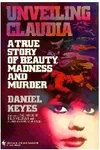
- Unveiling Claudia: A True Story of Serial Murder (1986): This true-crime book details the baffling case of Claudia Yasko, a young woman who confessed to a series of triple homicides in Columbus, Ohio. When the murders continued while she was locked up, police realized they had a false confession on their hands. Keyes spent two years researching Claudia's fragile mental state and the circumstances that led her to confess to crimes she did not commit.
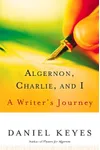
- Algernon, Charlie, and I: A Writer's Journey (2000): Part memoir and part writing guide, this book tracks the inspiration behind Flowers for Algernon. Keyes explains how his college psychology courses, his time editing pulp magazines, and his experience teaching students with special needs combined to inspire his most famous creation.
What to Know About the EC Archives Collections
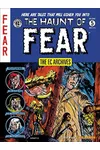
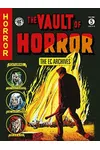
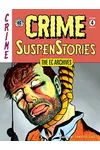
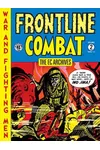
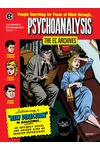
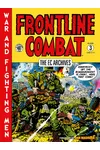
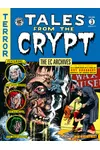
When looking at complete bibliographies of Daniel Keyes, you will frequently see listings for The EC Archives (such as Weird Science, Two-Fisted Tales, and Psychoanalysis). It is important to know that Keyes did not write these massive compilations. Instead, in the mid-1950s, long before he wrote his novels, Keyes worked as an editor and writer for EC Comics and Atlas Comics under pseudonyms like Kris Daniels and A.D. Locke. The modern EC Archives volumes collect these vintage issues, containing short stories he wrote or edited during his early career in the comic book industry.