







Recommended Reading Path: Where to Start
For most readers, the journey into Daniel Quinn’s thought-provoking universe begins with his seminal work, Ishmael. Since Quinn’s books are deeply philosophical and build upon one another conceptually, jumping into his catalog without a roadmap can lead to confusion. The author himself frequently structured his writing as a progressive "course" designed to dismantle human-centric biases and reconstruct our relationship with the natural world. While each book can be read as a standalone, reading them in order lets you follow the natural evolution of his ideas.
To get the most out of his bibliography, follow this recommended progression:
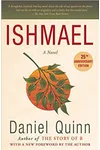
- Ishmael (1992): Start here. This is the foundational text that introduces the core vocabulary of Quinn’s philosophy, including the distinction between "Takers" (modern agricultural civilization) and "Leavers" (indigenous, tribal societies).
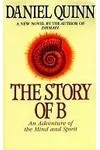
- The Story of B (1996): Read this second. It serves as a spiritual sequel, diving deeper into the history of the agricultural revolution, religion, and the cultural mythology that keeps Taker culture in place.
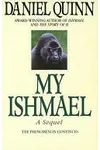
- My Ishmael (1997): Read this third. Often called a "sidequel," it retells the events of the first book from a different perspective with a new, younger pupil, addressing how to apply these ideas in our daily lives.
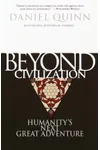
- Beyond Civilization (1999): Move to this nonfiction work next. It acts as the practical handbook for Quinn's concept of "new tribalism," offering concrete ideas on how small, cooperative communities can operate outside the modern industrial system.
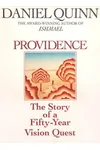
- Providence: The Story of a Fifty-Year Vision Quest (1994): Read this autobiographical work to understand the personal experiences, dreams, and publishing career that led Quinn to write his famous trilogy.
What to Know Before You Start
Before diving into Daniel Quinn's works, it is helpful to understand the central themes and literary styles that define his bibliography. Quinn was not a typical novelist; he was first and foremost a philosopher who used fiction as a vehicle to challenge the global narrative of human supremacy. He won the Turner Tomorrow Fellowship in 1991 for his manuscript of Ishmael, a prize established to encourage authors to write works offering positive, creative solutions to global problems.
His writing relies heavily on Socratic dialogue. Rather than action-packed plots, his books are built on intellectual conversations between a mentor and a pupil. The mentor is often someone unexpected—such as a telepathic gorilla or a modern-day heretic. Through these dialogues, Quinn introduces the core concepts of "Takers" and "Leavers." The Takers are members of the dominant global civilization who believe the Earth belongs to humans, while the Leavers are members of hunter-gatherer and indigenous cultures who believe humans belong to the Earth. Quinn's ultimate goal was to show that our civilization's story is not the only way to live, and that we must change our story if we want to survive.
The Foundation: The Ishmael Trilogy
Although they can theoretically be read as standalones, the three novels in the Ishmael series form a cohesive intellectual arc. Reading them in order of publication is highly recommended because each book answers questions left open by its predecessor.
Ishmael (1992)
Winner of the Turner Tomorrow Fellowship Award, this novel introduces a nameless narrator who responds to a classified ad seeking a pupil who wants to save the world. He discovers the teacher is Ishmael, a telepathic gorilla who has learned to communicate with humans. Through Socratic dialogue, Ishmael explains how human history took a destructive turn 10,000 years ago with the agricultural revolution, dividing humanity into Takers and Leavers.
The Story of B (1996)
This spiritual sequel follows Jared Osborne, a priest sent to investigate a mysterious heretic named Laurent who goes by "B." B is preaching an eco-centric philosophy that directly challenges traditional religions and Western history. The book contains long, essay-like lectures that expand on the ecological crisis and the mechanisms of cultural brainwashing.
My Ishmael (1997)
In this parallel novel, we learn that before working with the narrator of the first book, Ishmael taught a twelve-year-old girl named Julie Gerchak. Because of her youth, Julie forces Ishmael to explain his ideas without academic jargon, leading to a much more accessible and practical breakdown of how tribalism can be adapted to modern society.
The Standalone Novels
For readers who want to see Quinn’s philosophical concepts applied to different genres, his standalone novels offer psychological suspense, alternate history, and magical realism.
Dreamer (1988)
Published before Ishmael, this psychological thriller follows Greg Donner, a Chicago writer who falls in love with a mysterious woman named Ginny. After she warns him of a strange danger, Greg wakes up locked in a sanatorium, where doctors tell him his entire life in Chicago was a dream. The book challenges the nature of reality and sanity, foreshadowing Quinn's interest in how cultural narratives shape what we perceive as real.
After Dachau (2001)
This dystopian, alternate history novel imagines a future world two thousand years after a Nazi victory in World War II. The Nazis developed the atomic bomb first, conquered the globe, and systematically eliminated all non-white populations. The narrative shifts when Mallory Hastings experiences a traumatic event and remembers a past life as a Black woman in 1940s America, exposing the horrific truth behind their sanitized global history.
The Holy (2002)
Blending magical realism and detective fiction, this novel follows a private investigator hired to find evidence of "the ancient gods" or "Forerunners" who have lived secretly alongside humanity. The book acts as a philosophical thriller, showing how modern religious dogmas have alienated us from the Earth and the older, animistic spiritualities that preceded civilization.
Non-Fiction and Philosophical Collections
If you prefer direct essays and guides rather than narrative fiction, Daniel Quinn wrote several companion volumes that expand on his core worldview.
- Providence (1994): A blend of autobiography and philosophy, detailing Quinn's childhood dreams, his time training to be a Trappist monk under Thomas Merton, and the twenty-year struggle to find the right format for Ishmael.
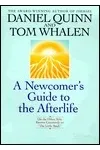
- A Newcomer's Guide to the Afterlife (1997): Co-authored with Tom Whalen, this lighthearted, satirical book guides readers through a whimsical view of what happens after we die, blending humor with existential philosophy.
- Beyond Civilization (1999): A collection of short, punchy essays outlining how "new tribalism" can work in business, education, and community organizing. It is a call to action, focusing on how humans can organize themselves in small, cooperative groups to survive the collapse of industrial civilization.
- If They Give You Lined Paper, Write Sideways. (2007): Structured as a series of letters and dialogues with readers, this guide offers advice on critical thinking, challenging authority, and living an authentic life.
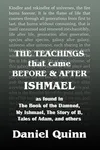
- The Teachings That Came Before and After Ishmael (2014): A comprehensive anthology compiling excerpts from his earliest writings and later essays, serving as a perfect retrospective of his philosophical evolution.
Short Stories, Graphic Novels, and Other Formats
Quinn also experimented with visual and shorter formats to convey his message of ecological awareness and cultural renewal.
- The Book of the Damned (1982): A rare early novella that outlines the philosophical frustrations that would eventually culminate in his later works.
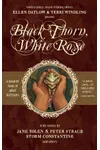
- Black Thorn, White Rose (1994): An adult fairy tale anthology edited by Ellen Datlow and Terri Windling, featuring Quinn's short story retelling "The Frog King, or Iron Henry."
- The Man Who Grew Young (2001): A graphic novel illustrated by Szimhart that tells the story of a man living backwards through human history, from the high-tech future back to the hunter-gatherer era.
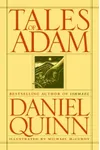
- Tales of Adam (2005): A collection of short stories depicting the lifestyle of early humans, illustrating what it truly means to live as a "Leaver" in harmony with the environment.
- Work, Work, Work (2006): A children's picture book that critiques the modern obsession with labor and productivity through the story of a badger.
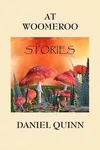
- At Woomeroo (2012): A collection of short stories, essays, and fables that continue to probe civilized assumptions.
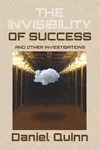
- The Invisibility of Success (2014): A collection of writings exploring how successful ecological adaptations are often invisible because they do not disrupt the environment.
- Sleepwalking Thru a Marriage (2020): A posthumously published collection of short stories exploring domestic life, relationships, and human communication.
Chronological vs. Publication Order Caveats
While some readers try to tackle Quinn’s bibliography in absolute chronological order—starting with early works like The Book of the Damned (1982) or the standalone Dreamer (1988)—this is not recommended. Quinn's early works, while interesting, do not have the refined vocabulary or structured Socratic methodology that made his philosophy famous. Reading them first can lead to confusion about his ultimate message. Reading his bibliography in publication order starting with Ishmael ensures you build a step-by-step understanding of the terminology and concepts he invented.