
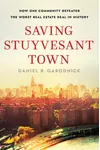
Where to Start Reading Daniel R. Garodnick
Daniel R. Garodnick has a singular, deeply impactful narrative non-fiction book that functions as a standalone work. If you want to dive into his writing, there is one clear and essential starting point:
- Saving Stuyvesant Town: How One Community Defeated the Worst Real Estate Deal in History (2021)
Because Garodnick is primarily a public servant, lawyer, and urban planner rather than a career novelist, he has not published multiple fictional series or connected sagas. His book is a complete, self-contained story. You do not need to worry about spin-offs, prequels, or companion volumes to understand the narrative.
Publication Order vs. Chronological Order
Since there is only one book, the publication order and chronological order are identical. The book was published on April 15, 2021, by Three Hills Press, an imprint of Cornell University Press. However, the events detailed within the book span a complex nine-year period from 2006 to 2015. For readers interested in local history and urban policy, the narrative outlines a chronological timeline of real estate negotiations, legal challenges, and community organizing in Manhattan's East Side.
What to Know Before You Start
Before reading Saving Stuyvesant Town, it is helpful to understand the setting and the stakes of the conflict. Stuyvesant Town-Peter Cooper Village is a massive post-WWII housing development in Manhattan designed to provide middle-class New Yorkers with stable, affordable homes. Garodnick, who grew up in the community and later represented it as a New York City Council member, writes the book from a unique dual perspective: both as an insider tenant activist and a legislative negotiator.
The book details the aftermath of the 2006 sale of the complex to Tishman Speyer and BlackRock for $5.4 billion—which became the largest single-asset real estate default in American history when the buyers' plans to aggressively deregulate rent-stabilized apartments collapsed. The narrative serves as a practical, real-world case study for community advocates, planners, and readers interested in affordable housing preservation across the United States.
Other Publications and Legal Work
For readers who wish to study Garodnick's deeper policy analysis and academic writing, his background includes legal publications. Most notably, during his time at the University of Pennsylvania Law School, he served as the Editor-in-Chief of the University of Pennsylvania Law Review. He also authored the legal article "What's the BID Deal? Can the Grand Central Business Improvement District Serve a Special Limited Purpose?" (published in the University of Pennsylvania Law Review, Vol. 148), which explores urban management and business improvement districts. While these publications are legal studies rather than mainstream narrative books, they offer valuable context for those studying New York City planning and municipal law.