
Where to Start Reading David C. Taylor
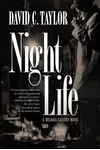
For anyone looking to dive into David C. Taylor's vivid historical fiction, the absolute best place to start is with his debut novel, Night Life. This book introduces readers to Detective Michael Cassidy and establishes the dark, atmospheric, and politically charged world of 1950s New York City. Starting here allows you to fully experience the character's growth, his complex family dynamics, and the looming shadow of the Cold War as it intensifies across the trilogy.
If you prefer a fast-paced contemporary thriller instead of historical noir, you can start with his standalone novel, L.A. Burning. However, to capture the heart of what made Taylor a celebrated voice in crime fiction—including winning the prestigious Nero Wolfe Award—the Michael Cassidy books remain the essential starting point.
The Michael Cassidy Series in Order
The Michael Cassidy series is a trilogy that follows an NYPD detective navigating the moral gray areas of mid-century America. Fortunately for readers, the publication order of these books matches their internal chronological order, making the reading path straightforward. Here is the order in which to read them:
1. Night Life (2015)
Set in New York City in 1954, the series debut introduces us to Detective Michael Cassidy during the height of the Red Scare and Senator Joseph McCarthy's anti-communist witch hunts. Cassidy is assigned to investigate the brutal murder of Alexander Ingram, a Broadway chorus dancer. What initially looks like a localized crime quickly spirals into a massive conspiracy involving the FBI, the CIA, and the Mafia, all of whom are desperate to secure high-level intelligence the victim left behind. Cassidy must navigate these competing forces while dealing with his own prophetic, haunting nightmares. Night Life was a finalist for the Edgar Award for Best Novel and won the 2016 Nero Wolfe Award.
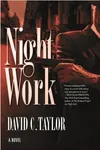
2. Night Work (2016)
Taking place in December 1958, the second installment broadens the geographical scope of Cassidy's investigations. The novel begins with Cassidy being tasked with transporting a Cuban killer back to Havana. Upon arrival, he finds himself caught in the explosive final days of the Cuban Revolution. The plot thickens when Cassidy is subsequently assigned to protect Fidel Castro during his high-profile visit to New York. Blending international political intrigue with a domestic murder case involving New York's wealthy elite, Night Work delivers high-tension suspense and a deep look at political corruption.
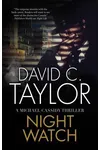
3. Night Watch (2019)
Set in the late 1950s, the final book in the trilogy finds Cassidy embroiled in a dangerous web of conspiracy that reaches the highest levels of government. The investigation forces him to confront escaped Nazi war criminals, rogue CIA operatives, and a highly elusive psychopathic killer. The novel leans heavily into the paranoid, shadows-and-fog atmosphere of late-fifties NYC, bringing Cassidy's personal and professional struggles to a thrilling conclusion.
Venturing Into Modern Hollywood: The Standalone
For readers who want a change of pace from historical New York, Taylor wrote a standalone thriller that shifts the setting to the West Coast and the modern era.
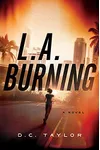
L.A. Burning (2022)
Sometimes credited under the name D.C. Taylor, this contemporary thriller centers on Cody Bonner, a resilient protagonist with a troubled past. Cody is the daughter of a famous Hollywood star, but she spent her youth as a street kid before serving six years in prison for a bank robbery. Following her release, Cody returns to Los Angeles determined to investigate the mysterious death of her identical twin sister, Julie, whose body washed up on a Malibu beach. Her quest for vengeance leads her into the dark underbelly of the entertainment industry, targeting a powerful Hollywood agent accused of exploiting young women. The story reaches its climax against the dramatic backdrop of a devastating Southern California wildfire.
What to Know Before You Start: Themes and Tone
Before you dive in, there are several key elements that define David C. Taylor's writing style and make his books stand out:
- The Influence of Classic Noir: Taylor's style is heavily influenced by masters of the genre like Dashiell Hammett and Raymond Chandler. Expect fast-paced, cinematic prose, moral ambiguity, and a deep appreciation for the atmosphere of the locations he describes.
- Fictionalized Family Dynamics: Michael Cassidy's background features a fascinating contrast: his father is a wealthy Broadway producer (mirroring Taylor's real-life father, the famous playwright Samuel Taylor), while his godfather is the notorious real-world Mafia boss Frank Costello. This dual connection constantly pulls Cassidy between high society and the criminal underworld.
- Historical Accuracy: Taylor utilizes his own childhood memories of growing up in mid-century New York, alongside extensive research, to make the settings feel authentic. Real-world historical figures and events—such as McCarthyism, the Cuban Revolution, and Frank Costello—are woven seamlessly into the fictional narratives.
- A Screenwriter's Eye: Having spent over two decades writing scripts in Hollywood, Taylor brings a highly visual, scene-driven pace to his novels, making them feel like classic movies playing out on the page.