



Where to Begin: The Best Starting Points for David Brin
David Brin is a titan of hard science fiction, combining his PhD-level understanding of space science with a gift for expansive, philosophical storytelling. If you are new to his work, you have two excellent entry points depending on what flavor of sci-fi you prefer:
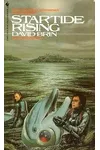
- For Epic Space Opera: Start with Startide Rising (1983). Although it is technically the second book in the Uplift Saga, it works perfectly as a standalone introduction. It won both the Hugo and Nebula awards and features a dolphin-crewed starship fleeing hostile alien alliances. It remains Brin's most famous and beloved space adventure.
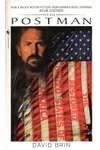
- For Post-Apocalyptic Hope: Start with The Postman (1985). If you prefer grounded, Earth-bound stories over galactic politics, this standalone novel is the perfect choice. Set in a rugged, post-collapse America, it follows a drifter who assumes the role of a mail carrier, accidentally sparking a movement of hope and renewal. It won the John W. Campbell Memorial Award and Locus Award, and was later adapted into a Kevin Costner film.
The Uplift Saga: Publication vs. Chronological Order
The Uplift Saga is David Brin's signature series, set in a universe where sentient species survive by "uplifting" pre-sentient species into sapience. While the timeline runs chronologically, reading the series in publication order is highly recommended. The series is divided into two distinct trilogies:
The Original Uplift Trilogy
The first three novels are largely self-contained stories set in different parts of the galaxy, though they share the same universe and overall lore. You can read them out of order, but publication order is best for absorbing the worldbuilding:
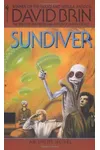
- Sundiver (1980): Chronologically the first, this is a sci-fi murder mystery set near the sun. It introduces the concept of Uplift, but is generally considered slower and less representative of the series' epic scale. Many readers choose to skip this and come back to it later.
- Startide Rising (1983): The crown jewel of the series, detailing the crew of the dolphin-assisted ship Streaker and their discovery of a mysterious derelict fleet that throws the galaxy into chaos.
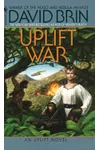
- The Uplift War (1987): Taking place concurrently with the events of Startide Rising, this novel shifted focus to a human-and-chimpanzee colony on the planet Garth, which is invaded by the avian Gubru who seek to exploit the secrets found by the Streaker.
The Uplift Storm Trilogy (The Second Trilogy)
Unlike the first trilogy, the second set of books forms a single, continuous narrative. You must read these in order, and you should read Startide Rising and The Uplift War first to understand the galactic conflict that forms the backdrop:
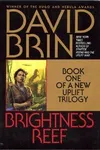
- Brightness Reef (1995): Introduces the planet Jijo, where several illegal colonist species (including humans) live in hiding.
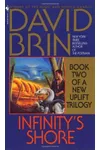
- Infinity's Shore (1996): Continues the story on Jijo as the galactic crisis catches up to the hidden refugees.
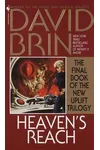
- Heaven's Reach (1998): The final entry that ties together the fates of the Jijo refugees and the crew of the Streaker.
Uplift Side Stories and Companions
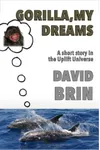
- Gorilla, My Dreams (2011): A short, comedic digital story set in the Uplift universe. It follows humans and uplifted chimpanzees dealing with alien arrival.
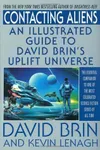
- Contacting Aliens (2002): An illustrated, non-fiction style field guide co-authored with Kevin J. Anderson, detailing the alien species of the Uplift universe.
The High Horizon (Colony High) Series
If you're looking for Young Adult science fiction, this series follows a group of high school students from Twenty-Nine Palms, California, who are transported to an alien world:
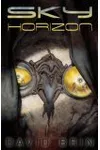
- Sky Horizon (2007): Originally published as a novella, this book serves as the prequel and backstory to the main series.
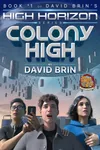
- Colony High (2021): The first full-length novel in the series, expanding on the students' survival on the alien jungle planet.
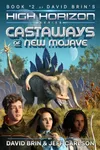
- Castaways of New Mojave (2021): Co-authored with the late Jeff Carlson, this second volume follows the students' struggle to build a society amidst alien parasites.
The Out of Time Series
This YA science fiction series was conceived by David Brin, but the individual novels were written by other prominent authors. The books follow teenagers from history who are pulled into the 24th century to save the future. If you want to read them, follow this order:
- Yanked! (1999) by Nancy Kress
- Tiger in the Sky (1999) by Sheila Finch
- The Game of Worlds (1999) by Roger MacBride Allen
- The Archimedes Gambit (2021) by Patrick Freivald
The Kiln Series Caveat
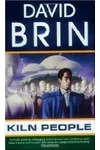
Brin's 2002 novel Kiln People (sometimes stylized as Kil'n People) is a brilliant standalone detective story set in a future where people can imprint their consciousness into short-lived clay duplicates called "dits". While many bibliographies and online bookstores list a sequel titled Kil'n Time (2002), readers should be aware that this sequel was never actually published. It remains an unreleased project, so do not spend your time searching for a copy!
David Brin's Standalone Masterpieces
Beyond his series, Brin has written several notable standalone novels that are highly regarded by science fiction readers:
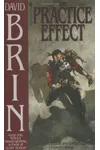
- The Practice Effect (1984): A fun, lighthearted portal fantasy/sci-fi about a world where tools improve the more they are used, rather than wearing down.
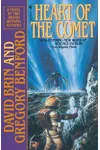
- Heart of the Comet (1986): Co-authored with Gregory Benford, this hard sci-fi novel chronicles a human mission to colonize Halley's Comet.
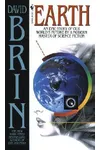
- Earth (1990): An incredibly prescient novel set in 2038 that predicted email spam, social media, blogging, and personal camera phones, while telling a story about a micro-black hole threatening to consume the Earth.
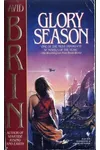
- Glory Season (1993): A complex sociological sci-fi novel set on a planet dominated by cloned women, exploring genetic engineering and societal structures.
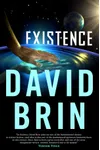
- Existence (2012): A near-future epic about first contact, space debris, and the survival of human consciousness.
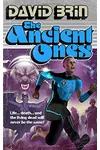
- The Ancient Ones (2020): A comedic sci-fi novel about a future where humans are now the revered but outdated "elder" species of the galaxy.
The Second Foundation Trilogy Connection
For fans of Isaac Asimov's Foundation, David Brin contributed to the authorized **Second Foundation Trilogy**, written by the "Killer B's" (Gregory Benford, Greg Bear, and David Brin). The books should be read in this order:
- Foundation's Fear (1997) by Gregory Benford
- Foundation and Chaos (1998) by Greg Bear
- Foundation's Triumph (2000) by David Brin
Brin's final book is highly praised for tying together Asimov's Robot, Empire, and Foundation universes into a cohesive conclusion.