
The Recommended Reading Path
If you are diving into the works of David Eddings (co-authored with his wife, Leigh Eddings), the best way to read them is by following the publication order of their distinct universes. The authors wrote two massive, separate fantasy cycles, a standalone epic, and a final four-book series. Because their series build directly on the rules, lore, and character development established in preceding books, reading them out of order will spoil major plot points.
Here is the ultimate recommended reading path for David Eddings' books:
- The Belgariad: The essential starting point for all Eddings readers.
- The Malloreon: The direct five-book sequel series to The Belgariad.
- The Prequels & Companion: Belgarath the Sorcerer, Polgara the Sorceress, and The Rivan Codex. Read these only after finishing the main ten-book saga.
- The Elenium: A separate, slightly grittier trilogy featuring the knight Sparhawk.
- The Tamuli: The direct sequel trilogy to The Elenium.
- The Redemption of Althalus: A standalone epic fantasy novel perfect for a quick transition.
- The Dreamers: A standalone four-book series set in a completely different world.
The Belgariad & The Malloreon Universe (The Aloria Cycle)
This is David Eddings' most famous work, following the classic coming-of-age journey of Garion, a farm boy who discovers he has a central role in a cosmic battle between rival gods. It is highly recommended to read this ten-book epic in strict chronological publication order.
The Belgariad
The Belgariad is a five-book series that introduces readers to the world of Aloria and the magic of the Will and the Word. The books should be read in this order:
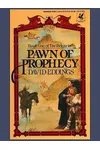
- Pawn of Prophecy (1982) – Introduces Garion on Faldor's farm and begins the quest for the stolen Orb of Aldur.
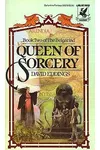
- Queen of Sorcery (1982) – Follows the traveling party into Sendaria, Arendia, and Nyissa.
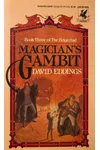
- Magician's Gambit (1983) – The companions journey into the dark lands of the Tolnedran Empire and Ulgoland.
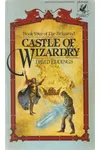
- Castle of Wizardry (1984) – Garion and his friends reach Riva, where his true lineage and destiny are revealed.
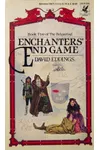
- Enchanters' End Game (1984) – The climax of the series, where Garion must face the evil god Torak in singular combat.
The Malloreon
A direct sequel to The Belgariad, this series takes place several years later. A new prophecy arises, forcing Garion and his companions to travel to the eastern continent of Mallorea to rescue his kidnapped son. Read these books in this order:
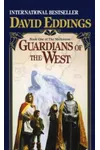
- Guardians of the West (1987) – Details the peace following Torak's defeat and the emergence of a new threat. Note that some catalog sources list a publication date of 1985, but the book was widely released in 1987.
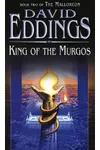
- King of the Murgos (1988) – Follows the search for Garion's son through the dangerous lands of the Murgos.
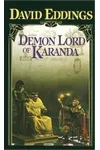
- Demon Lord of Karanda (1988) – The quest leads the companions into the plague-stricken regions of Karanda.
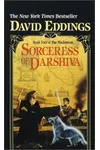
- Sorceress of Darshiva (1989) – Garion pursues the kidnapper Zandramas while navigating a war between rival empires.
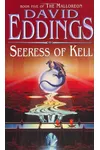
- The Seeress of Kell (1991) – The final confrontation that decides the fate of the universe.
The Prequels and Companion Books
After completing the ten books of the main cycle, you can dive into the prequels and companion materials that expand the lore of Aloria. Do not read these first, as they contain massive spoilers for both the Belgariad and the Malloreon:
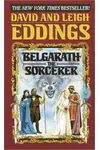
- Belgarath the Sorcerer (1995) – A prequel novel told from the perspective of Belgarath, covering thousands of years of history leading up to the main series.
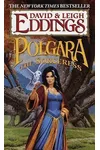
- Polgara the Sorceress (1997) – A companion prequel telling the history of the world through the eyes of Belgarath's daughter, Polgara.
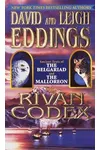
- The Rivan Codex (1998) – A collection of background notes, world-building essays, and drafts compiled by David and Leigh Eddings.
The Elenium & The Tamuli Universe
This universe is entirely separate from Aloria. It features Sparhawk, a veteran Pandion Knight who serves as a champion for his queen. The tone here is slightly more mature, with political intrigue, church politics, and ancient monsters playing a larger role.
The Elenium
This trilogy must be read first to understand the characters and the geopolitical state of the world:
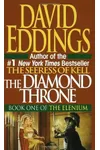
- The Diamond Throne (1989) – Sparhawk returns from exile to find his young queen poisoned and encased in diamond to keep her alive.
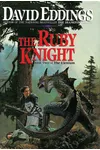
- The Ruby Knight (1990) – The quest for the Bhelliom, a magical blue rose-shaped jewel capable of curing the queen.
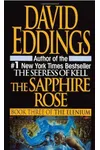
- The Sapphire Rose (1991) – Sparhawk utilizes the power of the Bhelliom to defeat the corrupt forces within the church and save his kingdom.
The Tamuli
A direct sequel trilogy that picks up soon after the events of The Elenium, moving the setting to the exotic eastern continent of Tamul:
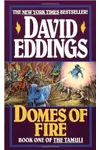
- Domes of Fire (1992) – Sparhawk is summoned to the Tamul Empire to deal with an outbreak of ancient paranormal threats.
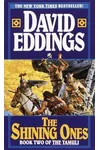
- The Shining Ones (1993) – The conflict escalates as glowing, supernatural beings threaten the empire's survival.
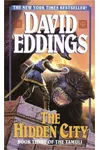
- The Hidden City (1994) – The final battle against the dark forces manipulating the empire.
The Dreamers Series
Co-authored explicitly with Leigh Eddings, this four-book series takes place in a unique world protected by Elder Gods who must rely on mortal heroes and mysterious children known as the Dreamers to fight off a terrifying insectoid collective mind called the Vlagh.
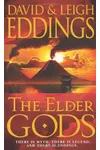
- The Elder Gods (2003)
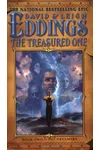
- The Treasured One (2005)
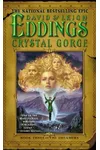
- Crystal Gorge (2005)
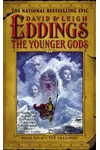
- The Younger Gods (2006)
Standalone Novels
If you are looking for a break from long series, David Eddings published a few standalone books. Only one of these is epic fantasy:
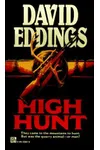
- High Hunt (1973) – Eddings' debut novel, which is a contemporary drama about a deer hunting trip in the Pacific Northwest and does not feature any fantasy elements.
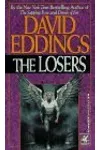
- The Losers (1992) – A contemporary novel exploring themes of morality, wealth, and self-destruction.
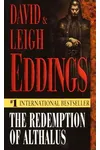
- The Redemption of Althalus (2000) – An epic standalone fantasy co-authored with Leigh Eddings. It follows a clever thief named Althalus who is recruited by a goddess to save the world. It is highly recommended for fans of Eddings' lighthearted, dialogue-heavy style.
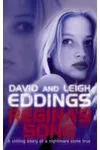
- Regina's Song (2000) – A contemporary murder mystery and psychological thriller set in Seattle.
What to Know Before You Start
Before diving into David Eddings' catalog, it helps to understand a few details about the writing behind these books. First, his wife, Leigh Eddings, was a full co-author on all of his fantasy works. She did not receive cover credit on the early series due to publisher beliefs that fantasy fans preferred a single male author's name, but she was formally credited starting with Belgarath the Sorcerer in 1995.
Eddings' writing is famous for its distinct, repetitive tropes: snarky banter, distinct cultural archetypes, powerful prophecies, and a focus on chosen-family dynamics. If you enjoy the comfort of familiar formulas and witty dialogue, Eddings' works are exceptionally cozy reads. However, they are best read with some space in between series to prevent his structural formulas from feeling too repetitive.