


How to Read David Ignatius’s Novels
David Ignatius has carved out a unique space in the espionage thriller genre. As a long-time columnist and editor for The Washington Post, he has spent decades interviewing diplomats, intelligence officials, and military leaders. This real-world access infuses his novels with an authentic, detailed look at tradecraft that few other fiction writers can match. In fact, his books are so realistic that they have occasionally been used as informal training tools within the intelligence community.
The most important thing for new readers to know is that all of David Ignatius's novels are standalones. Unlike many spy thriller authors who stick to a single recurring protagonist across a multi-book series, Ignatius creates fresh characters, settings, and conflicts for each book. Because there is no overarching character arc or sequential plot, you do not need to worry about a strict narrative order. You can read them in any sequence that catches your interest.
However, we highly recommend reading his books in publication order. Doing so allows you to track the fascinating real-world evolution of global intelligence. His early books focus on classic Cold War tradecraft, proxy conflicts, and Middle Eastern human intelligence (HUMINT), while his later novels dive deep into cyber-warfare, quantum computing, disinformation campaigns, and satellite-based space operations.
Recommended Starting Points
If you are unsure where to begin your journey, here are three excellent entry points depending on your favorite flavor of suspense:
The Classic Espionage Starting Point: Agents of Innocence (1987)
Ignatius’s debut novel is widely considered a masterpiece of modern spy fiction. Set during the Lebanese Civil War, it follows Tom Rogers, a CIA case officer tasked with recruiting a high-ranking official within Yasser Arafat's Fatah movement. It is a slow-burn, atmospheric, and deeply realistic look at the moral compromises of human intelligence in a chaotic war zone.
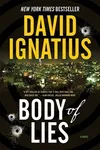
The Modern Action Starting Point: Body of Lies (2007)
This is his breakout hit that was adapted into a major Hollywood film. The story centers on CIA operative Roger Ferris as he devises an elaborate, high-risk deception campaign to smoke out an elusive terrorist leader in the Middle East. It is faster-paced than his earlier works and perfectly captures the tensions of the post-9/11 War on Terror.
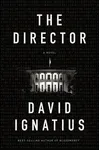
The Cyber-Espionage Starting Point: The Director (2014)
For readers interested in modern digital warfare, this book is the perfect choice. It centers on Graham Weber, a tech entrepreneur who is appointed as the new Director of the CIA, only to face a massive security breach from a young hacker. It is a brilliant exploration of how hacking, data leaks, and digital surveillance have permanently altered traditional spycraft.
David Ignatius Books in Publication Order
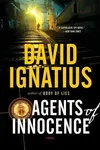
Agents of Innocence (1987)
Set in Beirut between 1969 and 1984, this debut novel explores the tragic intersection of American foreign policy and Middle Eastern realities. It details the relationship between the CIA and Palestinian operatives, highlighting the loss of American idealism in the region.
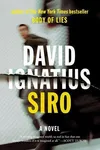
Siro (1991)
Set in 1979 during a time of upheaval inside the CIA, this thriller follows a rogue operation led by agent Alan Taylor and recruit Anna Barnes. Their mission is to exploit the Muslim republics along the Soviet Union's southern border to destabilize the communist superpower from within.
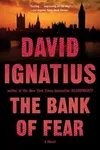
The Bank of Fear (1994)
Blending financial thriller elements with classic espionage, this book follows Lina Alwen and investigator Sam Hoffman. Together, they hunt for the hidden, embezzled billions of a brutal Middle Eastern dictator, navigating deadly killers and corrupt Swiss banks.
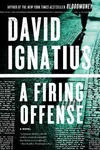
A Firing Offense (1997)
This novel draws heavily on Ignatius's journalistic background. It follows Eric Truell, a Paris-based reporter for a major New York newspaper, who becomes entangled with a CIA officer. Truell is forced to navigate a secret trade war involving France, China, and the U.S. while questioning the ethics of his own profession.
The Sun King (1999)
A departure from traditional espionage, this contemporary drama is set in the corridors of power in Washington, D.C. It follows Sandy Galvin, a charismatic billionaire who buys a major newspaper, disrupting the capital's elite and rekindling a romance with a prominent journalist.
Body of Lies (2007)
Also published under the title House of Lies in some regions, this thriller pits CIA operative Roger Ferris against a shadowy terrorist mastermind. Ferris constructs a complex web of lies using a fictional agent to draw out his target, though the scheme quickly spins out of control.
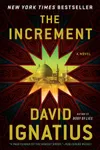
The Increment (2009)
Centering on the Iranian nuclear program, this novel follows CIA officer Harry Pappas as he tries to extract a high-value Iranian informant. To complete the mission, he enlists "The Increment," an elite and highly secretive British special operations unit licensed for lethal force.
Bloodmoney (2011)
This thriller explores the tense and dysfunctional relationship between the CIA and Pakistan’s intelligence services. When members of a covert CIA unit are systematically murdered, young operative Sophie Marx is sent to investigate, discovering a web of bribery and black-market finance.
The Director (2014)
Focusing on the vulnerability of modern intelligence networks, this book follows an outsider CIA director who must hunt for an internal mole and stop a devastating cyberattack after a hacker reveals that the agency's systems have been compromised.
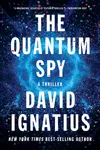
The Quantum Spy (2017)
A high-tech thriller about the race between the United States and China to build the first functional quantum computer, which would have the power to break all global encryption. Chinese-American CIA officer Harris Chang leads a high-stakes mole hunt through Washington, Singapore, and Mexico.
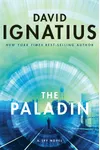
The Paladin (2020)
This novel dives into the dangers of disinformation and fake news. It follows disgraced CIA officer Michael Dunne, who is disavowed and imprisoned after a high-tech operation goes wrong. Once released, he goes rogue to seek revenge and uncover the hackers who set him up.
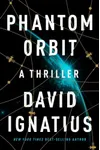
Phantom Orbit (2024)
Ignatius's most recent thriller takes the reader into the domain of space warfare. It follows Ivan Volkov, a Russian student who uncovers a 17th-century mathematical puzzle by Johannes Kepler that holds the key to manipulating satellite navigation, prompting a global search by rival space programs.
Themes and What to Know Before You Start
To get the most out of David Ignatius's novels, it is helpful to keep a few key concepts in mind. First, his writing style favors realism over melodrama. You won't find caricature villains or bulletproof action heroes in these pages; instead, his protagonists are flawed, highly professional bureaucrats, analysts, and case officers who must make difficult moral compromises under extreme stress.
Second, his novels frequently return to the clash between human intelligence (HUMINT) and technical intelligence (SIGINT). Ignatius regularly illustrates how modern technology—drones, hacking, and satellite tracking—can fail when commanders lose touch with the people on the ground. Finally, because his stories are heavily grounded in actual geopolitical events, reading them provides a compelling historical look back at the real national security anxieties of the last four decades.