


Where to Start Reading Denny S. Bryce
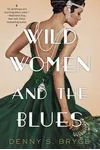
If you are new to Denny S. Bryce’s richly researched and emotionally gripping historical fiction, the best place to begin is with her sensational debut novel, Wild Women and the Blues (2021). This book serves as the perfect introduction to Bryce’s signature storytelling style: a dual-timeline narrative that weaves the glamor and grit of the past with the hard-won insights of a modern-day protagonist. Drawing from her own background as a professional dancer, Bryce brings 1920s Chicago to life with unparalleled rhythm and authenticity. Starting here allows you to experience the foundation of her themes—Black resilience, female ambition, and the power of artistic expression—before moving on to her later works.
Because all of Denny S. Bryce’s novels are standalone works, there is no strict continuity or plot-level reading order. You can pick up any of her books in any sequence without worrying about missing key character arcs or recurring plotlines. However, reading them in publication order is highly recommended for readers who want to follow the author’s stylistic evolution as she moves from dual-timeline fictional dramas to biographical fiction and collaborative projects.
Denny S. Bryce Books in Order of Publication
Here is the complete list of Denny S. Bryce’s novels in the order they were published, including her solo historical fiction, biographical novels, and co-authored projects:
1. Wild Women and the Blues (2021)
Set against the backdrop of 1920s Chicago's jazz-soaked Bronzeville neighborhood, this debut novel alternates between two timelines. In 1925, Honoree Dalcour is a talented, ambitious chorus girl dancing at the Dreamland Cafe, determined to make it big despite the dangerous underworld surrounding her. In 2015, Sawyer Hayes, a grieving film student, tracks down a 110-year-old Honoree in hopes of uncovering the truth about a legendary filmmaker and a long-lost film that could save his academic career. The novel is a vibrant exploration of ambition, survival, and the enduring legacy of early Black cinema and music.
2. In the Face of the Sun (2022)
Bryce's sophomore novel is another dual-timeline story, this time exploring the Civil Rights era alongside the tail end of the Black Renaissance. In 1968, Frankie Saunders, pregnant and fleeing an abusive marriage, embarks on a road trip from Chicago to Los Angeles with her brilliant but stubborn aunt, Daisy Washington. Aunt Daisy has a hidden agenda, which ties back to 1928 Los Angeles, where a young Daisy navigated the glamorous but highly segregated early days of Hollywood. The novel is a moving depiction of family secrets, forgiveness, and the pursuit of freedom across two distinct generations.
3. The Other Princess (2023)
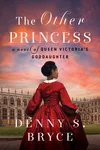
Marking Bryce's first foray into biographical historical fiction, this novel explores the remarkable life of Sarah Forbes Bonetta (originally named Aina). Born a Yoruba princess in West Africa, she was orphaned and enslaved during a raid before being rescued by a British naval captain and presented to Queen Victoria as a "gift." Queen Victoria became her godmother, and Sarah was raised in the upper echelons of Victorian high society. The book vividly portrays her struggle for self-determination, identity, and love as she navigates royal circles in England and her homeland in West Africa.
4. Can't We Be Friends (2024) — Co-authored with Eliza Knight
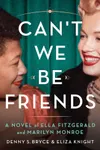
In this collaborative biographical novel, Denny S. Bryce teams up with Eliza Knight to chronicle the unexpected, barrier-breaking friendship between two of the mid-20th century's biggest icons: jazz legend Ella Fitzgerald and Hollywood superstar Marilyn Monroe. Spanning the decade between 1952 and 1962, the narrative alternates between Ella's and Marilyn's perspectives. It highlights how the two women supported one another through professional discrimination, difficult relationships, and the intense pressures of fame, helping each other claim independence in male-dominated industries.
5. The Trial of Mrs. Rhinelander (2024)
Inspired by the real-life 1925 court case that shocked New York high society, this novel tackles the issues of race, class, and "passing." The 1920s timeline follows Alice Jones, a working-class woman of mixed racial heritage, who secretly marries Leonard "Kip" Rhinelander, the heir to one of New York's wealthiest and most prominent families. When Kip's family discovers Alice's background, they force him to sue for annulment, resulting in a public, humiliating trial. The 1940s timeline follows Roberta Brooks, a young journalist tasked with interviewing the reclusive Alice years after the trial, forcing them both to confront the trial's painful legacy.
6. Where the False Gods Dwell (2026)
Set in 1935, this novel takes inspiration from the historic Caribbean research expedition of legendary choreographer and anthropologist Katherine Dunham. The story follows three very different women—Othella, a Chicago con artist on the run; Vivian Jean, an aspiring anthropologist trying to prove herself; and Zinzi, a passionate Jamaican labor activist—who join Dunham's expedition to the Maroon community of Accompong in Jamaica. As they study the sacred Koromantee war dances, they must survive a devastating tropical storm and confront the secrets they left behind, forming an unbreakable bond of sisterhood.
The Chronological Timeline of Settings
While the books should not be read in chronological order of their historical settings, mapping them out reveals the impressive historical range of Denny S. Bryce's catalog. If you want to follow the history of the worlds she builds from the earliest era to the most recent, here is how the settings line up:
- Victorian Era (1840s–1880s): The Other Princess (Sarah Forbes Bonetta's life in England and West Africa)
- The Jazz Age (1920s): Wild Women and the Blues (1925 Chicago), The Trial of Mrs. Rhinelander (1924–1925 New York trial), and the historical timeline of In the Face of the Sun (1928 Los Angeles)
- The Great Depression (1930s): Where the False Gods Dwell (1935 Jamaica)
- Post-WWII / 1940s: The framing timeline of The Trial of Mrs. Rhinelander
- Mid-Century & Civil Rights Era (1950s–1960s): Can't We Be Friends (1952–1962 Hollywood and jazz tour scenes) and the framing timeline of In the Face of the Sun (1968 road trip)
- Modern Era (2010s): The framing timeline of Wild Women and the Blues (2015 Chicago)
What to Know Before You Start
Before diving into Denny S. Bryce’s books, there are a few stylistic choices to keep in mind that will enrich your reading experience:
- Dual-Timeline Mastery: Bryce frequently employs a dual-timeline structure, particularly in her solo fictional works like Wild Women and the Blues, In the Face of the Sun, and The Trial of Mrs. Rhinelander. She uses modern or later-era framing devices to look back at the past, reflecting on how historical trauma and triumphs echo through generations.
- Fictionalizing Real History: The author meticulously researches her subjects. Several of her books feature real-life historical figures as central characters (such as Queen Victoria, Katherine Dunham, Ella Fitzgerald, Marilyn Monroe, and Alice Rhinelander) or place fictional characters directly alongside them to capture the genuine atmosphere of the era.
- Focus on Black Women's Perspectives: A central pillar of Bryce's writing is highlighting the agency, creativity, and resilience of Black women. Whether her characters are navigating the segregated stages of 1920s Chicago, fighting for civil rights in the 1960s, or surviving royal expectations in Victorian England, they are portrayed as complex, flawed, and deeply human figures.