


























































Where Should You Start Reading Dennis Wheatley?
With a career spanning over four decades and more than 70 books, Dennis Wheatley can feel intimidating to approach. Fortunately, his vast catalog falls into clear thematic lanes. Your ideal starting point depends entirely on what genre you want to explore first:
- For Occult & Supernatural Thrillers: Start with The Devil Rides Out (1934). Widely considered Wheatley's masterpiece, this fast-paced occult thriller introduces his famous protagonist, the Duke de Richleau, as he battles a satanic cult to save a friend's soul.
- For Classic Espionage: Start with The Forbidden Territory (1933). This was Wheatley's debut novel and a massive success. It introduces the Duke de Richleau and his loyal circle of friends on a high-stakes rescue mission inside the early Soviet Union.
- For World War II Spy Thrillers: Start with The Scarlet Impostor (1940). This book kicks off Gregory Sallust's wartime adventures, establishing the dark, gritty espionage style that heavily influenced Ian Fleming's James Bond.
- For Historical Fiction Lovers: Start with The Launching of Roger Brook (1947), which begins the epic, chronological journey of a British secret agent operating behind enemy lines during the French Revolution and Napoleonic Wars.
The Duke de Richleau Series: Publication vs. Chronological Order
The Duke de Richleau is Wheatley's most famous recurring character—a brilliant, aristocratic French émigré living in London who, along with his three close friends (Rex Van Ryn, Richard Eaton, and Simon Aron), faces geopolitical crises and supernatural threats.
Because Wheatley wrote several prequels later in his career to flesh out the characters' youths, readers must choose between two distinct reading orders. We recommend the Chronological Order for a smoother narrative journey through the characters' lives, starting in the late 19th century and ending in the Cold War era. However, the Publication Order is a fantastic way to experience how Wheatley's writing style and the series' supernatural elements evolved.
Chronological Reading Order
- The Prisoner in the Mask (1957) – Set in 1899, exploring the Duke's mysterious early life and the origins of his title.
- Vendetta in Spain (1961) – Set in 1906, involving anarchist conspiracies and royal intrigue.
- The Second Seal (1950) – Set in the months leading up to the outbreak of World War I in 1914.
- Three Inquisitive People (1940) – The actual first-written story chronologically introducing the main group of friends.
- The Forbidden Territory (1933) – A thrilling rescue mission set in the Soviet Union during the early 1930s.
- The Devil Rides Out (1934) – The legendary battle against the satanic mastermind Damien Mocata.
- The Golden Spaniard (1938) – Set amidst the political chaos and battles of the Spanish Civil War.
- Codeword - Golden Fleece (1946) – A high-stakes adventure set during World War II.
- Strange Conflict (1941) – A wartime occult crossover where the Duke uses astral projection to defeat Nazi voodoo agents.
- Gateway to Hell (1972) – Set in the 1950s, bringing the aging Duke into South American occult conspiracies.
- Dangerous Inheritance (1965) – Set in the mid-1960s, wrapping up the Duke's long saga.
Publication Reading Order
- The Forbidden Territory (1933)
- The Devil Rides Out (1934)
- The Golden Spaniard (1938)
- Three Inquisitive People (1940)
- Strange Conflict (1941)
- Codeword - Golden Fleece (1946)
- The Second Seal (1950)
- The Prisoner in the Mask (1957)
- Vendetta in Spain (1961)
- Dangerous Inheritance (1965)
- Gateway to Hell (1972)
The Gregory Sallust Series: World War II Espionage
Gregory Sallust is a cynical, tough, and resourceful British secret agent. Sallust is famous among thriller enthusiasts as the direct blueprint for Ian Fleming's James Bond (Fleming and Wheatley worked together in British intelligence during World War II).
Sallust's reading order has one major chronological anomaly: Black August (1934). Although published first, it is set in a then-future, semi-dystopian Britain facing a communist revolution. In terms of character development and timeline, it is best read last. The rest of the series follows a mostly linear progression through the events of World War II and the early Cold War.
Chronological Reading Order
- Contraband (1936) – Set in the mid-1930s, introducing Sallust as he fights smuggling rings.
- The Scarlet Impostor (1940) – The start of Sallust's World War II missions, tracking down a peace conspiracy.
- Faked Passports (1940) – Sallust travels to Finland and Russia during the Winter War.
- The Black Baroness (1940) – Set during the German invasion of Norway.
- V for Vengeance (1942) – Espionage work with the French Resistance in occupied Paris.
- Come Into My Parlour (1946) – Sallust works deep undercover in Germany and the Soviet Union.
- Traitors' Gate (1958) – A spy mission centering around the defense of Hungary.
- They Used Dark Forces (1964) – A unique crossover book where Sallust uses occult magic to disrupt Hitler's war machine.
- The Island Where Time Stands Still (1954) – A post-war adventure set in a mysterious South Seas kingdom.
- The White Witch of the South Seas (1968) – Sallust's final chronological mission, dealing with voodoo and local cults.
- Black August (1934) – Read last due to its near-future setting relative to the wartime stories.
The Roger Brook Series: The Napoleonic Epic
For fans of historical fiction, the Roger Brook series is widely considered Wheatley's most consistent work. It follows a young, charming agent of Prime Minister William Pitt the Younger during the French Revolution and the rise of Napoleon Bonaparte. Unlike the other series, the Roger Brook novels were written in a linear fashion, and the publication order matches the chronological timeline perfectly. You should read these books strictly in order:
- The Launching of Roger Brook (1947)
- The Shadow of Tyburn Tree (1948)
- The Rising Storm (1949)
- The Man Who Killed the King (1951)
- The Dark Secret of Josephine (1955)
- The Rape of Venice (1959)
- The Sultan's Daughter (1963)
- The Wanton Princess (1966)
- Evil in a Mask (1969)
- The Ravishing of Lady Mary Ware (1971)
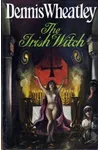
- The Irish Witch (1973)
- Desperate Measures (1974)
The Black Magic Series: A Thematic Collection
Wheatley is arguably most famous today for his "Black Magic" novels. Although marketed under a single series banner, this is actually a thematic collection of stories rather than a single continuous narrative. Several books are crossovers featuring protagonists from his other series (such as Duke de Richleau, Gregory Sallust, and Roger Brook), while others feature standalone characters like Molly Fountain. The series is best read in order of publication to see how Wheatley developed his occult mythos:
- The Devil Rides Out (1934) – Duke de Richleau Series
- Strange Conflict (1941) – Duke de Richleau Series
- The Haunting of Toby Jugg (1948) – Standalone occult thriller
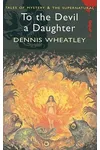
- To the Devil, A Daughter (1953) – Molly Fountain Series
- The Ka of Gifford Hillary (1956) – Standalone dealing with life after death
- The Satanist (1960) – Molly Fountain Series
- They Used Dark Forces (1964) – Gregory Sallust Series
- Unholy Crusade (1967) – Standalone historical occult novel set in Mexico
- The White Witch of the South Seas (1968) – Gregory Sallust Series
- Gateway to Hell (1972) – Duke de Richleau Series
- The Irish Witch (1973) – Roger Brook Series
Minor Series & Key Collaborations
In addition to his grand epics, Wheatley wrote several shorter, focused series and experimental formats:
- The Molly Fountain Series: A two-book subset of the Black Magic series, consisting of To the Devil, A Daughter (1953) and The Satanist (1960), featuring Molly Fountain and Colonel Verney as they protect young women from satanic cults.
- The Julian Day Series: A three-book thriller series following the adventures of Julian Day: The Quest of Julian Day (1939), The Sword of Fate (1941), and Bill for the Use of a Body (1964).
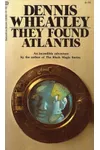
- The Lost World Series: An adventurous trilogy focusing on hidden civilizations and lost continents: They Found Atlantis (1936), Uncharted Seas (1938), and The Man Who Missed the War (1945).
- The J.G. Links Crime Dossiers: Co-authored with J.G. Links, these were pioneering interactive mystery games published in the 1930s. The books contained real physical clues, like police reports, hair samples, telegrams, and blood-stained fabric, which the reader had to inspect to solve the mystery. The four dossiers are Murder Off Miami (1936), Who Killed Robert Prentice? (1937), The Malinsay Massacre (1938), and Herewith the Clues! (1939).
What to Know Before You Start
Dennis Wheatley's novels are product of their era, written between the 1930s and 1970s. Readers should prepare for a very descriptive, slow-burn style of thriller that focuses heavily on historical detail, political philosophies (Wheatley was fiercely conservative and anti-communist), and meticulously researched occult rituals. His depiction of black magic was based on conversations with real-world figures like Aleister Crowley and Montague Summers, giving his supernatural thrillers an eerie, authentic detail that set the stage for modern horror fiction.