

Where to Start with Dinaw Mengestu: The Recommended Reading Path
Dinaw Mengestu has written four acclaimed standalone novels, each exploring the emotional and psychological landscape of the African diaspora in America. Because his novels are independent stories, you do not need to follow a strict chronological sequence to understand the plot. However, to fully appreciate his stylistic evolution and the deepening complexity of his themes, we recommend the following reading order:
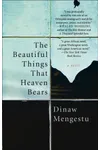
- Start with: The Beautiful Things That Heaven Bears (2007)
This debut novel is the absolute best starting point. It introduces you to Mengestu's signature lyrical prose, quiet atmosphere, and themes of displacement. The story centers on Sepha Stephanos, an Ethiopian refugee who runs a struggling grocery store in a gentrifying Logan Circle neighborhood in Washington, D.C. It is an intimate, deeply character-driven introduction to the author's work.
- Next read: All Our Names (2014)
After your debut experience, jump to his third novel. All Our Names widens the lens by shifting between the revolutionary university campuses of 1970s Uganda and a quiet town in the American Midwest. The dual narrative highlights how political upheaval and migration force people to shed their past identities and even their names, providing a powerful contrast between African idealism and Midwestern isolation.
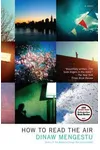
- Follow up with: How to Read the Air (2010)
Next, dive into his second novel. This is his most structurally complex book, following Jonas Woldemariam as he attempts to reconstruct his parents' volatile marriage and their ill-fated road trip from Peoria to Nashville. It is a haunting exploration of generational trauma and the way children must use imagination to fill the gaps in their parents' histories.
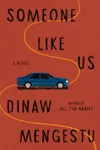
- Conclude with: Someone Like Us (2024)
Wrap up your reading journey with his latest masterpiece. Someone Like Us follows Mamush, an Ethiopian-American journalist who returns from Paris to Washington, D.C., only to find his charismatic father-figure, Samuel, dead. The novel turns into a cross-country search for the truth about Samuel's life and the secrets that his community kept hidden to survive. It is a mature, suspenseful culmination of all his previous themes.
The Chronological Publication Order
If you prefer to read authors in the exact order they published their books, you can follow this timeline of Dinaw Mengestu's standalone novels:
The Beautiful Things That Heaven Bears (2007)
Published in the United Kingdom under the title Children of the Revolution, this debut novel captured global attention and won the Guardian First Book Award. Sepha Stephanos runs a small shop in Washington, D.C., seventeen years after escaping the Red Terror in Ethiopia. The novel captures the quiet gentrification of Logan Circle and the deep bond Sepha shares with his immigrant friends, Ken and Joseph, as well as his complicated relationship with a new white neighbor, Judith, and her daughter, Naomi.
How to Read the Air (2010)
Mengestu's second novel focuses on Jonas Woldemariam, a young man whose marriage is collapsing. Following the death of his father, Jonas embarks on a journey that retraces the path of his parents' early road trip across America. The book alternates between Jonas's journey and his fictionalized, imagined recreation of his parents' migration from Ethiopia and their subsequent domestic conflicts, showing how memory and myth become survival tools.
All Our Names (2014)
This novel uses a split perspective to contrast two worlds. One narrator is an African student who becomes embroiled in a campus revolution in post-colonial Uganda, while the other narrator is Helen, a white social worker in the American Midwest. Helen falls in love with the student—now living under the assumed name of Isaac—after he escapes the violence of his homeland. The narrative probes the limits of love, the weight of secrets, and the cost of building a new life.
Someone Like Us (2024)
His fourth novel starts as a mystery and evolves into a profound ghost story. Mamush, a journalist living in Paris, returns to the close-knit Ethiopian community in Washington, D.C., only to find his mother's close friend, Samuel, dead. Mamush travels to Chicago and across the Midwest to piece together Samuel's double life, confronting his own struggles with addiction, family abandonment, and the unspoken trauma of his community.
Anthologies and Editorial Works
For readers who want to explore Mengestu's short stories and curated selections, he has contributed to several significant literary projects:
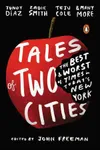
- Tales of Two Cities: The Best and Worst of Times in Today's New York (2014): Edited by John Freeman, this anthology features Mengestu's piece "Options," an autobiographical essay addressing his experiences seeking services in New York for his autistic son.
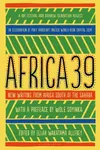
- Africa39 (2014): A Hay Festival project showcasing 39 of the most promising writers under the age of 40 from Sub-Saharan Africa and the diaspora. Mengestu is featured alongside other major contemporary African voices.
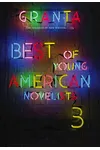
- Granta 139: Best of Young American Novelists 3 (2017): In this decennial issue highlighting the most exciting American writers under 40, Mengestu contributed a short fiction piece focusing on a man dealing with the sudden death of his uncle.
Reading Caveats: Non-Linear Narratives & Memory
When diving into Dinaw Mengestu's work, it is important to understand that he does not write straightforward, linear plots. Instead, he treats time as fluid, mirroring the way memory works for those who have experienced trauma and displacement. In How to Read the Air and Someone Like Us, the narrators frequently drift between their current physical journeys and reconstructed memories of the past. The "truth" in these novels is rarely simple; narrators often confess to inventing details to fill in the silent spaces left by their parents or community. Embrace the atmospheric, slow-burning nature of his storytelling rather than searching for quick plot resolutions.
What to Know Before You Start
Mengestu's books are deeply informed by history and geography. His characters are often shaped by the Red Terror—the period of violent political repression in Ethiopia during the late 1970s—which mirrors his own family's escape to the United States when he was a toddler. The geographical settings of Peoria, Chicago, Washington, D.C., Paris, and Uganda are not mere backdrops; they serve as active characters representing safety, isolation, or the hope of reinvention. While the subject matter deals with heavy themes like grief, isolation, and systemic racism, Mengestu's writing remains remarkably tender, intimate, and focused on the quiet ways people attempt to love and understand one another.