
Where to Begin Your Dominic Smith Journey
Dominic Smith is a master of literary historical fiction, celebrated for his ability to weave meticulous historical research with profound, intimate human drama. Since all of his novels are completely standalone, there is no strict continuity to follow. You can pick up any of his books and dive right in without worrying about missing key backstories or character arcs.
For readers new to his work, the absolute best starting point is The Last Painting of Sara de Vos. Published in 2016, this breakout New York Times bestseller showcases Smith at the height of his powers. By utilizing three interwoven timelines spanning centuries and continents, it perfectly represents his signature style: combining art history, human obsession, and the weight of secrets. Once you have experienced the lyrical prose and dual-timeline structure of his masterpiece, you can explore his other works based on your personal interest in silent cinema, early photography, or mid-century family sagas.
Dominic Smith Books in Publication Order
Reading Dominic Smith’s novels in the order they were published allows you to trace his evolution from an experimental debut novelist to a seasoned storyteller of global historical landscapes. Here is the publication order of his six novels:
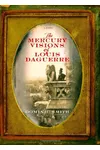
- The Mercury Visions of Louis Daguerre (2006)
Set in Paris in 1847, Smith’s debut novel centers on Louis Daguerre, the real-life pioneer of early photography. Suffering from the early stages of mercury poisoning (a side effect of his photographic process), Daguerre is convinced that the world is ending and that the mercury is revealing the future. He sets out to make a list of the final ten things he must capture on his silver plates before the end. It is a striking, surreal look at the intersection of early technology, art, and madness.
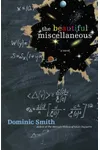
- The Beautiful Miscellaneous (2007)
A departure from historical settings, this coming-of-age story is set in the late 1980s. Nathan Nelson is an ordinary boy living in the shadow of his brilliant physicist father. After surviving a near-fatal car accident and a brief period of clinical death, Nathan awakens from a coma with synesthesia—a neurological condition where senses collide. To study his transformed mind, his father sends him to the Brook-Mills Institute in Michigan, a specialized research center for savants and prodigies. The novel explores memory, family expectations, and what it means to be average in a world obsessed with genius.
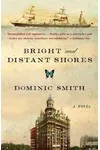
- Bright and Distant Shores (2011)
Set in 1897, this novel contrasts the industrial boom of Chicago with the colonial landscapes of the South Pacific. Hale Gray, a wealthy Chicago insurance magnate, commissions a shipping merchant named Owen Graves to sail to the New Hebrides (modern-day Vanuatu). The mission is to collect sacred Melanesian artifacts and bring back a group of indigenous people to be displayed in a live exhibition on the rooftop of Gray’s new skyscraper. The story examines cultural exploitation, museum collecting, and the moral compromises of the Victorian era.
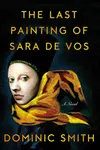
- The Last Painting of Sara de Vos (2016)
This multi-generational narrative links three eras: 1630s Amsterdam, where female painter Sara de Vos breaks guild rules while grieving her child; 1950s Manhattan, where art history student Ellie Shipley makes a fateful decision to forge Sara's only surviving landscape; and 2000s Sydney, where Ellie, now a respected curator, must confront her past forgery when both the original and fake paintings are scheduled to appear in the same exhibition. It is a suspenseful and deeply moving meditation on art, betrayal, and redemption.
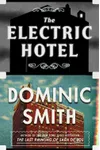
- The Electric Hotel (2019)
A grand tribute to the silent film era, this novel follows Claude Ballard, a pioneer filmmaker living as a recluse in a rundown Los Angeles hotel in the 1960s. When a graduate student tracks him down to find his lost silent masterpiece, The Conflagration, Claude is forced to look back at his life. The narrative travels to late-19th-century Paris, Fort Lee, New Jersey (the early capital of cinema), and the battlefields of World War I, capturing the fleeting magic and early struggles of the motion picture industry.
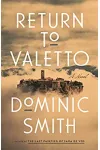
- Return to Valetto (2023)
Part contemporary mystery and part historical drama, this novel is set in a nearly abandoned hill town in Umbria, Italy. Hugh Fisher, an American history professor mourning the loss of his wife, returns to his family's ancestral home, a villa run by his eccentric aunts. He arrives to find a squatter claiming ownership of the property based on a promise made during the dark days of World War II. To resolve the dispute, Hugh must dig into his family's wartime history, uncovering long-buried secrets of partisan resistance and fascist occupation.
The Chronological Settings Order
Because Dominic Smith’s novels span a wide array of historical eras, some readers enjoy reading them in chronological order of their historical settings. While several books feature dual or triple timelines, they can be ordered by the earliest period they depict:
- 1630s: The Last Painting of Sara de Vos (starts in the Dutch Golden Age)
- 1840s: The Mercury Visions of Louis Daguerre (depicts the final years of Daguerre's life)
- 1890s (Early cinema): The Electric Hotel (begins with the birth of motion pictures in Paris)
- 1897 (Victorian era): Bright and Distant Shores (focuses on late-19th-century museum expeditions)
- 1940s (World War II): Return to Valetto (centered around wartime secrets in occupied Italy)
- 1980s (Contemporary/Modern): The Beautiful Miscellaneous (takes place in the late 1980s)
What to Know Before You Start
When diving into Dominic Smith's catalog, it helps to appreciate the central themes that run through his bibliography. Smith is fascinated by forgotten pioneers and lost art forms. Whether it is a female painter unrecognized by history, an early photographer breathing toxic mercury fumes, or a silent film director whose work was melted down for silver, his books champion those on the fringes of artistic and technological history.
Additionally, watch out for database confusion. Some online retailers and libraries list a children's philosophy book called The Bird and the Elephant under Dominic Smith's name. This is actually by a different, UK-born author and musician of the same name. The Dominic Smith covered in this guide writes strictly adult literary and historical fiction. Knowing this distinction will save you from accidentally picking up a book outside his actual body of work.