






Where to Start: The Recommended Reading Path
Don DeLillo does not write interconnected fantasy series or chronological sequences. Almost all of his books are standalone novels. However, diving into his catalog without a plan can be overwhelming due to his dense, philosophical prose and shifting experimental styles. To get the most out of his work, we recommend following a thematic path rather than reading strictly in order of publication.
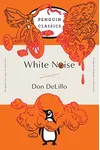
1. The Ideal Entry Point: White Noise (1985)
If you only read one Don DeLillo book to start, make it White Noise. This novel represents the peak of his mid-career style and won the National Book Award. It tells the story of Jack Gladney, a professor of "Hitler Studies," and his family as they navigate consumerism, media saturation, and the existential dread of a toxic industrial accident known as the "Airborne Toxic Event." It is his most accessible book, balancing dark comedy, cultural satire, and profound dread in a way that perfectly introduces you to the author's unique voice.
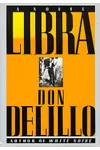
2. The Historical Thriller: Libra (1988)
Once you have a feel for DeLillo's style, move on to Libra. This is a speculative, highly researched fictionalization of the life of Lee Harvey Oswald and the conspiracy leading up to the assassination of President John F. Kennedy. It functions like a literary conspiracy thriller, showcasing DeLillo's masterful ability to blend historical facts with deep psychological portraits.
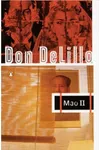
3. The Gateway to the Late Style: Mao II (1991)
Before tackling his longest work, read Mao II. This shorter novel focuses on a reclusive writer who becomes entangled in a hostage crisis. It acts as a bridge between his classic 1980s novels and his more fragmented, spare late-career works, exploring themes of global terrorism, crowd psychology, and the role of art in a media-driven world.
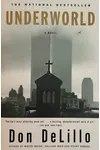
4. The Masterpiece: Underworld (1997)
Save Underworld for when you are fully committed to DeLillo's voice. Standing at over 800 pages, this epic novel is widely considered his magnum opus. It opens with a legendary description of the 1951 baseball game where Bobby Thomson hit the "Shot Heard 'Round the World" and traces the history of the Cold War, waste management, and American paranoia through the late 20th century. It is a massive, complex, and beautiful puzzle that rewards patient readers.
The Hidden Companion: The Amazons Connection
While DeLillo's novels are standalones, there is one fascinating exception that fans of White Noise should know about. In 1980, DeLillo co-wrote a novel titled Amazons: An Intimate Memoir by the First Woman Ever to Play in the National Hockey League under the female pseudonym Cleo Birdwell. He collaborated on this satirical sports memoir with Sue Buck, a former co-worker.
For many years, DeLillo avoided publicly acknowledging the book and even asked publishers to leave it off his official lists of works. However, the connection became undeniable because a character named Murray Jay Siskind—the eccentric college professor who plays a major role in White Noise—first appeared as a character in Amazons. If you want to see the genesis of one of DeLillo's most famous characters, hunting down a copy of Amazons is highly recommended.
Standalone Novellas vs. Main Novels
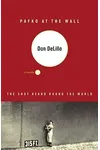
In your search, you will likely come across a book titled Pafko at the Wall (published in book form in 2001). It is important to know that this is not a separate novel. Pafko at the Wall was originally published as a novella in Harper's Magazine in 1992. DeLillo later repurposed this text to serve as the prologue (titled "The Triumph of Death") for his massive 1997 novel Underworld. If you plan on reading Underworld, you do not need to buy or read Pafko at the Wall separately, as you will read it as the opening chapter of the main book.
Don DeLillo Novels in Publication Order
If you prefer to see how DeLillo's themes and style evolved chronologically over the decades, you can follow his career from his 1971 debut to his most recent reflections on technology and isolation:
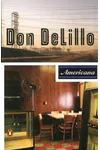
- Americana (1971) - His debut novel, exploring television, advertising, and the search for meaning in the American landscape.
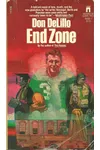
- End Zone (1972) - A satirical look at college football, nuclear warfare, and language.
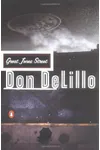
- Great Jones Street (1973) - A portrait of a rock star trying to withdraw from fame and the music industry.
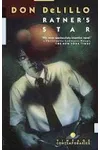
- Ratner's Star (1976) - A highly complex, mathematical science fiction satire that is often considered his most difficult early work.
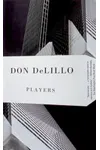
- Players (1978) - A novel about a bored, modern couple who become involved in domestic terrorism.
- Running Dog (1978) - A thriller centering on the search for a rumored erotic home movie of Adolf Hitler.
- Amazons (1980) - Written under the pseudonym Cleo Birdwell with Sue Buck. A satirical sports comedy.
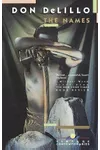
- The Names (1982) - A psychological thriller set in Greece, focusing on cults, language, and corporate life.
- White Noise (1985) - The breakout satire on consumerism and death anxiety.
- Libra (1988) - Fictionalized account of Lee Harvey Oswald and the JFK assassination.
- Mao II (1991) - A look at crowds, terrorism, and the power of images.
- Underworld (1997) - The sprawling Cold War epic.
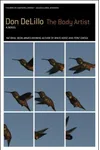
- The Body Artist (2001) - A short, sparse, ghost-like story focusing on grief and time.
- Cosmopolis (2003) - A day in the life of a young billionaire traveling across Manhattan in a limousine during a currency crisis.
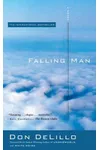
- Falling Man (2007) - A quiet, reflective novel dealing with the immediate aftermath of the September 11 attacks.
- Point Omega (2010) - A short, philosophical meditation on war, art, and desert isolation.
- Zero K (2016) - A sci-fi leaning story examining cryonics, mortality, and the super-rich.
- The Silence (2020) - A post-apocalyptic novella set during a sudden blackout of digital technology on Super Bowl Sunday.
Plays and Short Story Collections
Beyond his novels, DeLillo has written several standalone plays and short stories that capture the same paranoid, poetic energy of his longer books:
- The Day Room (1986) - A play exploring identity, madness, and theater set in a psychiatric ward.
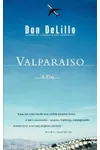
- Valparaiso (1999) - A play focusing on an ordinary man who takes the wrong flight and becomes a media celebrity.
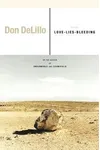
- Love-Lies-Bleeding (2002) - A play centered on family dynamics, aging, and the ethics of end-of-life decisions.
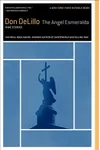
- The Angel Esmeralda: Nine Stories (2011) - A collection of short stories written between 1979 and 2011, serving as a brilliant sampler of his stylistic shifts across his career.
What to Know Before You Start
Don DeLillo is a master of "paranoid fiction." He writes about systems—media, religion, corporations, technology—and how they shape or alienate individual human consciousness. Do not expect traditional, linear plot-driven storytelling. Instead, focus on the rhythm of his dialogue and the prophetic nature of his ideas. Reading DeLillo is about tuning into a specific, slightly off-kilter frequency of modern life. Start with White Noise to see if you match that frequency, and then expand into his massive historical canvases.