

Where to Start with Doug Richardson
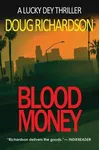
For readers looking to experience Doug Richardson’s signature cinematic pacing and hard-boiled grit, the absolute best starting point is the Lucky Dey Series. Specifically, you should begin with the first novel, Blood Money (2013). This book introduces Lucky Dey, a hard-edged, risk-addicted Los Angeles County Sheriff's deputy who walks a fine line between the law and his own moral code. Starting here establishes the tone of Richardson’s "San Fernando noir" style and sets up the recurring cast of characters and the complicated dynamics of Lucky's on-again, off-again relationship with his department.
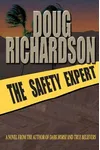
If you prefer a self-contained story before committing to a series, the standalone noir thriller The Safety Expert (2011) is an excellent alternative starting point. It showcases Richardson's knack for intense, Hollywood-style pacing and complex, flawed characters without the commitment of an ongoing series arc.
Lucky Dey Series in Publication Order
While Doug Richardson has noted that each of his Lucky Dey novels is designed to stand on its own as a complete story, reading them in publication order is highly recommended. Doing so allows you to follow Lucky's personal evolution, his ongoing battles with internal politics, and the shifting dynamics of his career. Here is the recommended order:
- Blood Money (2013): Introduces Lucky Dey as he investigates the murder of a fellow deputy, exposing a deep web of corruption and danger in Los Angeles.
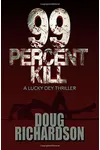
- 99 Percent Kill (2015): Lucky returns to the hunt, tracking a deadly assassin while dealing with personal fallout and his own self-destructive habits.
- Reaper (2016): A high-stakes chase where Lucky must track down an elusive killer known as the Reaper, forcing him to push past his limits.
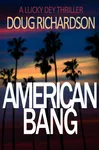
- American Bang (2017): Puts Lucky in the crosshairs of a massive conspiracy that threatens to blow the lid off the city's political elite.
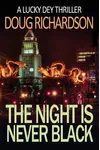
- The Night is Never Black (2018): A moody, atmospheric entry that delves deeper into L.A.'s dark underbelly and Lucky's own inner demons.
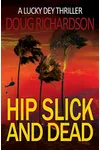
- Hip Slick and Dead (2019): The sixth installment in the series, featuring another pulse-pounding case that tests Lucky's street smarts and survival instincts.
Doug Richardson’s Standalone Novels
Before creating the Lucky Dey series, Richardson established his literary career with standalone political and crime thrillers. These novels are entirely independent and can be read in any order:
- Dark Horse (1997): Richardson’s debut novel is a fast-paced political thriller detailing a ruthless, high-stakes senatorial race between lawyer Mitchell Dutton and his shadowy, unscrupulous opponent, Shakespeare McCann.
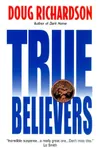
- True Believers (1999): A gripping thriller focused on Senator Will Sullivan and his wife Gwen, who find their lives upended by a terrifying connection to a dangerous cult leader.
- The Safety Expert (2011): A modern L.A. noir following Ben Keller, a professional risk assessment expert whose carefully protected life is shattered when a violent past resurfaces.
The Hollywood Connection and Non-Fiction
Doug Richardson is just as famous for his screenplays as he is for his novels, having penned the scripts for blockbuster action films like Die Hard 2 (1990), Bad Boys (1995), and Hostage (2005). If you want to understand the real-life drama behind these films, you must read his non-fiction work:
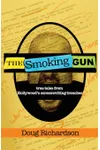
- The Smoking Gun: True Tales from Hollywood’s Screenwriting Trenches (2015): A collection of essays and stories adapted from Richardson’s popular blog. It offers a hilarious, candid, and sometimes shocking behind-the-scenes look at the deals, egos, and intellectual property battles of the film industry.
Reading Caveats and Database Discrepancies
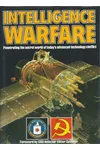
When searching online bibliographies for Doug Richardson, you may encounter a listing for a 1983 book titled Intelligence Warfare: Penetrating the Secret World of Today's Advanced Technology under his name. This is a common database error. That specific book was actually authored by defense analyst William V. Kennedy. The confusion arises because another writer named Doug Richardson has written extensively on military aviation and missiles. The screenwriter and novelist Doug Richardson did not write or contribute to this 1983 publication.
What to Know Before You Start
Doug Richardson’s writing style is heavily influenced by his decades in Hollywood. His books read like movies on paper—characterized by rapid-fire dialogue, tight scene transitions, and visual storytelling. The tone is gritty, cynical, and unapologetically noir, focusing on the dark, sun-baked streets of the San Fernando Valley and the moral ambiguity of both the criminals and the cops who chase them. If you enjoy authors like Michael Connelly, Robert Crais, or Elmore Leonard, you will find yourself right at home in Richardson's L.A.