
The Recommended Reading Order
For the best reading experience, we highly recommend starting with the Quantum Series, which is Douglas Phillips's signature work. While he has expanded into new universes and standalone thrillers, the Quantum books remain the absolute fan favorites and provide the perfect introduction to his style of science-informed speculation.
1. The Quantum Series Reading Order
The Quantum Series centers on government science investigator Daniel Rice and particle physicist Nala Pasquier as they deal with anomalies that defy the known laws of physics. We recommend reading this series in chronological order, which closely mirrors its publication sequence. However, there is a small caveat regarding the prequel novella, which we address below.
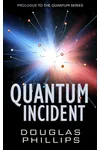
- Quantum Incident (2017) – Prequel Novella (Book 0.5). Set immediately following the discovery of the Higgs boson at the Large Hadron Collider, this story introduces Nala Pasquier's early Fermi National Accelerator Laboratory experiments and Daniel Rice's investigation into a mysterious Nevada anomaly.
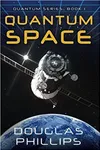
- Quantum Space (2017) – Book 1. The official entry point to the main sequence. Daniel Rice is called in to investigate the bizarre disappearance of a Russian Soyuz capsule, leading to the discovery of hidden dimensions.
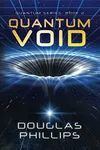
- Quantum Void (2018) – Book 2. The team faces the terrifying consequences of tampering with the fabric of space itself as global powers clash over control of the new dimension.
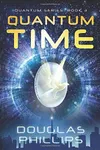
- Quantum Time (2019) – Book 3. The narrative tackles time travel from a speculative yet mathematically grounded perspective, forcing Daniel to prevent a catastrophic temporal paradox.
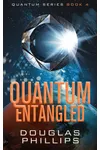
- Quantum Entangled (2021) – Book 4. Taking the scale of the universe even further, this installment explores quantum entanglement on a cosmic level and what it means for the future of human exploration.
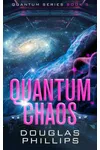
- Quantum Chaos (2023) – Book 5. The action-packed conclusion to the primary Daniel Rice arc, pushing the boundaries of particle physics and chaos theory to their absolute limits.
2. The Ascending Carbon Series
After wrapping up the initial Quantum arc, Phillips launched a brand new hard science fiction saga centered around the engineering, politics, and dangers of a space elevator. The reading order is straightforward:
- Ascending Carbon (2024/2025) – Prologue Novella. Introduces the core concepts and setup of the space elevator technology.
- First Ascent (2025) – Book 1. Follows the monumental effort to construct the first carbon-nanotube elevator to orbit, along with the corporate espionage and physical dangers of the project.
- Second Ascent (2026) – Book 2. The narrative continues as humanity begins using the elevator for regular space transit, facing new structural and geopolitical threats.
- Third Ascent (2026) – Book 3. The climax of the space elevator trilogy, exploring the long-term impact on human civilization and deep-space exploration.
3. Standalone Novels & Co-authored Projects
If you want a break from multi-book sagas, Phillips has written two highly entertaining standalone books that showcase different sides of his storytelling:
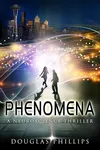
- Phenomena (2020) – A neuroscience thriller. The story follows Amelia Charron, a neuroscientist who uses advanced mind-linking technology to guide patients through assisted lucid dreams. When she enters the mind of a patient suffering from schizophrenia, she uncovers a complex, seemingly alien language and coordinates that point to a shocking mystery.
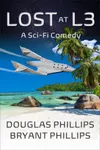
- Lost at L3 (2022) – A sci-fi comedy adventure. Co-written with his son, Bryant Phillips, this book takes a lighter, humorous approach. It follows two pilots, five space tourists, and a dog who find themselves stranded on a miniature planet hidden on the far side of the sun.
Publication Order vs. Chronological Order
The only real debate in Douglas Phillips's bibliography lies within the Quantum Series and its prequel, Quantum Incident. While Quantum Incident takes place first chronologically, it was published around the same time as Quantum Space and is often distributed as a promotional novella to mailing list subscribers.
We recommend starting with Quantum Space first. It has a stronger introductory hook, builds up the mystery of Daniel Rice's character, and explains the rules of the universe with a better pacing for newcomers. Once you are hooked on the world, you can jump back to read Quantum Incident to see how Nala's Fermilab experiments began, or simply read it first if you prefer a strict chronological progression.
What to Know Before You Start
Douglas Phillips holds two science degrees and spent decades building predictive computer models, and it shows in his writing. Unlike space opera or soft sci-fi, his stories are firmly rooted in actual theories of particle physics, string theory, and neuroscience. However, you do not need a physics degree to enjoy them; Phillips has a gift for making complex concepts like the Standard Model or quantum superposition easy to understand and thrilling to read. The conflicts in his books are solved through intellect, collaboration, and scientific curiosity rather than violence, offering a refreshing and optimistic outlook on humanity's scientific future.