





How to Read Douglas R. Casey’s Books
Douglas R. Casey (often known as Doug Casey) is unique in the literary world. He is a prominent libertarian philosopher and legendary contrarian investor who successfully transitioned from writing blockbuster financial guides to co-authoring high-octane political thriller novels. Whether you are looking for classic market speculation strategies or a fast-paced thriller, Casey’s works offer a unique blend of Austrian School economics and rugged individualism.
For the best experience, we recommend separating his works into two distinct paths: his fiction thriller series (the High Ground series) and his landmark Non-Fiction financial guides.
1. The High Ground Fiction Series (Recommended Order)
Co-authored with John F. Hunt, the High Ground series follows the adventures of Charles Knight, a young, individualistic entrepreneur who grows from a naive speculator into a bold rebel challenging global power structures. The series was originally planned as a six-part (and sometimes referenced as a seven-part) arc designed to redeem and explore "politically incorrect" or "unjustly besmirched" occupations.
Because the story follows Charles's personal growth, financial rise, and escalating clashes with state authorities, you must read these books in chronological publication order:
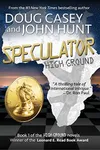
- Speculator (2016): The debut novel. A 23-year-old Charles Knight heads to a fictionalized West African country during a gold rush, where he uncovers a massive mining fraud and has to navigate rebel warlords, mercenaries, and local corruption.
- Drug Lord (2017): Charles returns to the United States after seven years abroad and enters the legal pharmaceutical sector and the black market, using a unique truth-revealing drug to challenge government regulators and smugglers.
- Assassin (2020): Set in a deeply divided America facing economic decay and political riots, Charles is released from prison and must use unconventional crypto networks and high-risk strategies to survive.
2. Non-Fiction & Financial Strategy Works
Casey’s non-fiction books revolutionized financial publishing in the late 1970s and 1980s. While some of the specific market predictions are historical, the underlying principles of contrarian investing, crisis management, and international diversification remain highly influential.
Here is the publication order of his major non-fiction works:
- The International Man (1978): A groundbreaking guide on how to expatriate, find freedom abroad, and protect wealth outside your home country. It became a historic bestseller in Rhodesia.
- The Expatriate Investor (1979): Further strategies for internationalizing assets.
- Crisis Investing (1979): Casey’s breakout masterpiece. It spent 29 weeks at the top of the New York Times bestseller list and was the bestselling financial book of 1980.
- International Investing (1981): A practical manual for investing across global markets.
- Strategic Investing (1982): The follow-up to Crisis Investing, which commanded a record-breaking publishing advance at the time.
- Strategic Investment Timing (1983): A guide to identifying market cycles and timing investments.
- Crisis Investing for the Rest of the '90s (1993): A major update detailing strategies for navigating the post-Cold War economy.
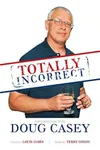
- Totally Incorrect: Conversations with Doug Casey (2012): A collection of interviews and essays detailing his thoughts on politics, society, and culture.
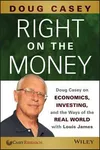
- Right on the Money: Doug Casey on Economics, Investing, and the Greed Ethic (2013): A companion volume focusing on economic principles and the morality of wealth generation.
Practical Reader Advice
Where is the best place to start?
If you want fiction, start with Speculator. It introduces Charles Knight and his mentor, Xander Winn, establishing the themes of finance, personal liberty, and survival that run throughout the trilogy. If you prefer his financial philosophy, start with his classic Crisis Investing to understand his core contrarian mindset, or pick up Totally Incorrect for a more modern, bite-sized overview of his worldview.
Can the High Ground books be read as standalones?
While each book features a distinct main conflict (a gold mining fraud, a drug empire, a political conspiracy), they are highly serialized. Charles Knight's character development, legal troubles, and relationships carry over directly from one book to the next. Reading them out of order will spoil major plot points and make his sudden changes in status quo confusing.
Caveats and Order Disagreements
When searching for Doug Casey’s books online, you will often find romance novels by an author named "Casey Douglas" mixed into his bibliography. These are completely unrelated books published under the Harlequin imprint. Additionally, although the High Ground series was planned to feature more titles (including a rumored fourth book titled Terrorist), only three books have been published, leaving the series currently open-ended.