


























Where to Start with Ed McBain’s Gritty Police Fiction
For readers looking to dive into the legendary crime fiction of Ed McBain (the primary pen name of Salvatore Lombino, who also wrote as Evan Hunter), there is one clear and undisputed starting point: Cop Hater (1956). This tight, suspenseful novel didn't just kick off his career-defining series; it practically invented the modern police procedural. Rather than focusing on a singular, brilliant detective solving crimes with ease, it introduced readers to an ensemble cast of overworked, underpaid detectives working as a team to protect a sprawling, chaotic city.
While most of the mysteries are self-contained and can theoretically be read as standalones, we highly recommend reading the books in publication order. Across the massive fifty-year span of the series, the characters grow, experience tragic losses, fall in love, get married, and age. Reading in order allows you to appreciate the long-running character arcs and the evolving interpersonal relationships of detectives like Steve Carella, Meyer Meyer, Cotton Hawes, and Bert Kling.
The 87th Precinct Series: A Complete Guide
The beating heart of McBain's bibliography is the 87th Precinct series, consisting of 56 novels published between 1956 and 2005. The stories are set in Isola, a thinly veiled, highly stylized version of New York City where Manhattan is renamed Isola, the Bronx becomes Harbin, Brooklyn is Kings, Queens is Calm's Point, and Staten Island is Richmond. The city itself acts as a central character, evolving from the gritty, post-war era of the 1950s into the high-tech, modern landscape of the early 2000s.
As you read through the series, you will notice a fascinating phenomenon known as the "Floating Timeline." Although fifty real-world years pass between the first book, Cop Hater, and the final book, Fiddlers (2005), the characters themselves only age by about ten years. Detective Steve Carella begins the series in his late twenties and finishes it in his early or mid-forties. This narrative choice allowed McBain to write contemporary social issues, technological shifts, and cultural changes into his novels without having to retire his beloved cast of detectives.
The Deaf Man: Isola’s Greatest Nemesis
Among the many criminals who pass through the precinct doors, none are as infamous as the Deaf Man. A brilliant, sadistic master criminal who sends cryptic, puzzle-like clues to the squad before committing his crimes, the Deaf Man serves as the closest thing the series has to a recurring supervillain. His high-stakes cat-and-mouse games with Detective Steve Carella are fan favorites. If you want to follow their rivalry, make sure to look out for these five specific novels in the main run:
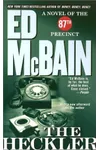
- The Heckler (1960)
- Let's Hear It for the Deaf Man (1973)
- Eight Black Horses (1985)
- Mischief (1993)
- Hark! (2004)
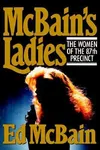
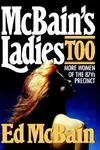
In addition to the main novels, McBain published two collection volumes titled McBain's Ladies (1988) and McBain's Ladies Too (1989). These collections compile and adapt past stories with a specific focus on the women who populate the 87th Precinct universe, offering deeper context into their lives and perspectives.
The Matthew Hope Series: Sunshine State Lawyer-Sleuth
In 1976, McBain launched his second major recurring series featuring Matthew Hope, a defense attorney practicing in Calusa, Florida (a fictionalized version of Sarasota). The Matthew Hope books offer a distinct change of pace from the 87th Precinct. The setting shifts from a dark, snowy northern metropolis to a sun-drenched, beachside southern community, and the stories focus on the legal and investigative battles of a single lawyer-sleuth rather than an ensemble police squad.
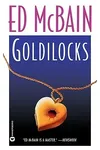
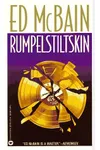
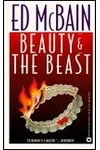
A notable hallmark of the Matthew Hope series is that every book title is derived from a classic fairy tale or nursery rhyme, starting with Goldilocks (1976) and running through titles like Rumpelstiltskin (1981), Beauty and the Beast (1982), and Jack and the Beanstalk (1984). The series ran for 13 novels, concluding in 1998.
The Ultimate Crossover: When Isola Meets Calusa
For years, readers treated the 87th Precinct and Matthew Hope series as entirely separate entities. However, McBain surprised fans with the final Matthew Hope novel, The Last Best Hope (1998). In this book, Steve Carella travels down from the cold streets of Isola to the heat of Florida to assist Matthew Hope on a complex case involving a museum heist, officially crossing over the two universes. For the complete experience, it is highly recommended to read this book after you have established a strong familiarity with both Carella and Hope.
Collaborations, Pen Names, and Standalones
While McBain was famous for his solo police procedurals, he occasionally experimented with collaborations and unique narrative structures. The most famous of these is Candyland (2001). This novel is billed as a unique "two-part collaboration" between Ed McBain and Evan Hunter—effectively Salvatore Lombino collaborating with himself. The first half, written under the Evan Hunter persona, is a psychological drama tracking a man struggling with sex addiction. The second half, written under the Ed McBain persona, shifts into a traditional police procedural that investigates a murder tied to the events of the first half.
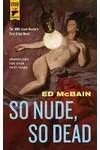
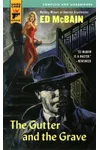
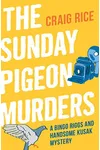
McBain also stepped in to complete The April Robin Murders (1958), a comedic mystery novel left unfinished by author Craig Rice after her death in 1957. Featuring her recurring amateur sleuths Bingo Riggs and Handsome Kusak, McBain polished and completed the manuscript, earning a co-author credit. Beyond these collaborations, McBain wrote dozens of standalone crime thrillers, such as Runaway Black (1954) and Another Part of the City (1986), which are perfect for quick, satisfying reads between his longer series runs.