









Where to Start Reading Edgar Allan Poe
Because the vast majority of Edgar Allan Poe's works are standalone short stories and poems, there is no single, strictly mandatory reading path. However, jumping blindly into his bibliography can lead to tonal whiplash, as his stories range from grim psychological horror to dense satire. To get the best experience, we recommend choosing a starting path based on what interests you most:
Path A: The Gothic Masterpieces (For Horror Fans)
If you want to experience the haunting, atmosphere-drenched tales of guilt, madness, and decay that made Poe a household name, start here. Read these iconic stories in any order, though this progression works wonderfully for building tension:
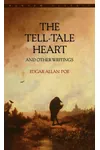
- The Tell-Tale Heart (1843): A short, intense study of guilt and paranoia featuring one of literature's most famous unreliable narrators.
- The Fall of the House of Usher (1839): A slow-burn masterpiece focusing on dread, isolation, family decay, and a crumbling mansion.
- The Cask of Amontillado (1846): A dark, chilling tale of cold-blooded revenge set in underground catacombs during carnival season.
- The Pit and the Pendulum (1842): A suspenseful, visceral story of survival and psychological torture during the Spanish Inquisition.
Path B: The Detective Fiction Trailblazer
Before Sherlock Holmes, Hercule Poirot, or modern police procedurals, there was Poe's brilliant Parisian amateur sleuth, C. Auguste Dupin. If you love mystery, detective deduction, and locked-room puzzles, start with this short, three-story series in publication order.
Path C: The Poet's Journey
For readers who appreciate rhythm, musicality, and melancholy themes of lost love, Poe's poetry is essential. Start with The Raven (1845), follow it with the hauntingly beautiful Annabel Lee (1849), and dive into his early collections to trace his development as a lyricist.
The C. Auguste Dupin Series
Poe single-handedly invented the modern detective genre with his C. Auguste Dupin stories. Dupin is an eccentric intellectual who uses what Poe termed "ratiocination"—a process of close observation and analytical reasoning—to solve mysteries that baffle the police. Unlike his standalone tales, this subseries should be read in chronological publication order:
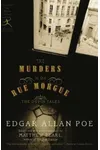
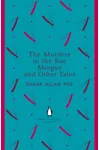
- The Murders in the Rue Morgue (1841): The world's first modern detective story, introducing Dupin and the classic locked-room mystery trope.
- The Mystery of Marie Rogêt (1842): A pioneering work of real-world true crime fiction, where Poe fictionalized the real-life murder of Mary Rogers using news reports.
- The Purloined Letter (1844): A brilliant, psychological battle of wits focusing on political blackmail and simple, yet deceptive, concealment.
The Narrative of Arthur Gordon Pym and Its Sequels
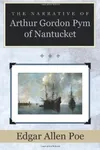
Poe only completed one full-length novel during his lifetime: The Narrative of Arthur Gordon Pym of Nantucket (1838). It is a bizarre adventure story that begins as a realistic whaling voyage involving shipwreck, mutiny, and cannibalism, before spiraling into a surreal, supernatural expedition toward the South Pole. The novel ends on a sudden, unresolved cliffhanger that left readers baffled for decades.
If you finish Poe's novel and want closure, you can follow it up with these famous literary continuations and homages:
- An Antarctic Mystery (1897) by Jules Verne: Also published as The Sphinx of the Ice Fields, this is an official sequel written by Verne, who was a massive admirer of Poe. Verne treats Poe's story as historical fact and follows an expedition sent to find out what happened to Pym's missing crew.
- At the Mountains of Madness (1936) by H.P. Lovecraft: While not a direct sequel, Lovecraft's classic sci-fi horror novella is heavily inspired by Pym, referencing its events and utilizing the eerie, recurring cry of "Tekeli-li!" in its final chapters.
What to Know Before You Start: Grotesque vs. Arabesque
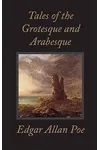
When Poe published his first major collection of stories in 1840, he titled it Tales of the Grotesque and Arabesque. Understanding this distinction is key to navigating his bibliography:
- The Grotesque Tales: These stories are characterized by satire, dark comedy, parody, and the bizarre. Works like A Predicament, King Pest, and The Devil in the Belfry show Poe's biting, sometimes absurd humor, which modern readers often overlook.
- The Arabesque Tales: These are Poe's serious, imaginative, and psychological stories. They deal with deep themes of death, identity, terror, and the human subconscious, such as Ligeia, William Wilson, and Morella.
If you prefer serious Gothic horror, focus on the Arabesque stories. If you enjoy bizarre, 19th-century black comedy and political satire, seek out his Grotesque pieces.
Publication Order of Poe's Key Tales and Collections
For readers who wish to witness Poe's evolution as a writer, reading his key works in chronological order of their original publication is a rewarding journey. Below is a timeline of his most significant short stories, poems, and collections:
- Tamerlane and Other Poems (1827): Poe's incredibly rare debut poetry collection, published anonymously.
- Metzengerstein (1832): Poe's first published short story, a Gothic tale of family curses and reincarnation.
- Ms. Found in a Bottle (1833): A maritime horror story that won Poe a crucial early literary prize.
- Berenice (1835): A controversial, morbid tale of obsession and dental horror.
- Ligeia (1838): One of Poe's personal favorite stories, exploring grief, memory, and supernatural rebirth.
- William Wilson (1839): A psychological thriller exploring the concept of the double (doppelgänger) and conscience.
- The Masque of the Red Death (1842): A vivid allegory about the inevitability of death and a plague sweeping a kingdom.
- The Gold-Bug (1843): A massive public success during Poe's lifetime, combining adventure, cryptography, and treasure-hunting.
- The Facts in the Case of M. Valdemar (1845): A chilling hoax story dealing with mesmerism and the suspension of death.
- Eureka (1848): A complex prose poem and philosophical essay where Poe attempted to explain his cosmological theories of the universe.
Tie-ins, Companion Works, and Anthologies
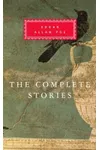
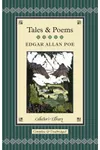
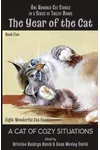
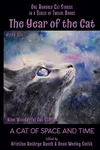
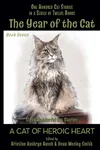
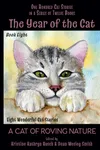
Poe's work has been repackaged, adapted, and celebrated in countless modern collections. When browsing bookstore shelves, you will find modern multi-author series like The Year of the Cat anthologies (edited by Kristine Kathryn Rusch and Dean Wesley Smith), which feature classic tales alongside modern stories inspired by Poe's unique blend of mystery, atmosphere, and animal-centric suspense (most notably paying homage to "The Black Cat"). For a comprehensive look, standard collections like The Complete Tales and Poems of Edgar Allan Poe provide all his fictional output in a single volume, allowing you to easily bounce between his horror, satire, and detective fiction.