




























Where to Start with Edith Wharton
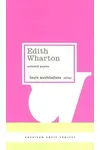
For readers looking to dive into Edith Wharton's sharp-witted and tragic world, you don't need to read her works chronologically by publication. Her books are largely standalone novels and collections. However, certain groupings and thematic pairings offer a much richer reading experience if approached strategically.
Here are the recommended entry points depending on what style you want to experience first:
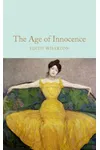
- The Masterpiece Entry Point: The Age of Innocence (1920). This Pulitzer Prize-winning novel is Wharton's most refined, poignant, and famous critique of 1870s New York high society. It is the absolute best representation of her style.
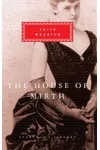
- The Tragic Social Satire Entry Point: The House of Mirth (1905). A darker, faster-paced story following Lily Bart, a woman navigating the brutal social climb of early 20th-century New York. It is deeply emotional and incredibly gripping.
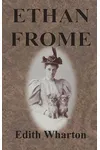
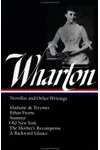
- The Stark Rural Entry Point: Ethan Frome (1911). If you want to bypass the high-society ballrooms entirely, this short, grim tragedy set in a snowbound New England town showcases Wharton's incredible range and psychological depth.
The 'Old New York' Series and Companion Reading
While most of Wharton's novels are standalones, she did publish a specific tetralogy of novellas collectively titled Old New York in 1924. These stories are independent of each other but trace the social evolution of New York City across consecutive decades from the 1840s to the 1870s. Because The Age of Innocence is also set in the 1870s, it serves as a perfect thematic companion to this sequence.
We recommend reading these in chronological setting order rather than publication order to experience the gradual shift in Manhattan's social landscape:
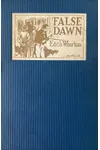
- False Dawn (Set in the 1840s) – Explores the beginnings of European art influences on the old moneyed elite.
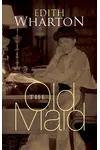
- The Old Maid (Set in the 1850s) – A tragic look at motherhood, secrets, and societal expectations (originally published in magazine format in 1922).
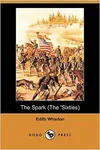
- The Spark (Set in the 1860s) – Explores the influence of the American Civil War and features a subtle nod to Walt Whitman.
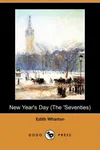
- New Year's Day (Set in the 1870s) – A story of social scandal, sacrifice, and redemption.
Reading Tip: Read The Age of Innocence immediately before or after New Year's Day, as both capture the strict social codes of the 1870s before the Gilded Age completely transformed the city.
The Vance Weston Duology
Edith Wharton's only direct narrative continuation is the Vance Weston series. These two novels function as a classic kunstlerroman (a novel depicting an artist's growth) and must be read in order:
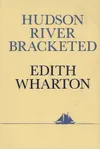
- Hudson River Bracketed (1929) – Introduces Vance Weston, an aspiring writer from the Midwest who moves east and is captivated by the history and culture of the Hudson River valley.
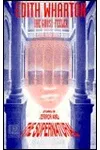
- The Gods Arrive (1932) – Picks up Vance's story as he navigates the literary scenes of London, Paris, and New York, dealing with bohemian life, creative blocks, and complex relationships.
The Gilded Age Social Novels
For readers who fall in love with Wharton's sharp observations on class, status, and the rise of new money, these novels form an unofficial thematic sequence. They can be read in any order, but reading them in publication order shows Wharton's evolving cynicism toward American materialism:
- The House of Mirth (1905)
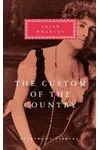
- The Custom of the Country (1913) – Featuring Undine Spragg, one of literature's most ruthless and memorable social climbers.
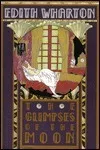
- The Glimpses of the Moon (1922) – A lighter, romantic satire of American expatriates in Europe.
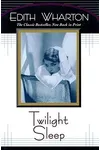
- Twilight Sleep (1927) – A sharp critique of the fast-paced, substance-addled Jazz Age elite.
- The Buccaneers (1938 / Completed 1993) – Wharton's final, unfinished novel about ambitious American girls marrying into the British aristocracy. Scholar Marion Mainwaring completed the novel in 1993 based on Wharton's extensive notes.
What to Know Before You Start
Before diving into Wharton's bibliography, keep these historical and narrative contexts in mind:
- Real-Life Inspiration: Wharton was born into the very 'old money' New York society she satirizes. The phrase 'keeping up with the Joneses' is widely believed to refer to her family (the Newbold Joneses). Her critiques are so sharp because she lived under the suffocating rules she wrote about.
- The Completed Masterpiece: The Buccaneers was left unfinished when Wharton died in 1937. While the 1938 edition contains only her words, Marion Mainwaring's 1993 completed version is the most common version in bookstores today. Both are worth exploring if you are interested in how a writer's notes can be interpreted posthumously.
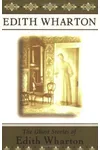
- Short Stories and Ghost Tales: Wharton was a prolific short story writer and loved gothic horror. Her collections, such as The Ghost Stories of Edith Wharton, are highly regarded and present a completely different, eerie side to her writing.