


How to Read Edmund Cooper: The Recommended Starting Path
For the vast majority of Edmund Cooper’s bibliography, you do not need to worry about a rigid chronological reading order. Cooper was primarily a writer of standalone speculative fiction novels, meaning you can dive into his most famous works in almost any order. However, jumping in blindly can be daunting given the sheer variety of his output across different decades and pseudonyms.
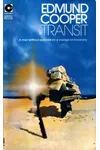
If you want the absolute best introduction to Cooper's style, we recommend starting with Transit (1964). It represents the peak of his mid-career writing, blending survival drama with sharp social commentary when a group of ordinary Londoners find themselves abducted and deposited onto a hostile, test-like alien environment. After Transit, the best path forward is to explore his other highly regarded standalone novels before moving on to his serialized space opera work or short story collections.
Here is our recommended sequence for new readers:
- Transit (1964) – The ideal starting point to experience his character-driven survival dynamics and alien world-building.
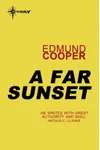
- A Far Sunset (1967) – A deeply philosophical look at cultural clashes and religion on a distant planet, following a lone human survivor who resists adopting the native culture.
- The Overman Culture (1971) – A fascinating, eerie story set in a reconstructed historical London run by computers, where children begin to realize their reality is artificial.
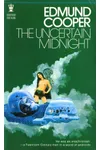
- The Uncertain Midnight (1958) (also published as Deadly Image) – Excellent for readers who want to explore his early treatment of androids and post-apocalyptic societies.
- The Expendables Series (1975–1976) – Switch to his serialized military space opera written under the pen name Richard Avery.
The Standalone Masterpieces
Cooper's standalones are where his philosophical and satirical side truly shines. Rather than focus on hard science, Cooper used speculative concepts to examine human nature, atheism, individualism, and the potential pitfalls of societal engineering. Here are the core standalone novels you should know:
The Uncertain Midnight / Deadly Image (1958): Cooper's first major science fiction novel published under his own name. It depicts a post-holocaust world where human-like androids are created to serve the survivors, leading to complex psychological and social conflicts. It remains a landmark early text in the subgenre of artificial consciousness.
A Far Sunset (1967): Often cited by critics as Cooper's most mature work. When the starship Gloria Mundi lands on the planet Altair III, the crew is quickly overwhelmed by the primitive, superstitious native humanoid population. The protagonist, Paul Marlow, must navigate survival among them without losing his rationalist identity, resulting in a bleak but powerful ending.
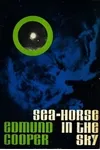
Sea-Horse in the Sky (1969): A classic "strange destination" story. The passengers of a plane crash do not die; instead, they wake up in a bizarre alien gallery that functions as an intergalactic zoo. It is a fast-paced mystery that deals with human tribalism and adaptability.
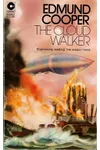
The Cloud Walker (1973): Set in a post-apocalyptic Britain that has reverted to a medieval-style Luddite society. The dominant religious order outlaws technology and machines. The story follows a young protagonist who dreams of flight and secretly constructs a hot-air balloon, framing a classic conflict between religious dogma and scientific curiosity.
The Expendables Series (Written as Richard Avery)
In the mid-1970s, Cooper wrote a traditional four-part space opera series under the pseudonym Richard Avery. The pen name itself was a nod to his own work, borrowed from the name of the protagonist in Transit. This series follows a crew of societal outcasts—the "Expendables"—who are sent to survey hostile planets for potential colonization.
Note that some historical databases and archives list these books out of order. To follow the narrative arc of the crew, you should read them in their true publication order, starting with The Deathworms of Kratos, rather than starting with later entries.
The correct reading order for The Expendables is:
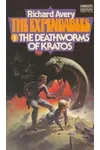
- The Deathworms of Kratos (1975)
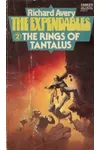
- The Rings of Tantalus (1975)
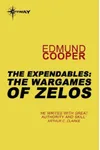
- The Wargames of Zelos (1975)
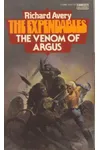
- The Venom of Argus (1976)
Complete Publication Order of Standalone Novels
If you prefer to read Cooper's standalones chronologically to observe how his themes and style evolved over three decades, use this publication order. Note that alternate titles are listed where applicable:
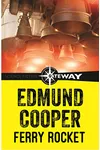
- Ferry Rocket (1954) – Published under the pseudonym George Kinley.
- The Uncertain Midnight / Deadly Image (1958)
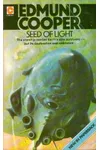
- Seed of Light (1959)
- Transit (1964)
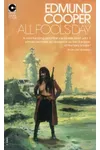
- All Fools' Day (1966)
- A Far Sunset (1967)
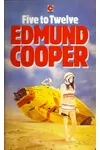
- Five to Twelve (1968)
- Sea-Horse in the Sky (1969)
- The Last Continent (1969)
- Kronk / Son of Kronk (1970)
- The Overman Culture (1971)
- Who Needs Men? / Gender Genocide (1972)
- The Cloud Walker (1973)
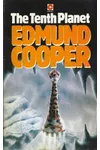
- The Tenth Planet (1973)
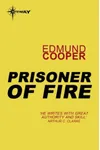
- Prisoner of Fire (1974)
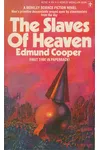
- The Slaves of Heaven (1974)
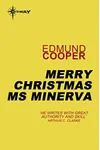
- Merry Christmas Ms Minerva (1978)
Short Story Collections
Cooper was a prolific short story writer, contributing to various science fiction magazines before compiling his work into dedicated anthologies. His short fiction often displays a sharper, more satirical edge than his novels. The collections are best read standalone, but they are listed here in order of release:
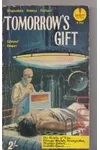
- Tomorrow's Gift (1958)
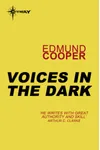
- Voices in the Dark (1960)
- Wish Goes to Slumberland (1960)
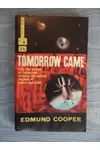
- Tomorrow Came (1963)
- News From Elsewhere (1969)
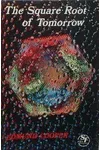
- The Square Root of Tomorrow (1970)
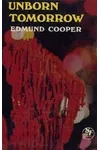
- Unborn Tomorrow (1971)
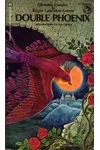
- Double Phoenix (1971) – A split collection shared with Roger Lancelyn Green.
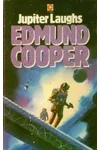
- Jupiter Laughs and Other Stories (1979)
- A World of Difference (1980)
What to Know Before You Start: Tone and Context
Before diving into Edmund Cooper's bibliography, it is helpful to understand the cultural context of his writing. Cooper was a distinctively British voice of the post-WWII era, and his style sits between the traditional adventure-focused Golden Age sci-fi and the experimental, literary New Wave of the late 1960s.
His work frequently champions individual liberty, rationalism, and atheism, reflecting his personal worldviews. However, readers should be prepared for the gender politics of his late 1960s and early 1970s novels. Works like Five to Twelve and Who Needs Men? (also published as Gender Genocide) depict battle-of-the-sexes dystopias. While progressive for their time in highlighting structural gender inequality, these novels can feel controversial or dated to modern audiences. Understanding them as historical artifacts of the era's ongoing sexual revolution will help you get the most out of them.
Lastly, pop culture trivia fans should keep an eye out for his 1956 short story "The Brain Child." It was adapted into the classic 1957 science fiction film The Invisible Boy, which famously brought the iconic character Robby the Robot back to the screen after his debut in Forbidden Planet.