











Where to Start Your Edna Ferber Reading Journey
Edna Ferber was a master chronicler of the American dream, writing stories that captured the grit, ambition, and diversity of a developing nation. Because most of her novels are standalone works, you have plenty of flexibility when choosing where to begin. Depending on your personal tastes, there are three ideal starting paths:
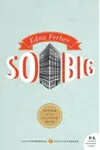
- For the Literary & Prize-Winning Masterpiece: Start with So Big (1924). This Pulitzer Prize-winning novel follows Selina Peake DeJong as she struggles to survive and maintain an appreciation for beauty in a farming community outside Chicago. It is the perfect distillation of Ferber's focus on resilient, independent women.
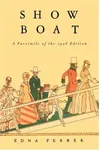
- For the Historical Epic & Cultural Milestone: Start with Show Boat (1926). Tracking three generations of performers on the Mississippi River, this rich novel addresses themes of race, romance, and performance. It served as the basis for the revolutionary Broadway musical by Jerome Kern and Oscar Hammerstein II.
- For Early Feminist Fiction: Start with Roast Beef, Medium (1913). This is the first collection of Ferber’s Emma McChesney stories, detailing the adventures of a divorced traveling saleswoman selling featherloom petticoats. Emma was one of the first self-reliant career women in American popular literature.
The Emma McChesney Series in Order
While Edna Ferber is primarily celebrated for her massive standalone historical novels, she did write one highly popular sequential series. The Emma McChesney stories were originally serialized in magazines before being collected into three volumes. To follow Emma's rise through the business world and the life of her son, Jock, they should be read in chronological publication order:
- Roast Beef, Medium: The Business Adventures of Emma McChesney (1913) – Emma establishes herself as a successful traveling salesperson in a male-dominated industry.
- Personality Plus: Some Experiences of Emma McChesney and Her Son, Jock (1914) – Focuses on Emma's relationship with her son as he enters the advertising business.
- Emma McChesney & Co. (1915) – Emma moves up the corporate ladder, eventually becoming a partner in the firm and navigating late-career decisions.
Note: Ferber also collaborated with playwright George V. Hobart on a theatrical adaptation titled Our Mrs. McChesney in 1915, starring Ethel Barrymore, which can be explored as a companion piece.
Edna Ferber’s Standalone Novels: Publication & Chronological Guide
Ferber’s standalone novels are grand, regional tapestries that explore different eras and geographic corners of America. While they do not share characters or plot continuities, reading them in order of publication reveals how Ferber’s social critiques and research methods matured over her career. Alternatively, you can read them based on the historical eras they depict. Here is the list of her major standalone novels by publication year:
- Dawn O'Hara: The Girl Who Laughed (1911) – Ferber's debut novel about a young female journalist working in Milwaukee.
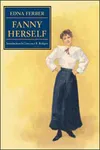
- Fanny Herself (1917) – A heavily autobiographical novel following a Jewish girl growing up in the Midwest who rises to success in the business world.
- The Girls (1921) – An ambitious look at three generations of unmarried women in Chicago, contrasting Victorian constraints with modern freedoms.
- So Big (1924) – Her breakthrough novel about motherhood, art, and farming, which won the 1925 Pulitzer Prize for Fiction.
- Show Boat (1926) – A sweeping river journey through the late 19th and early 20th centuries, addressing racial injustice and theatrical life.
- Cimarron (1930) – A dramatization of the Oklahoma Land Rush of 1889 and the subsequent oil boom, focusing on the development of the frontier.
- American Beauty (1931) – A study of cultural transition in Connecticut, detailing the arrival of Polish immigrants to historic, decaying New England farms.
- Come and Get It (1935) – A multi-generational saga centered on the Wisconsin lumber industry and the destruction of the primeval forests.
- Saratoga Trunk (1941) – Set in New Orleans and Saratoga Springs during the Gilded Age, tracking a Creole woman and a Texas gambler who take on railroad barons.
- Great Son (1945) – A multi-generational chronicle of the Melendy family in Seattle, tracing the city's rise from the Gold Rush to the eve of World War II.
- Giant (1952) – Her controversial and highly popular novel detailing the cattle and oil industries in Texas, exposing the state's racial prejudice and excess wealth.
- Ice Palace (1958) – Ferber's final novel, set in Alaska during its struggle for statehood, advocating for the region's preservation and development.
Co-Authored Plays and Collaborations
In addition to her fiction, Edna Ferber was a prominent playwright and a member of the famous Algonquin Round Table. She collaborated extensively with George S. Kaufman to write some of the era's most popular comedies. Readers interested in her theatrical career should read or watch these works:
- Minick (1924) – Adapted from Ferber's short story "Old Man Minick."
- The Royal Family (1927) – A parody of the Drew and Barrymore theatrical dynasty.
- Dinner at Eight (1932) – A classic melodrama highlighting the struggles of several high-society guests during the Great Depression.
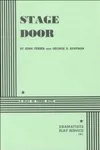
- Stage Door (1936) – Follows aspiring young actresses living in a theater boarding house in New York City.
- The Land Is Bright (1941) – A sweeping play tracing a wealthy family across three generations.
- Bravo! (1949) – A drama exploring the lives of European refugees in America after World War II.
Short Story Collections and Autobiographical Works
To fully appreciate Ferber's development as an author, you should dip into her short fiction and her memoirs. Her short stories showcase her quick wit and journalistic eye, while her memoirs provide a rare look at her life as an independent Jewish woman writer in mid-century America.
Key Short Story Collections
- Buttered Side Down (1912) – Her first collection, focusing on the working-class people of Chicago and the Midwest.
- Cheerful – By Request (1918) – Contains stories dealing with post-WWI American transitions and working-class struggles.
- Gigolo (1922) – A collection that reflects the changing social morals of the early Roaring Twenties.
- Mother Knows Best (1927) – A highly popular collection released at the peak of her literary fame.
- They Brought Their Women (1933) – Stories focusing on women from various social strata navigating the early years of the Great Depression.
- One Basket (1947) – A comprehensive anthology compiled by Ferber containing thirty-one of her personal favorite short stories.
Autobiographies
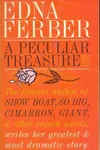
- A Peculiar Treasure (1939) – Covers her childhood, her career as a young reporter, her Jewish identity, and her rising alarm at European fascism.
- A Kind of Magic (1963) – Picks up where her first autobiography left off, detailing her life during World War II, her travels, and her writing process for later works like Giant.
What to Know Before You Start
Ferber's style is deeply character-driven, highly descriptive, and fundamentally grounded in intense research. She frequently traveled to the locations she wrote about, embedding herself in local cultures—whether it was boarding a real Mississippi showboat, visiting the oil fields of Texas, or traveling to the frontiers of Alaska. Because of this, her novels double as fascinating historical time capsules.
However, modern readers should keep in mind that while Ferber was highly progressive for her time—boldly addressing issues like racism in Show Boat, the mistreatment of Native Americans in Cimarron, and anti-Mexican prejudice in Giant—her works still contain terms, language, and cultural generalizations reflective of the era in which they were written.